CNTRFLD. Your Work in the Show:
Can you walk us through your work in Paranoia and Wilderness? What drew you to this theme, and how does your work explore the tension between the unknown and the familiar?
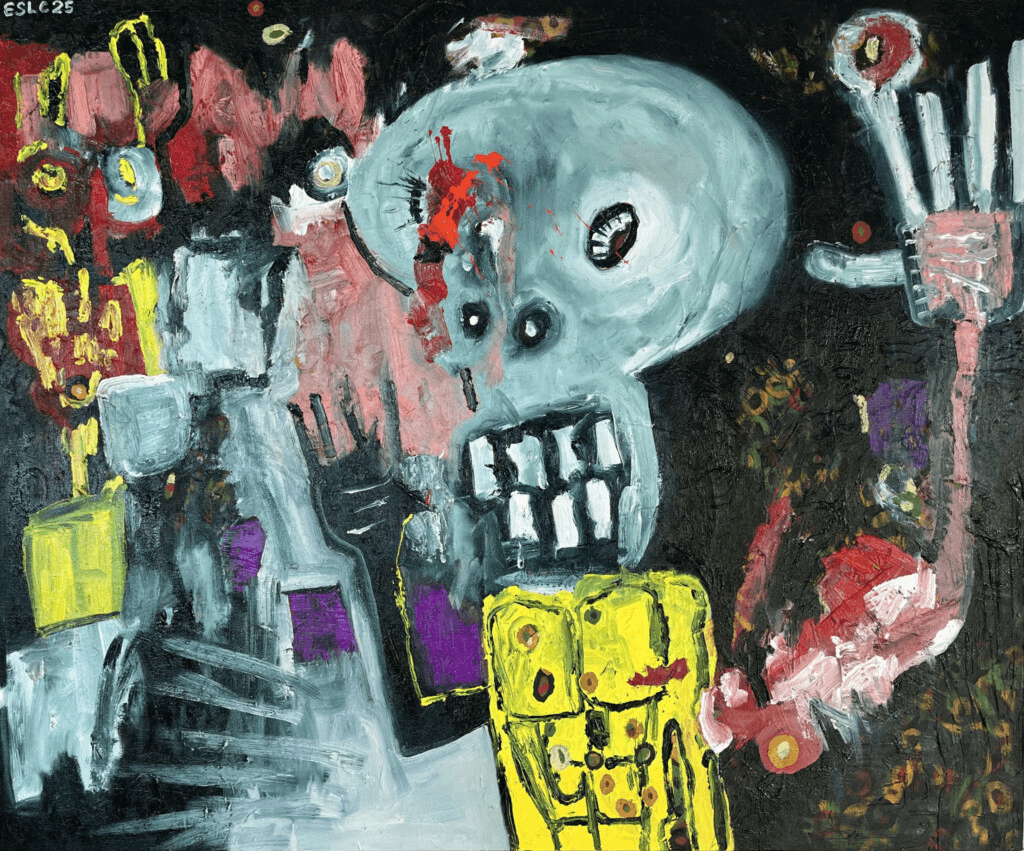
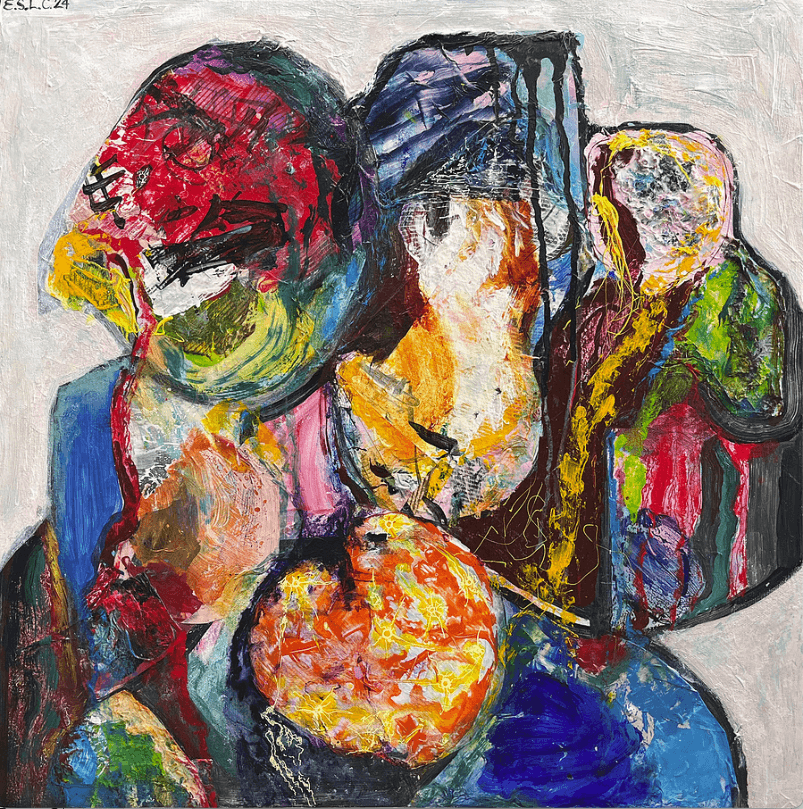
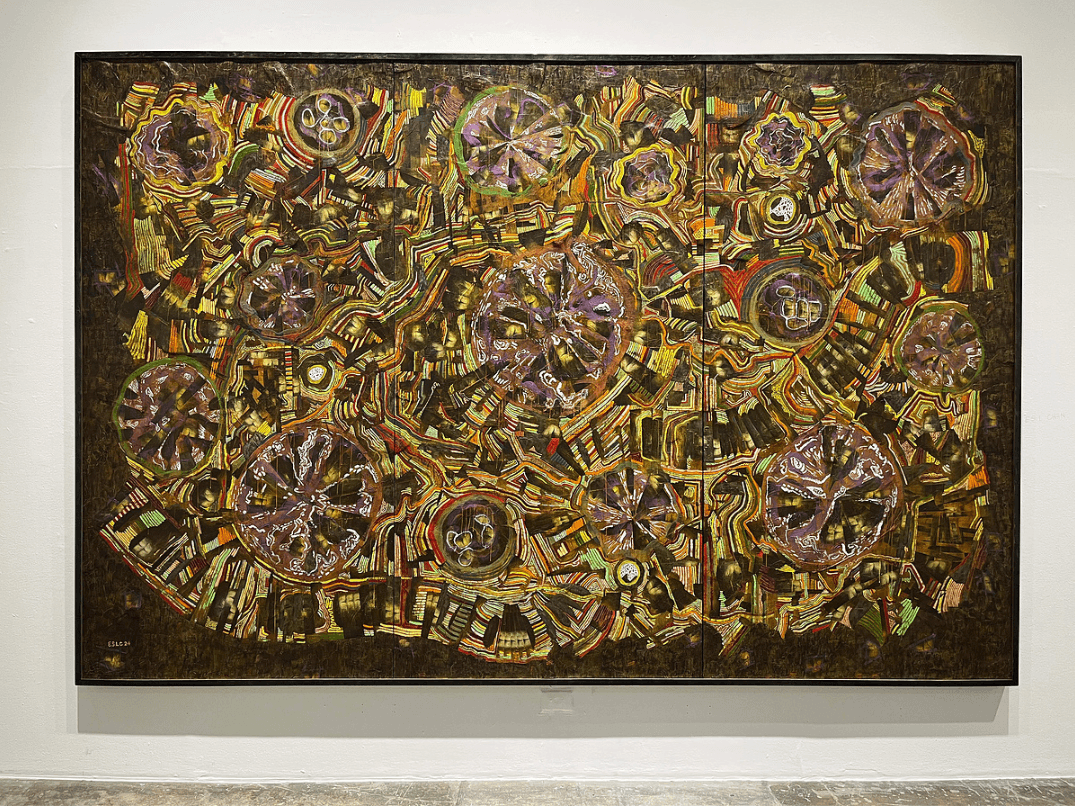
ESLC. Sometimes, I feel like being at peace has a similarity to being distraught with fear. Both states occupy two sides of the same coin. My work, Tranquilo, is an interplay between knowing and not knowing. The oval shapes that can be seen in the drawings that surround the painting were the base of the final image. I started out with the idea of painting an abstraction of the ouroboros to signify
the endless loop in the feeling of paranoia and at the same time, to demonstrate that the meditative act of painting the same shape over and over again can be an escape. I realized halfway that there may be no end to the ovals and so I frantically came up with a scene of violence.
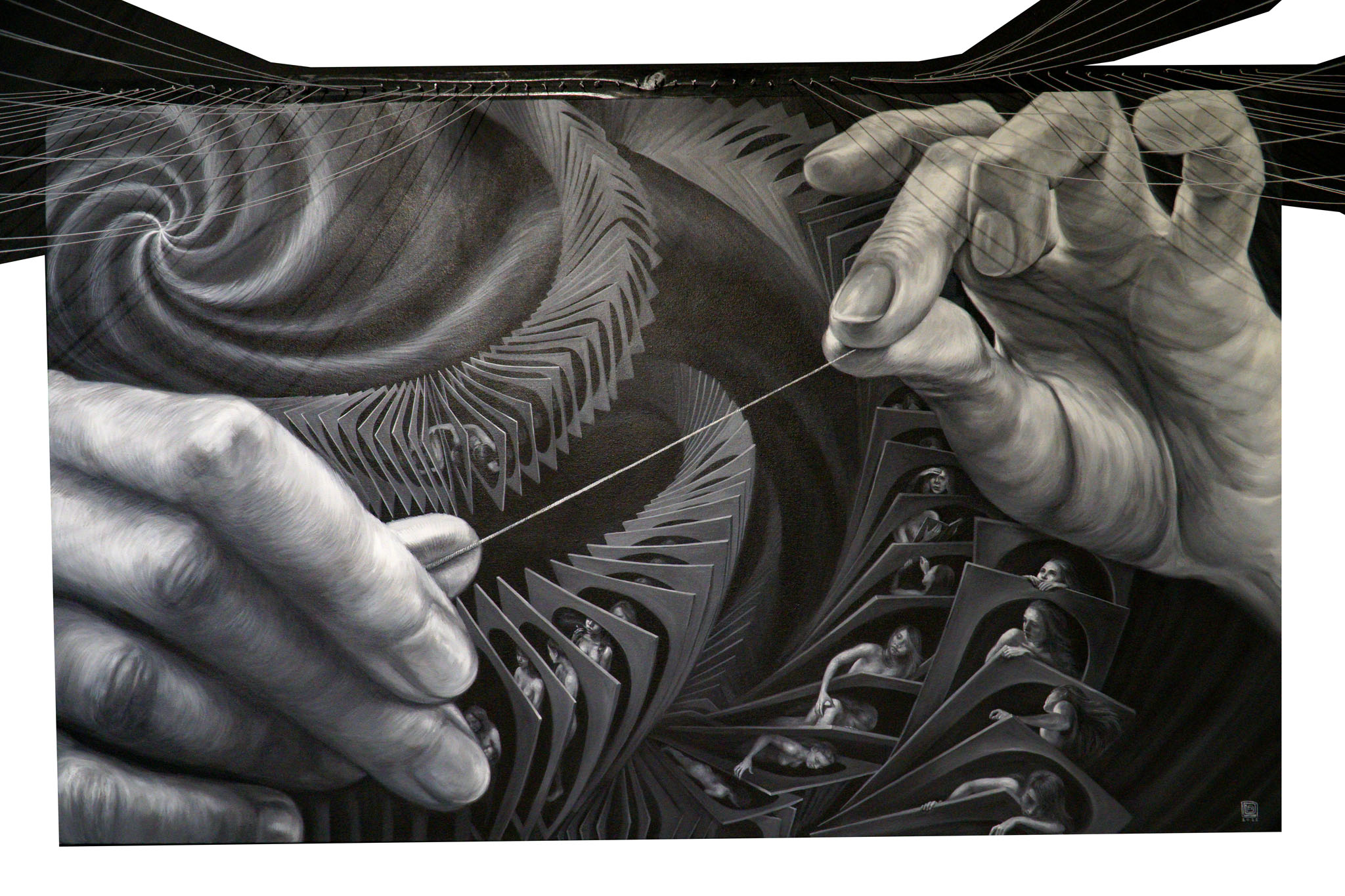
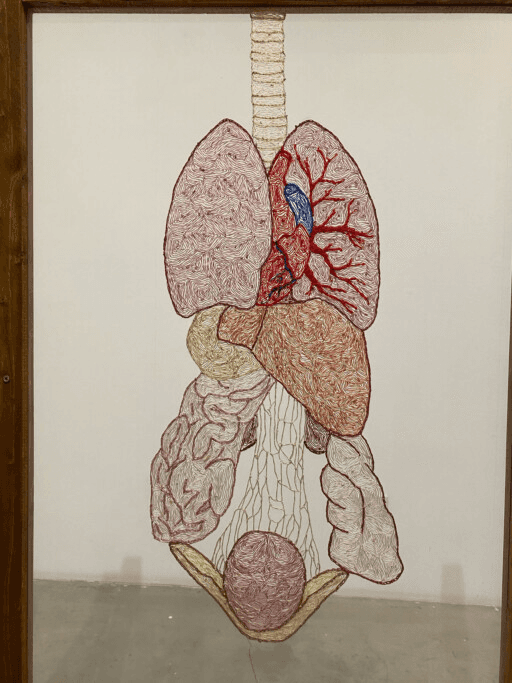
GD. I submitted three paintings and assembled a site-specific thread installation around them.
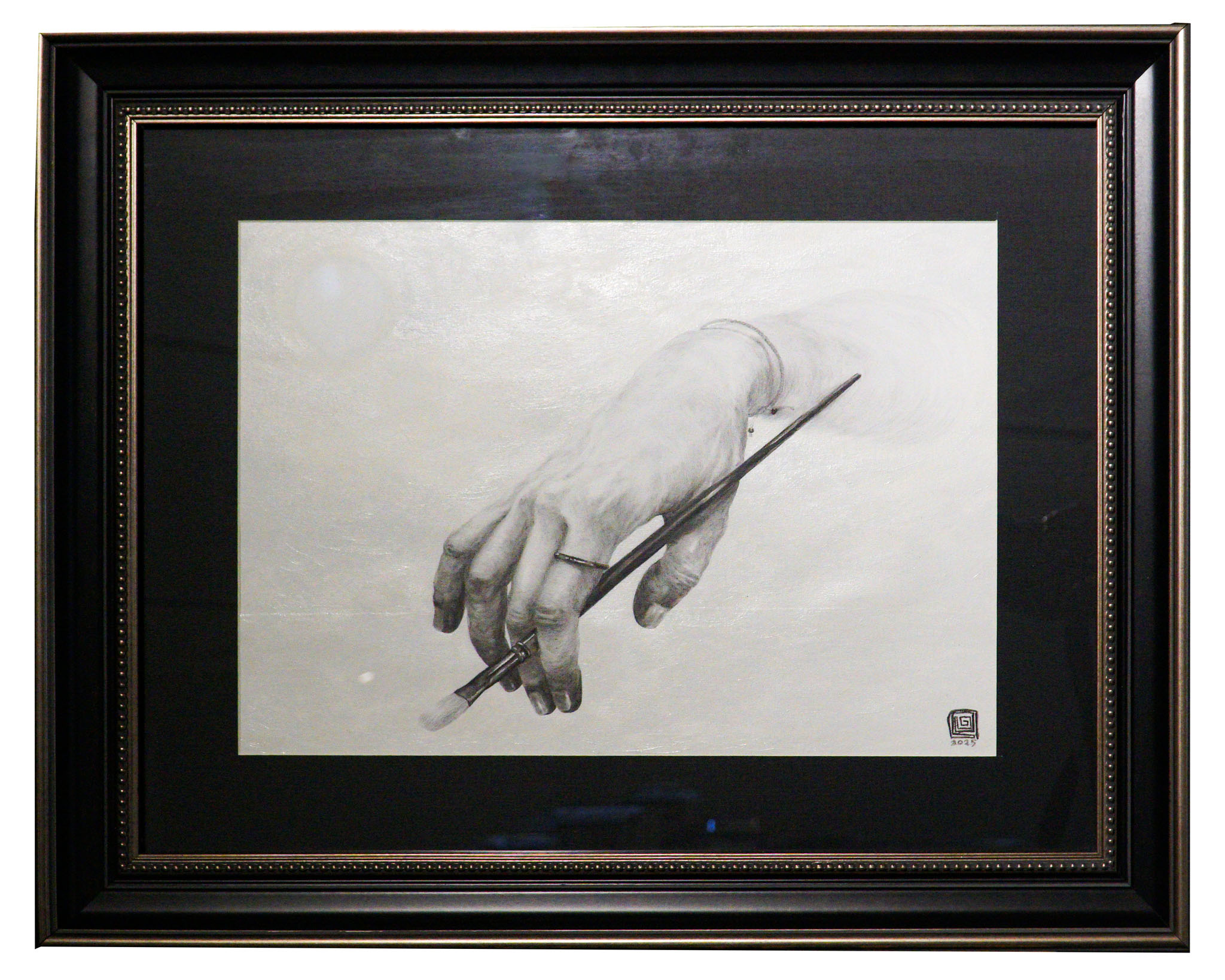
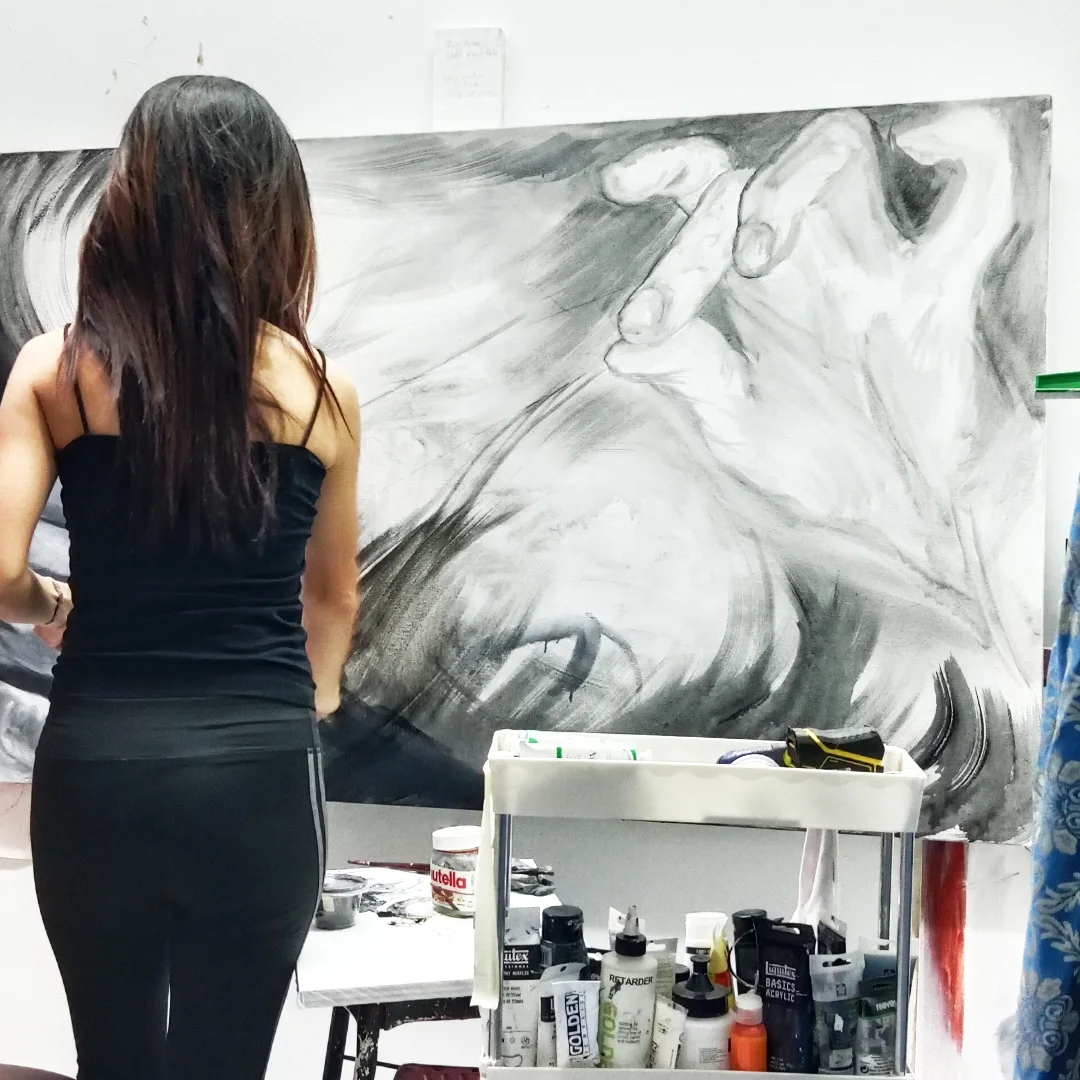
The big piece titled Sacred Weaver (acrylic on canvas, 3ft x 5ft), and two framed paper works-
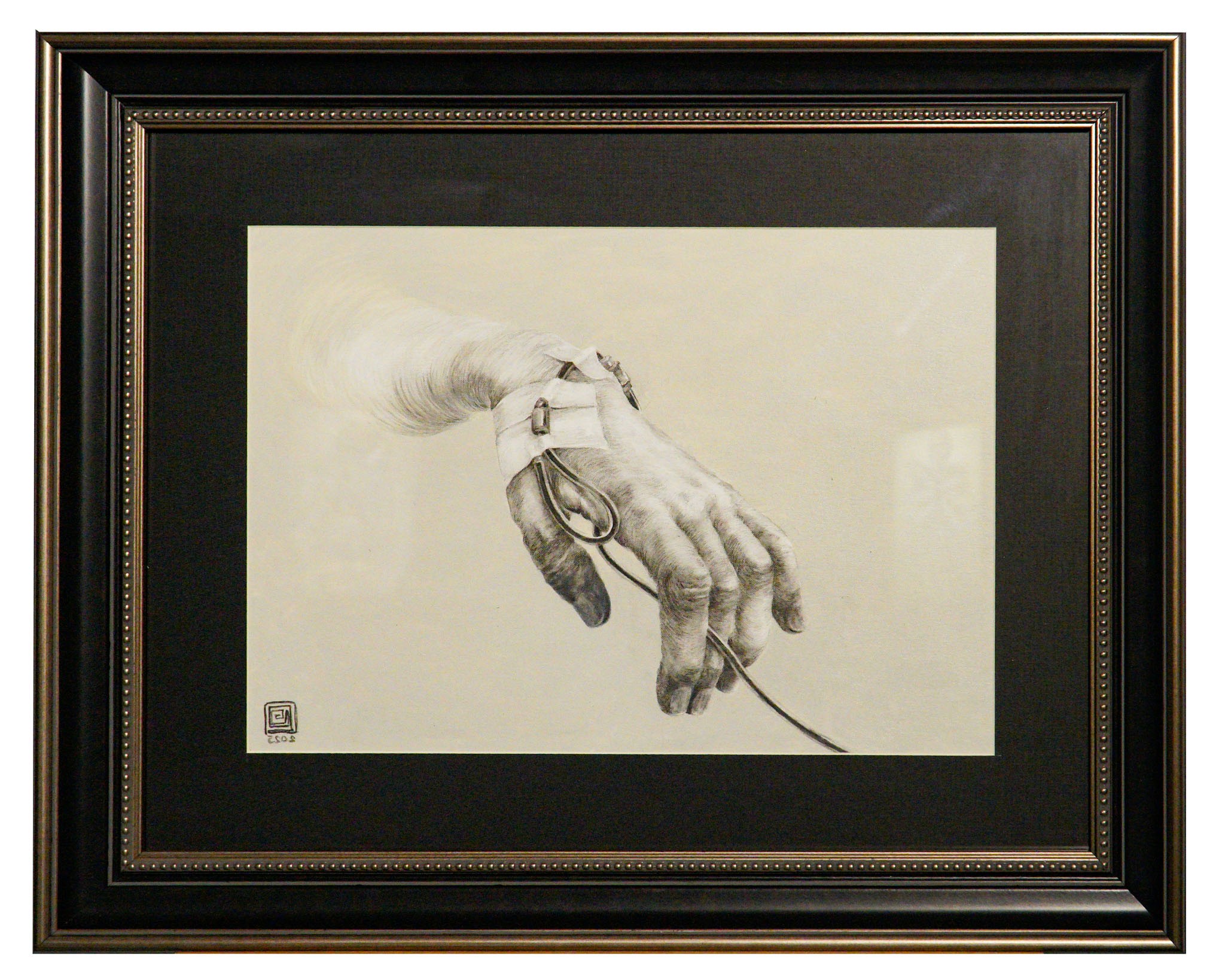
Weight of a Brush, 1 & 2. On “The Sacred Weaver” During a lecture, the evolutionary biologist and science communicator Richard Dawkins imagined all the human mothers alive and passed, forming a single line. This line, he said, will eventually lead back to the first mother ancestor, which is an extremely simple microscopic body. The origin of life is different when you are talking with an Astrophysicist. They will take you even further back to the event of the Big Bang, some 13.8 billion years ago. I merged these data into imagining myself as part of this infinitesimal line of mothers. I try to honor and embody the sacredness of this role by looking back where I should.
I find that looking back is only a burden if we only look back in the lens of our personal story. But looking further back, where it truly matters, life never fails to be beautiful. Wonderful. Sacred.
On “The Weight of a Brush, 1 & 2” These are self-portraits, really. When I fell ill, I avoided seeing my reflection, but I couldn’t stray from seeing my hands. I see them blacken, quiver and struggle. I see them as I work in the studio. And although they remind me I am sick, the way they move, and struggle reminds me I am still alive.
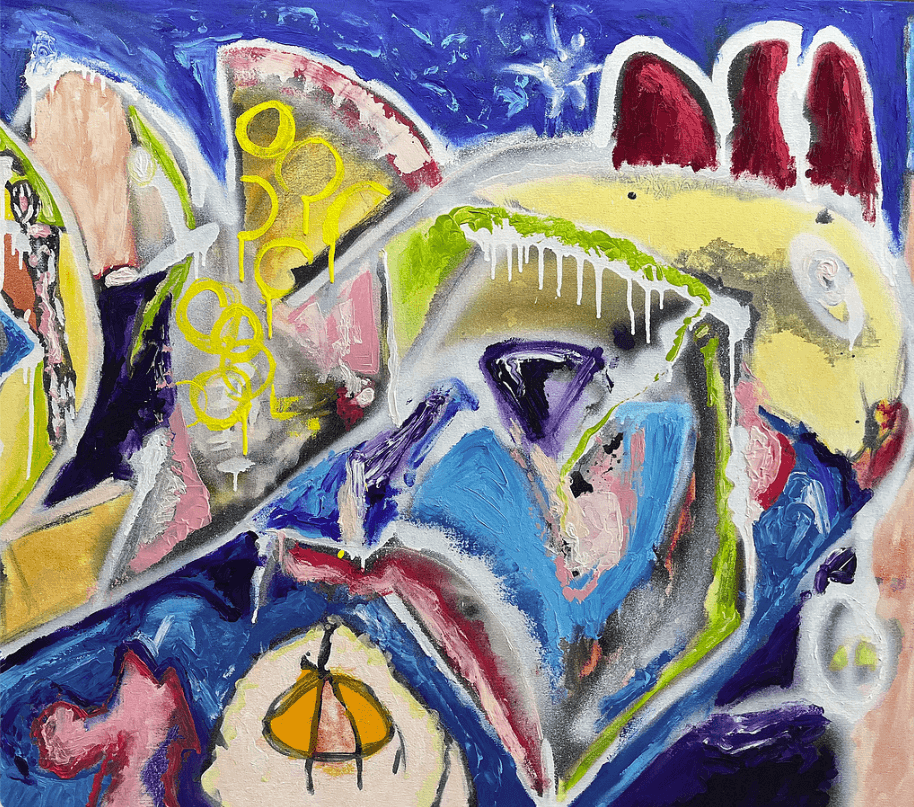
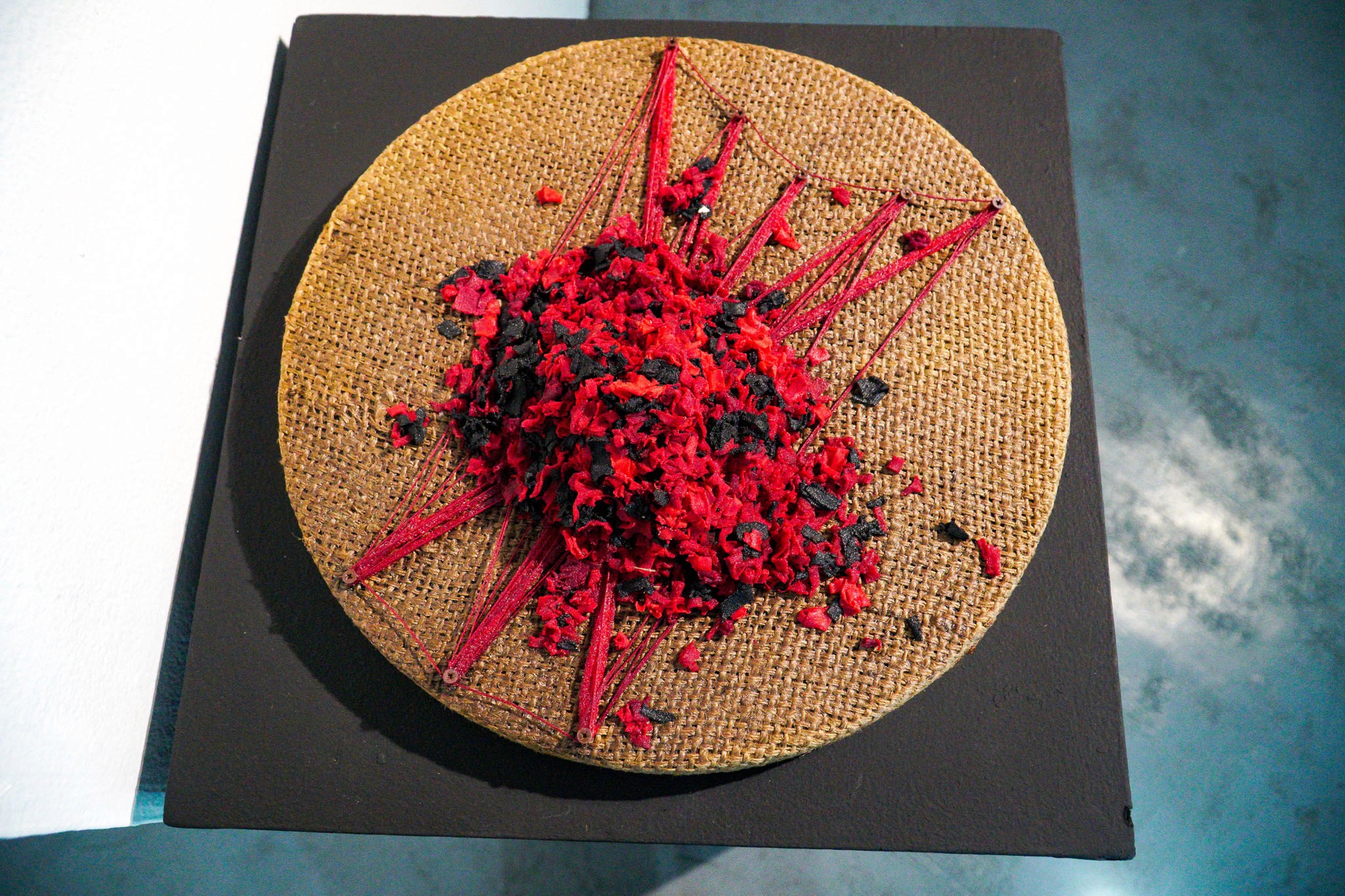
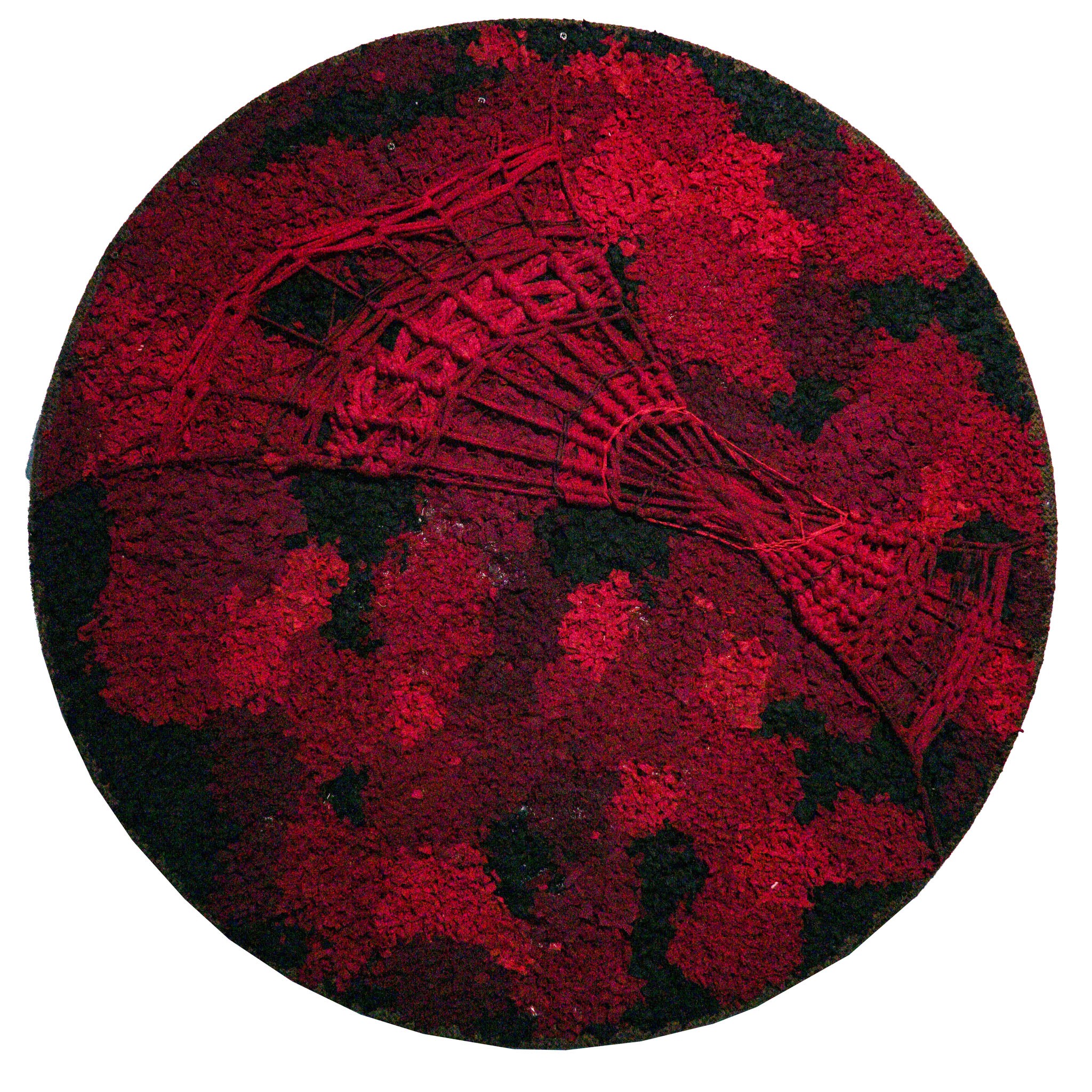
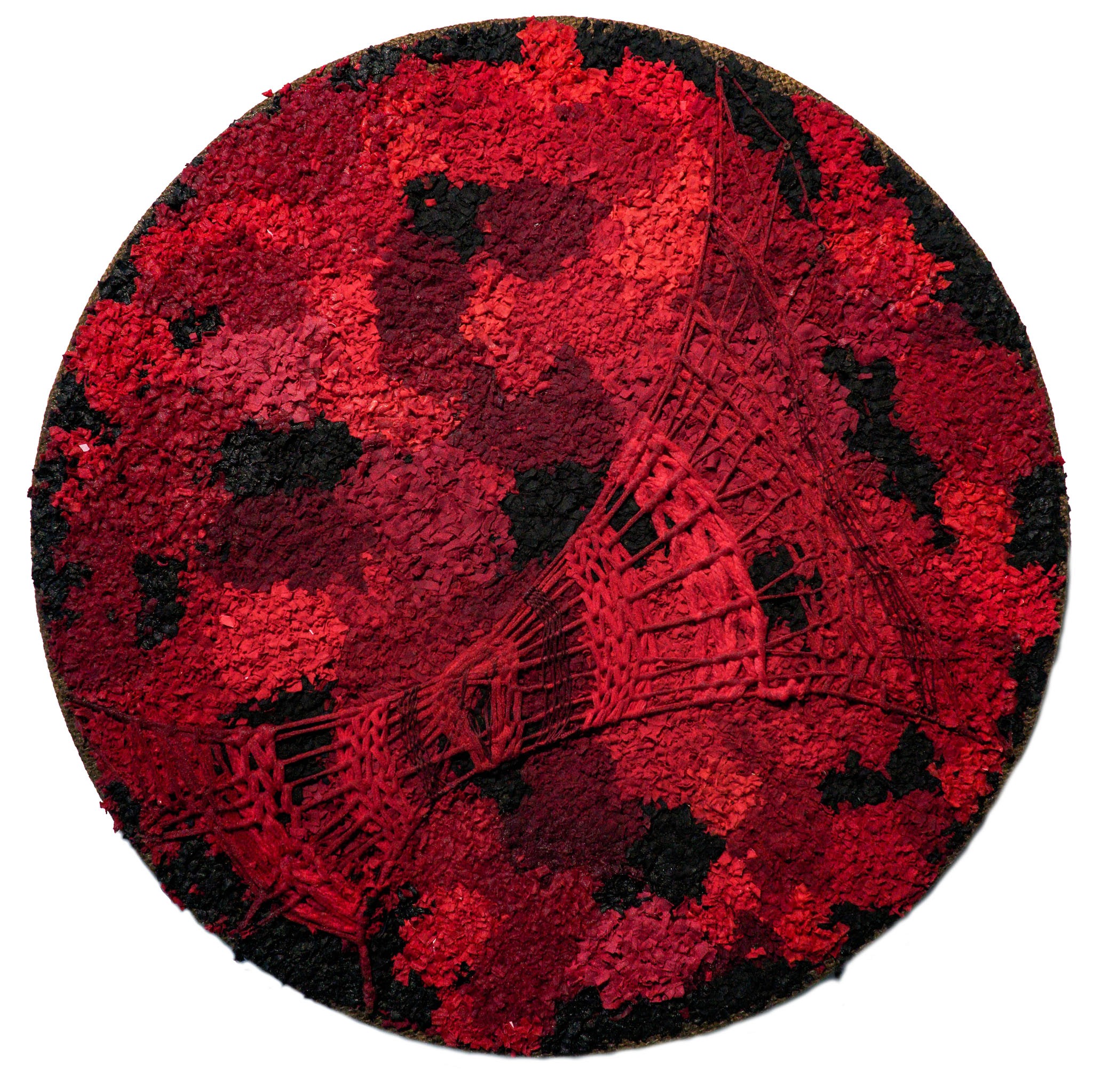
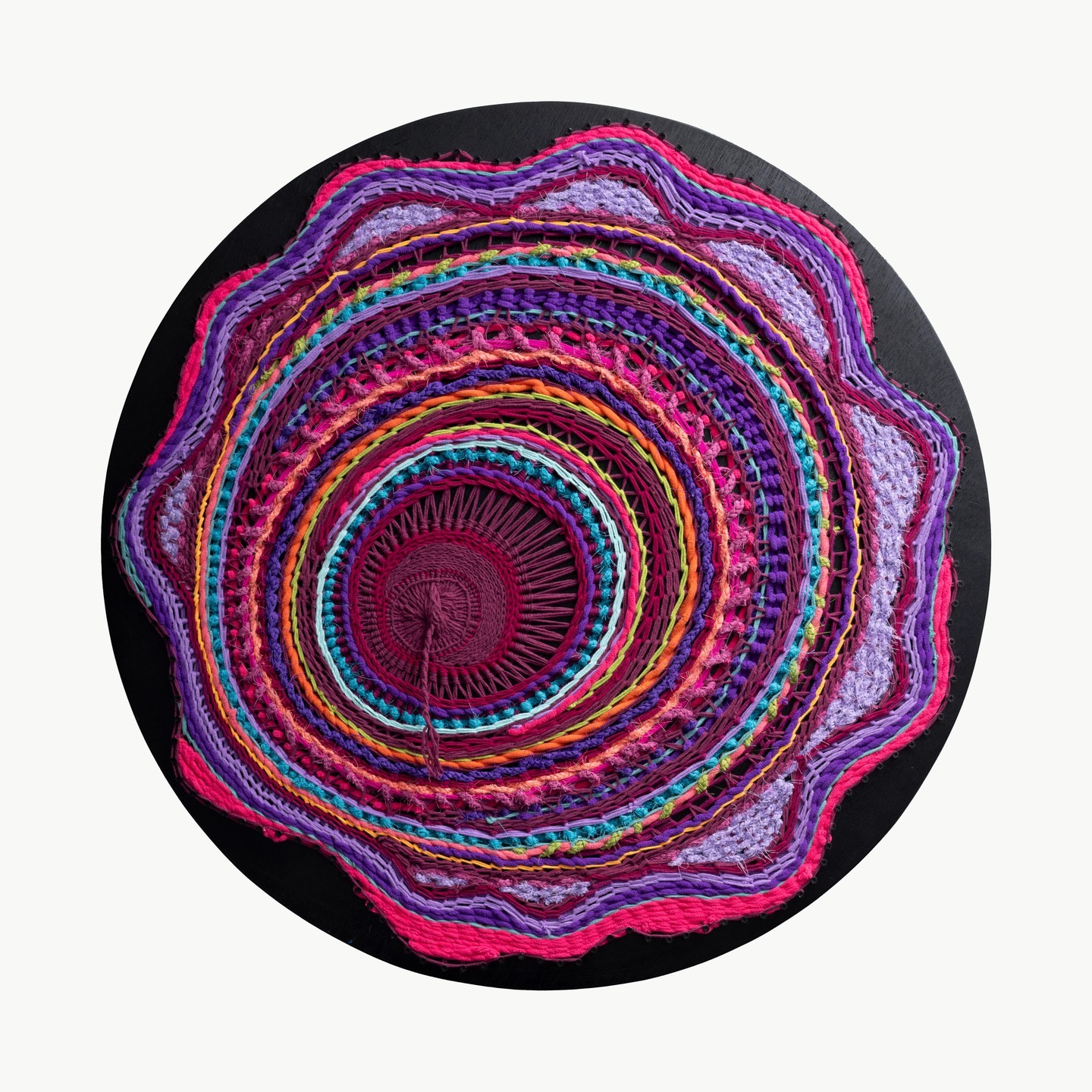
KBC. My work in Paranoia and Wilderness came from an interest in the in between, the space where you are navigating uncertainty rather than trying to solve it or arrive at an answer and allowing that uncertainty to exist without urgency - even being at ease with it. I often reflect on how I experience the outside world and how that is processed internally, and why certain ideas or materials appear at particular moments. This exhibition felt like an opportunity to sit with that tension and give it a tactile, visible presence. Instead of aiming for clarity or resolution, I let the work unfold through intuition with close attention to the process. It was important for me to listen and respond rather than force an outcome, while also trusting when the work felt complete. The work reflects that push and pull between what feels familiar and what feels unknown. For me, it was about allowing a way of creating where uncertainty is not something to fix, but something to stay with, trusting that the process can lead the work somewhere meaningful.
CNTRFLD. A Personal Spark:
Is there a specific memory, moment, or feeling from your life that inspired this work or shaped how you approached it?
ESLC. The feeling that the most effective solution to frustration usually involves a
revolutionary act against my own biases.
GD. I was recently diagnosed with stage 4 cancer. I spent a lot of my time in the chemotherapy infusion room. Here is a diary entry I made during of those days:
” There are three empty beds Infront of me in the infusion room today. I wonder if they're done with their cycles, or maybe they're late...What I really wonder about is, if they are alright. Beside me is an old man with a newspaper. When the doctor came to check his vitals, he refused to put down the newspaper, and instead kept it folded in his left hand until the doctor is done. Beside this old man is an even older man. His veins have become so small that three nurses had to take turns putting an IV on him. They tried more than five times. I'm sure he was in pain. But not a word came out of him. Not a twitch in the face. He was just sitting there, taking it all as it is. I have an impression that this happens to him often. He is not necessarily numb to it, he just expects nothing else, perhaps. At the farther walls are beds with toddlers on them, and older children with the same predicament as the rest of us. I dare wonder what "God" or whatever force of the spiritual realm or universe is at work for these things to happen to them.
The young one cry for their moms. I turn up the volume of my earphones but to no avail.
The mommy-chemicals in my brain are pushing me to anxiety and helplessness. The older kids seem to handle it well, looking almost cool, lost in their games, holding gadgets u bothered by all the needles and tubes. Their headphones with noise cancelation are burned in my iris. Now I have to buy one. As I await my turn to be poked by needles. I realize I am not like the old men in my row. This is all new to me. The pain is a stranger, becoming familiar more and more each day. I realize I am not like the toddlers, comforted by elders while they cry full volume and an audacious demand to be comforted. I realize I am not like the cool teenager who gets by with the gadgets and games. I realize, too, that I am connected to all of them. I am a string attached to the old generation, because I still have a deep love for newspapers, the ink and smell of actual paper...I am like the teenager, I have a relationship with technology and how it multiplies my senses to hundreds from merely 5...And I am like the toddlers, i cry, but more deeply, in silence, in my soul. And I also want it all. To stop.”
KBC. There was no single moment that inspired the work, but rather an accumulation of thoughts and experiences over time, and in many ways, across my life as an artist. This time in particular, I felt a strong pull to return to a more instinctive way of making, similar to how I made art as a child, but with greater awareness and intention. This is also an evolution of imagery that I have been pursuing, while returning to a grounded way, if that makes sense. The theme and title express primal thoughts and emotions through paranoia, and wilderness spoke to me as a state of navigation, not one of being lost but rather a state of trying to figure things out, while being okay with not having any clear answers yet. The journey is as important as the destination. An unexpected moment that shaped the final outcome was the storm, Tino.
The pieces were exposed to strong wind and rain that morning, and one of them was significantly damaged. Instead of discarding it, I gathered the cut fabric and reworked parts of the weaving, which led to the development of a third element in the installation. I welcomed that intervention in the work, while staying aware of the larger reality of the storm. Tino caused real devastation and loss in nearby communities, and that context mattered deeply. My reflection here is not meant to diminish that experience, but to speak honestly about how that moment affected the work in front of me. It became a quiet reminder that many things are beyond our control, and that even within fragility, unexpected events can alter a process in significant ways.
CNTRFLD. Roots and Heritage:
How has your upbringing or cultural background influenced your journey as an artist? Are there childhood experiences or local traditions that continue to resonate in your work?
ESLC. I have mostly been an outcast growing up. It may have led me to always be seeking out for new approaches. I am ethnically Chinese but the reason I’m an artist today is a result of a thirst for exploring creativity from all the years of being told to stick to tradition. However, I still see great value in tradition and find ways to engage with it.
GD. My parents are musicians. They travelled a lot for our survival. Consequently, leaving me as a three-month-old baby. I can say the only time we really lived together as a complete unit was when we were in Beijing, China, where they worked as the hotel musicians for Shangri-La. As an eight-year-old kid and onwards ‘til I was about 14, Beijing was a museum to my curious mind. I witnessed how people would clash due to their differences but somehow get together through music. This would later resonate whenever I would have residencies outside of my country (Kuala Lumpur, Jogjakarta, India, Germany, Switzerland). I would repeatedly witness art pull people closer instead of repelling them apart. This is what makes art important to me. I do not wish to put any other agenda in my artmaking except making humanity see how beautiful and wonderful they can be.
KBC. I grew up in a household where creativity, sports, and music were part of everyday life. My parents recognized my interest in the arts early on and supported it, which gave me the freedom to explore many forms of expression, from dance and music to writing, painting, sewing, embroidery, and sculpture (even baking and cooking!). These did not feel like separate disciplines, but natural ways of expressing myself. Sports played a major role in my upbringing. My father was a professional football player and later became a national team coach for the Philippines. Many of my brothers, cousins, and uncles were athletes, so movement training, and play were constant parts of home life.
Watching my father commit himself to the sport with focus, care, and generosity shaped how I understand practice. For a short period, he also became my coach, and I learned from him physically, mentally, and emotionally., Music was equally present. My brothers and relatives played in bands, and their taste in music influenced how I listened and paid attention. At home, my parents played classical and instrumental music, as well as the Beatles, and introduced me to old films and books. On my mother’s side, there are many artists across different disciplines, many of them women, who became early examples of what was possible for me. All these influences continue to surface quietly in my work through rhythm, material choices, and a deep respect for both intuition and commitment to prepetition, meaning, process.
CNTRFLD. Identity in Motion:
In what ways does your identity—whether personal, gendered, cultural, or otherwise—shape your artistic voice and the ideas you choose to explore?
ESLC. I am not sure. My most prized memories revolve around long distances travelled. I have moved houses very often growing up and each space represents a different era of my life. My family history is also interesting because we have fallen down and risen up the socio-economic ladder quite often in just a handful of generations. These kinds of metaphorical distances travelled when internalized creates a very dynamic sense of being. Most of the ideas I explore are quite personal. I find that my life is rich enough to draw from.
GD. To be myself in the “me”-est way possible has always been my mantra. If that is art, okay. If that is not art, then so be it. It is still okay with me.
KBC. My identity shapes my work in very direct ways. I became a mother at a young age, and that experience influenced how I understood responsibility, growth, and time. In many ways, parts of myself felt delayed, which later created a strong desire to explore who I was beyond the roles I stepped into early. Womanhood has never felt fixed to me. It moves through different stages, each with its own questions, tensions, and forms of strength. I am interested in those transitions, especially how a woman continues to evolve while carrying multiple roles and challenges, many times all at once. I was raised within a traditional environment but with the freedom to question and think independently. That contrast continues to shape my artistic voice. My work often sits where structure and curiosity meet, allowing identity to remain lived, shifting, and continually unfolding.
CNTRFLD. The Place You Call Home:
Where you live and work often shapes how you see the world. How has your environment influenced your creative process, and why is this place meaningful to you?
ESLC. My studios at home are usually filled with daylight and are white all over. I would say that the combination makes me more open. However, I find that I am able to transplant this feeling to other spaces as well.
GD. I am a third world single mother, artist and art instructor diagnosed with a terminal disease. This context cannot be scavenged from reading a book. It is a very intense point of view. Having said that, to remain positive, full of love, and embrace gratefulness is not just virtue… It is the only thing I am holding on to. It is my personal revolution against a world cooked by environmental degradation, corrupt politicians, global wars, and a traumatized society. The cultural workers in my community are all heroes. We are each other’s miracle, every day.
KBC. The places where I live and work have shaped my perspective in quiet but lasting ways. Growing up in San Carlos gave me a strong sense of closeness and community as a child. Living in a smaller city made me more aware of how identity is formed within limited spaces, and how creativity often emerges from a resistance to conform. Living within a family compound made me acutely aware of how to stand my ground while retaining relationships, learning to navigate closeness, conflict, and the quiet work of choosing what, and who, I carry forward. Over time, I have also come to call Bacolod home, especially after marrying my husband, who is from there.
The creative community in Bacolod, particularly within the Art District, and mainly the Orange Project, played an important role in helping me trust my artistic voice. Being surrounded by artists and spaces that valued sincerity and experimentation gave me the confidence to stand more firmly in my practice. Just as important was the freedom I was given to explore and express myself. I learned early on to resist being placed into a single box, whether in how I dressed, how I moved through different roles, or how I made work. These places remain meaningful because they offer both familiarity and challenge, grounding me while continually asking me to adapt, see differently, and grow.