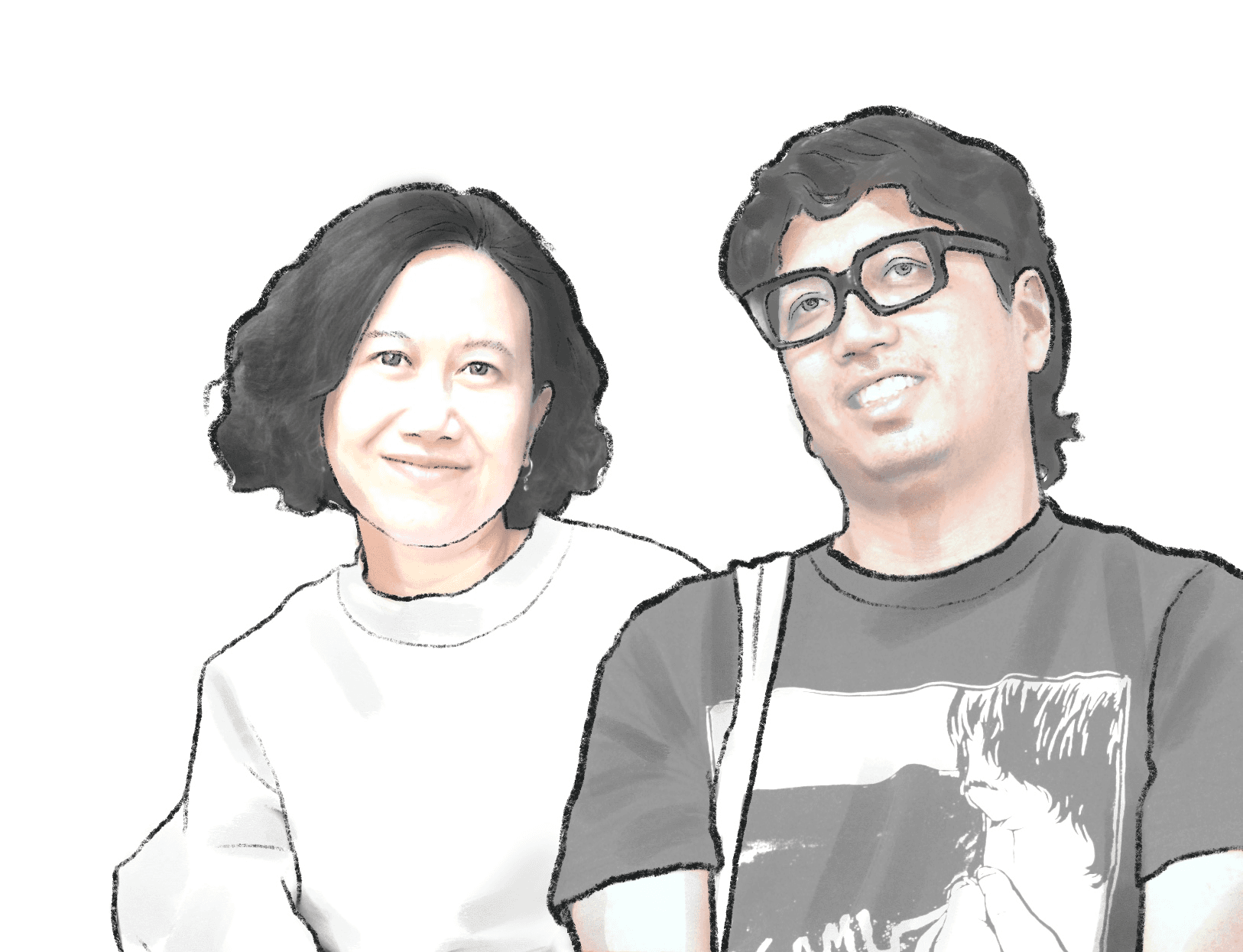
“The objects we consume—food, textiles, fuel—carry accumulated labour within them. Once that connection is acknowledged, our relationship to those materials can no longer feel neutral.”—Elia Nurvista
CNTRFLD. Nafasan Bumi ~ An Endless Harvest feels deeply connected to Indonesia — its landscapes, histories, and material realities. Could you talk about how your heritage and early environment shaped your journey into becoming artists, and how those roots continue to show up in your work today?
BP. I was born and raised in Jakarta. I grew up in a city that does not really function through a clear, centralized system. There is no proper centralized water system, so many people drill their own wells without real regulation. There is no real garbage cycle or recycling structure. Most waste ends up in landfills. Public transportation, buses, cars, motorcycles fill the air with smoke every day. That was normal for me growing up.
You do not question it at first. It becomes your environment. Over time, you start to see how everything operates in fragments. Systems exist, but they are partial. Infrastructure is uneven. People create their own solutions because they have to.
That condition shaped how I see structure and responsibility. I became interested in how systems are built and who maintains them. Even when my work deals with land or extraction, I approach it through that understanding. I think about circulation, waste, energy, and where resources go after they are taken. Growing up in that environment made me aware that every system has consequences, even when those consequences are normalized.
EN. My relationship to Indonesia is not only geographical but deeply historical and familial. I grew up with stories of migration and development, just like my father’s family which did urbanization and witnessed the early expansion of large-scale plantations in the 1970s. Although my family was not directly dispossessed, they were indirectly shaped by the economic shifts brought by extractive infrastructures, including plantation. Those early narratives of opportunity, mobility, but also silence around land conflict that formed an early awareness that landscapes are never neutral. They are structured by power.
Since from many years ago I have been interested with food politics, so Indonesia’s material realities, from their nature and the agricultural systems, which is cycles of extraction, have always felt close to the body for me. Food, land, and labour were not abstract concepts but part of everyday conversation. Over time, I began to understand that everything with observable value is constructed, such as what is framed as ‘modern’ or “development” often carries invisible costs: ecological degradation, erased labour, and unequal mobility. That awareness gradually shaped my artistic trajectory.
My roots continue to appear not as nostalgia, but as a critical lens. Indonesia is both a lived environment and a contested terrain of global capital. The work grows from that tension: between intimacy and infrastructure, memory and geopolitics, landscape and body.
CNTRFLD. Your practices are closely tied to specific materials — from palm oil and batik to machines, plants, and industrial systems. What first drew you to these mediums, and how do they help you tell stories that other forms might not?
BP. Machine and kinetic systems have been part of my practice since the early stage of my career. It did not appear instantly. There was a long process of learning, testing, failing, and rebuilding. I was interested in movement, in how mechanical parts rely on each other, in how energy flows through a structure. That became my language.
The ecological concern grew stronger during the pandemic. That period made me think more seriously about supply chains, resource dependency, and how fragile our systems are. Since then, I have been paying closer attention to extraction.
Palm oil was one entry point because it is embedded in daily life here. But currently, nickel mining is a bigger concern for me. Nickel is framed as part of a green future, especially for batteries and electric vehicles. But the extraction process is still destructive. Forests are cleared, land is reshaped, and waste is produced. The impact is immediate for ecosystems and communities.
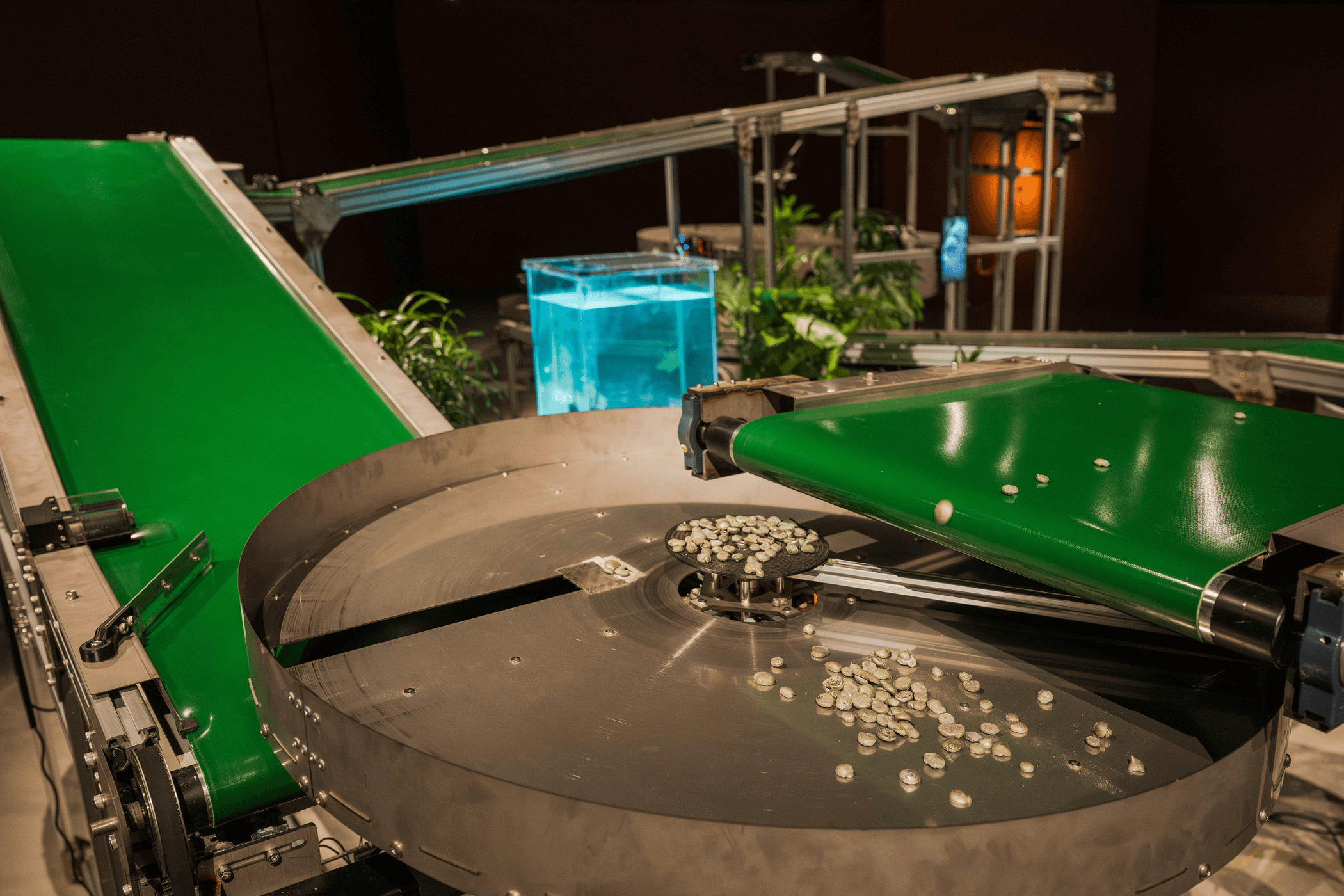
The materials I choose are not only symbolic. They are directly connected to real industries and real consequences. Through kinetic systems, I reconstruct part of their logic. Extraction is about movement, transfer, processing, repetition.
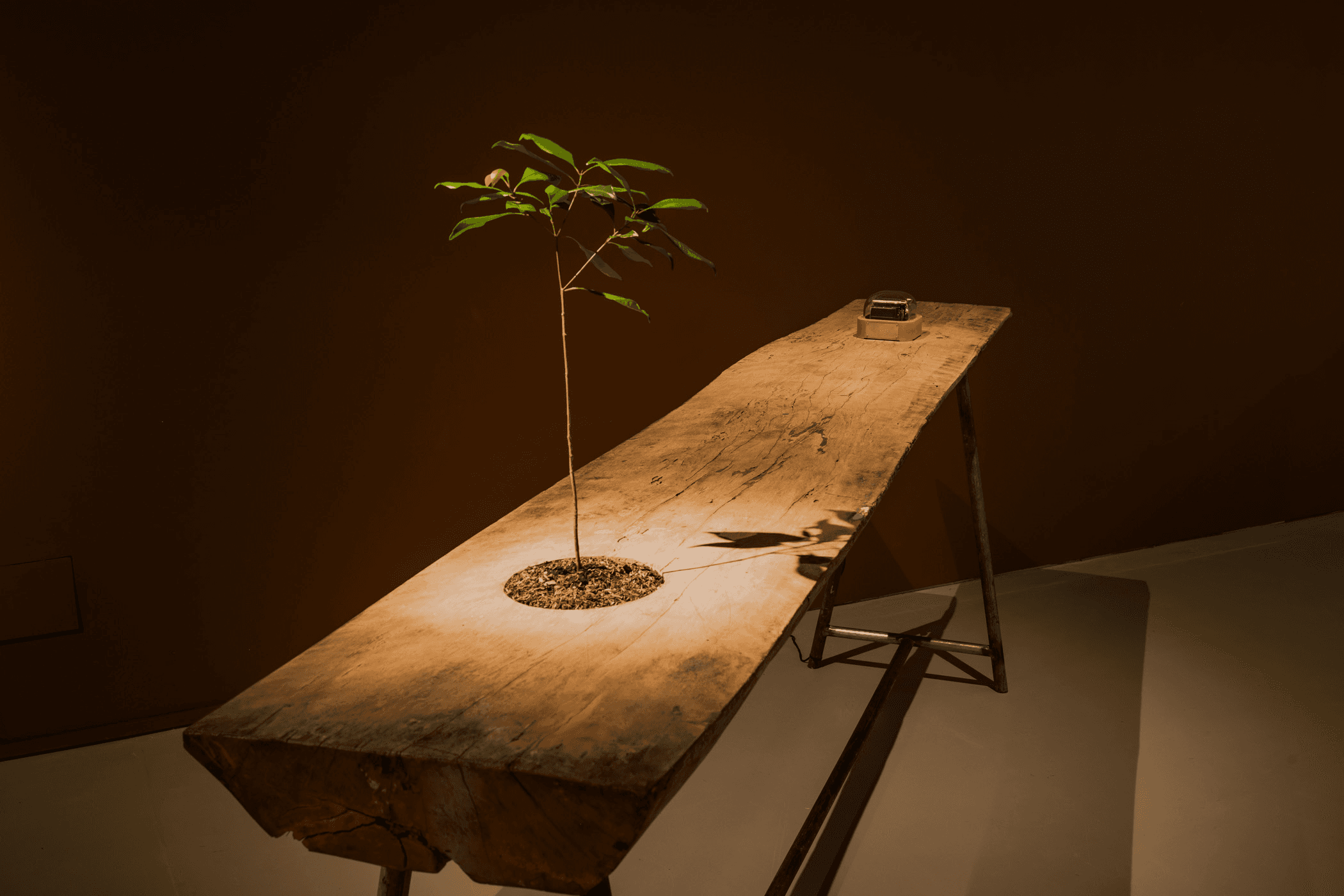
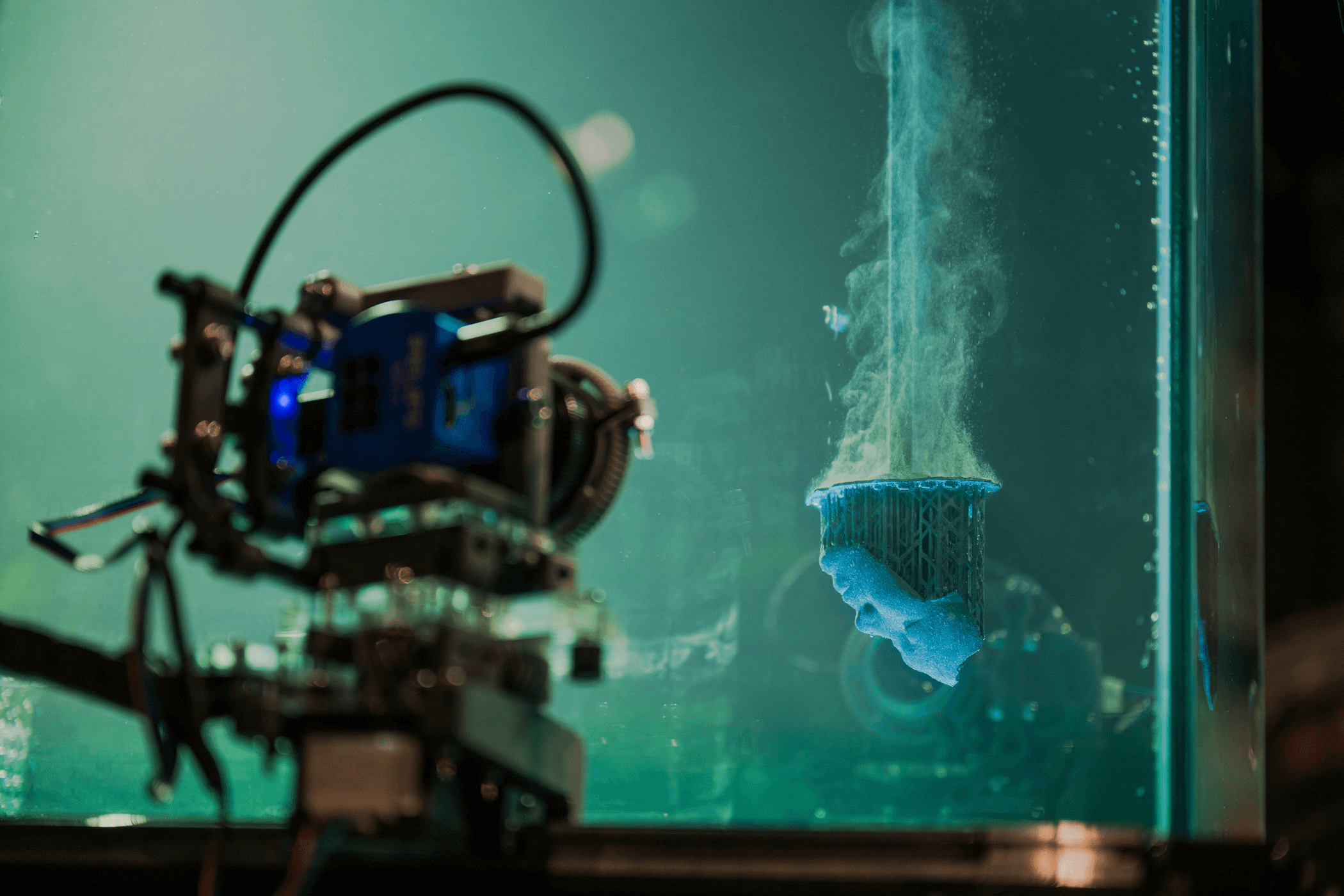
At the same time, I try to imagine what happens if these industrial systems are entangled with nature instead of fully controlled by humans. What if the machine does not stand above ecology, but operates within it? That tension between control and entanglement continues to shape the work.
EN. I always choose materials based on what I am researching and engaging with at a given time. My interest has long centred on food systems, and since 2020ish I have been particularly focused on palm oil. I initially approached it as a food ingredient, something present in everyday consumption. Gradually, my lens shifted toward a broader investigation: how palm oil functions as a commodity, and how its economic value is constructed within global systems.
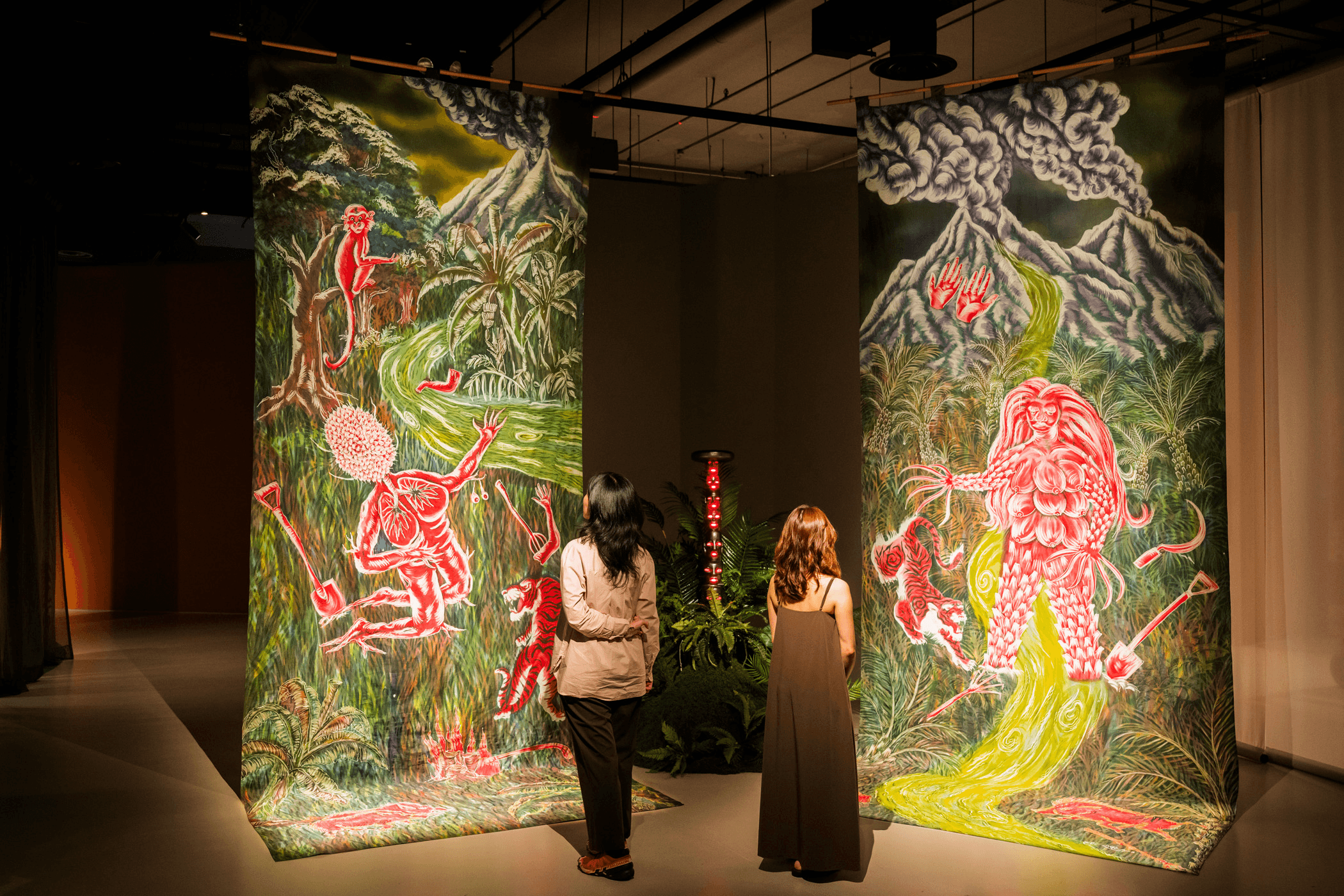
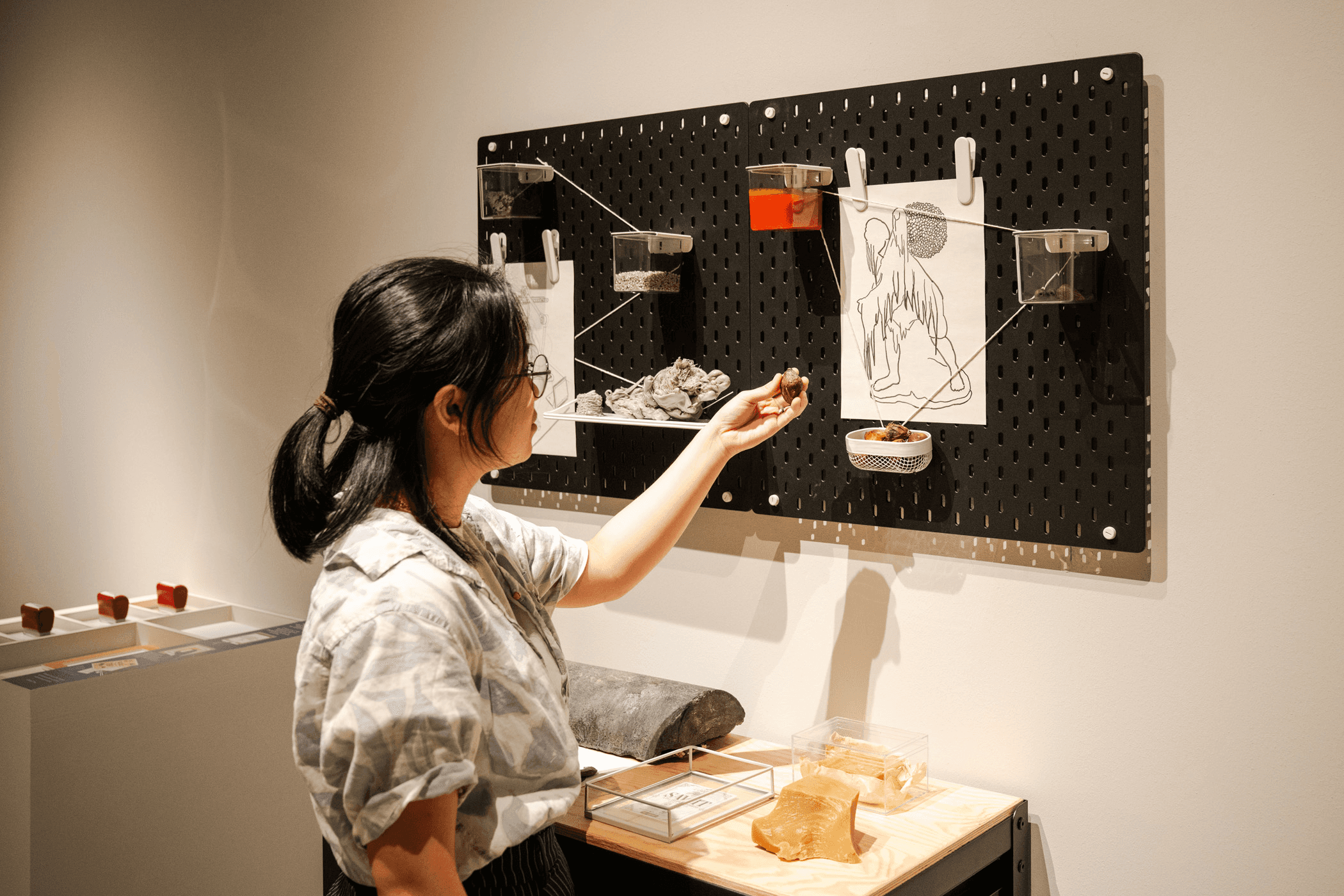
For example, one of my first batik works, The Route, emerged from this inquiry. Using the batik technique, the work traces the entangled histories of migration and displacement between palm oil and Dutch wax textiles. Oil palm was endemic to West Africa. Following its so-called “discovery” by Europeans in the 15th century, it entered European markets through the infrastructures of slavery. Palm oil became a highly profitable industrial material, adaptable into multiple products. When large-scale cultivation in West Africa did not develop as expected, investors redirected their attention to Sumatra and the Malay Peninsula, establishing major plantations under Dutch colonial rule. In parallel, Dutch textile companies in the 19th century industrialized Javanese batik techniques and distributed wax-printed textiles to markets along the Atlantic coasts of Africa. These movements reveal how commodities, labour, and cultural forms were reorganized across continents, and it was presenting through the palm-wax and the textile itself.
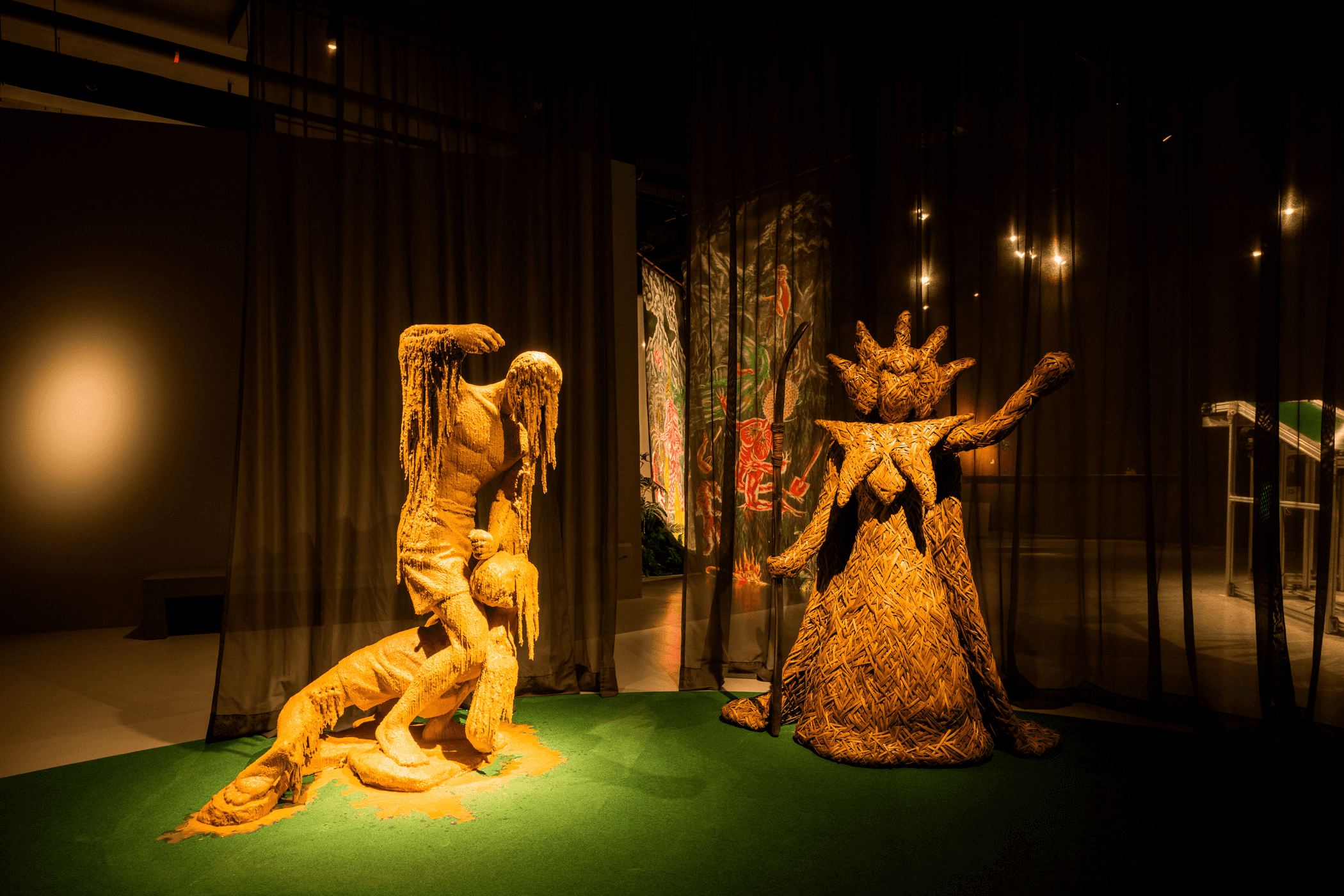
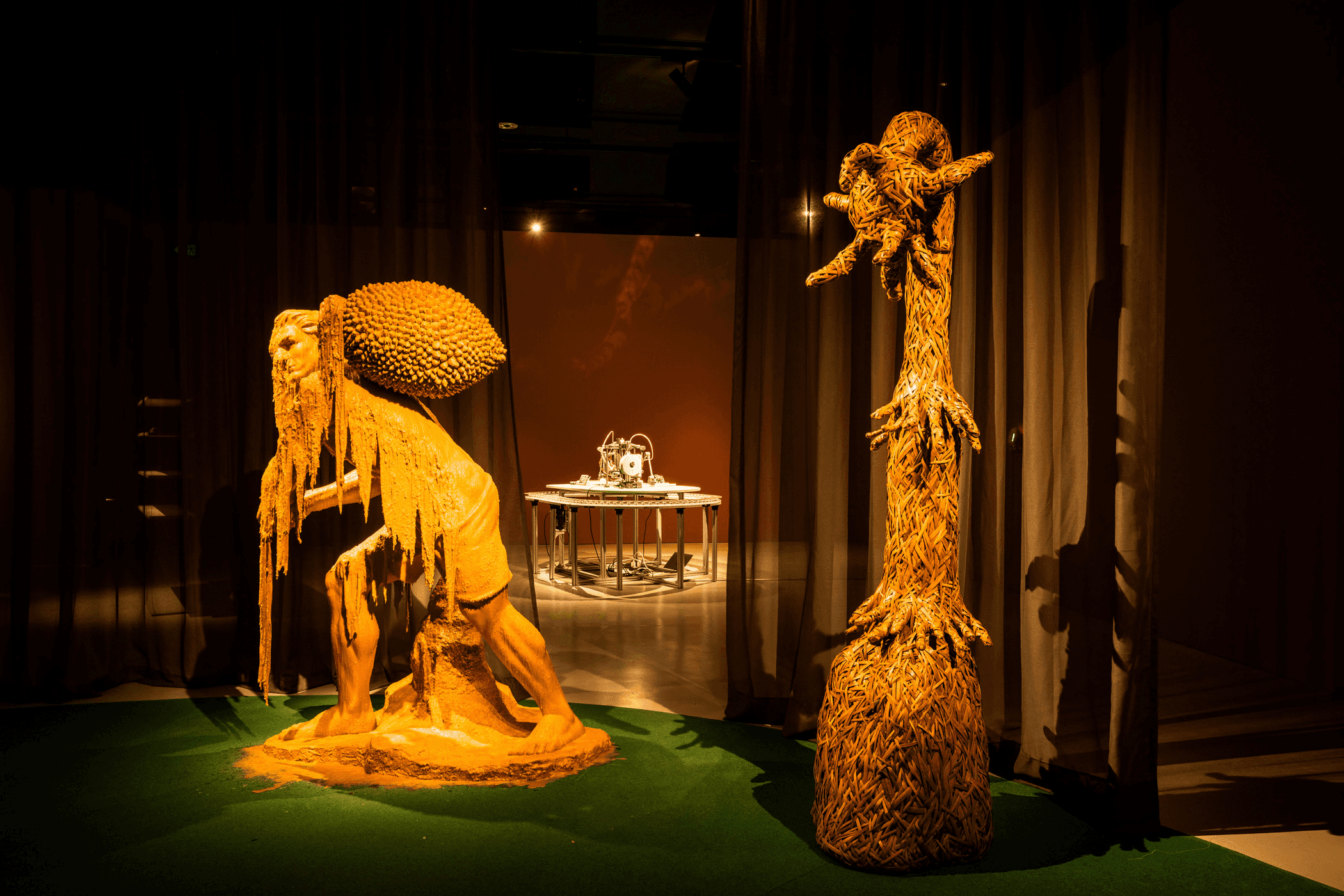
Similarly, the materials in my more recent sculptural series Bodies of Penumbra are derived from residues of oil palm plantations. The sculptures do not simply depict plantation labour; they are materially formed by its afterlife.
What draws me to these mediums is their embeddedness. They are not neutral carriers of meaning. They already contain economic, ecological, and political tensions. By working through them rather than representing them from a distance, I allow the material itself to complicate the narrative.
CNTRFLD. This exhibition explores cycles of extraction, labour, and memory in ways that feel both personal and systemic. When you began developing Nafasan Bumi, what questions were you sitting with — and did your thinking shift as the works evolved?
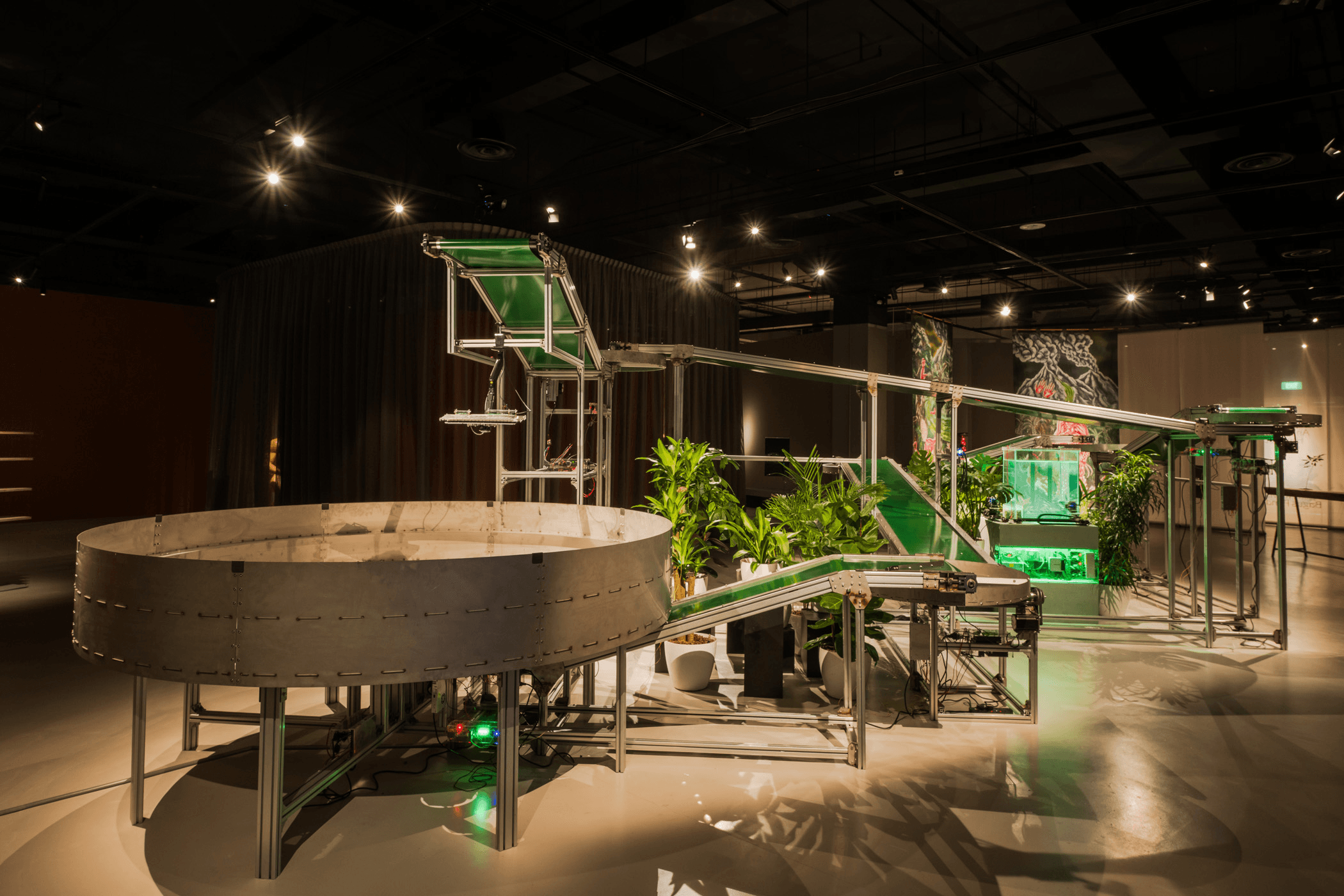
BP. When I started developing Nafasan Bumi, I was thinking about extraction as a continuous system. It is never just one action. There is always a source, a process, distribution, and consequences. The system works because it keeps moving.
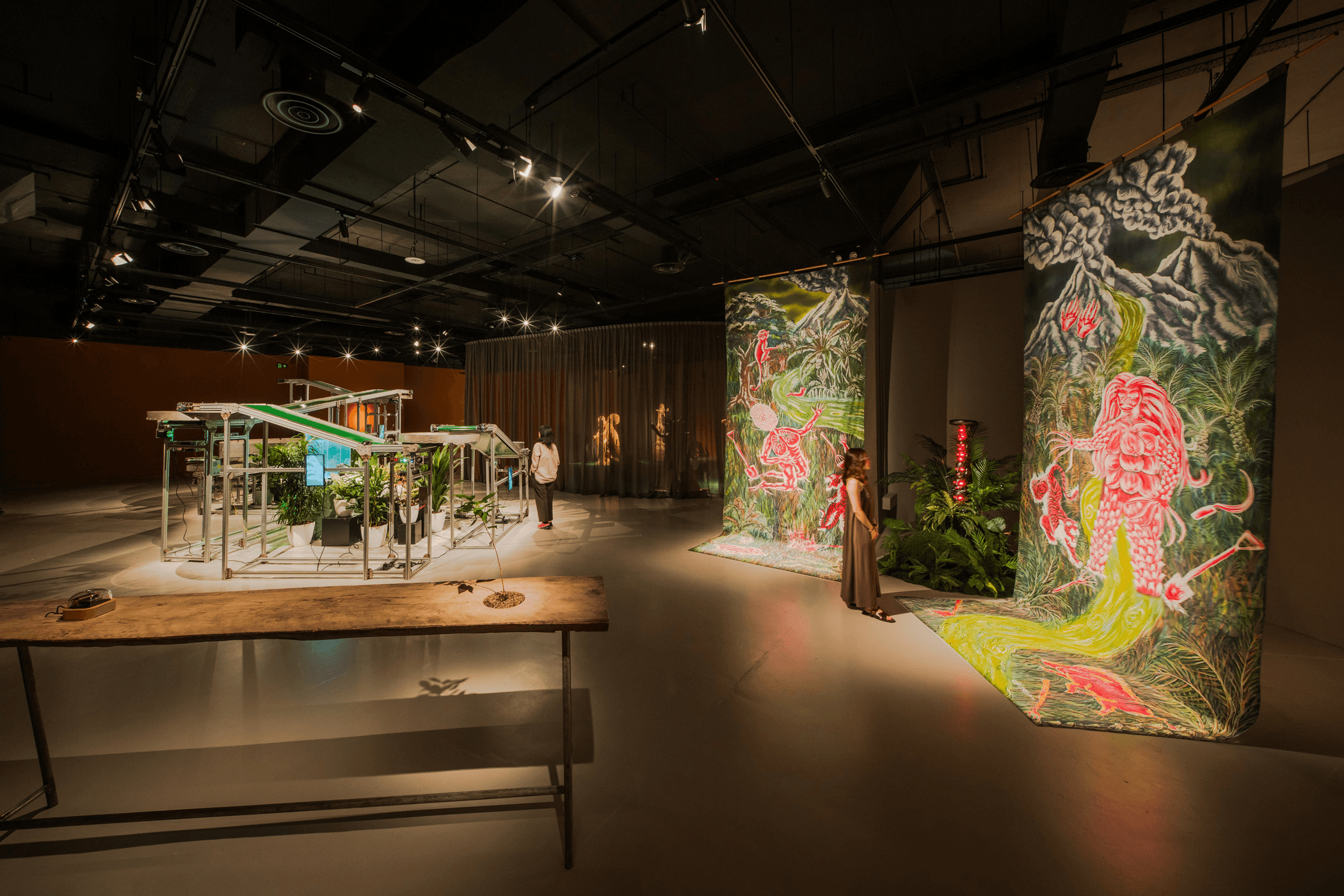
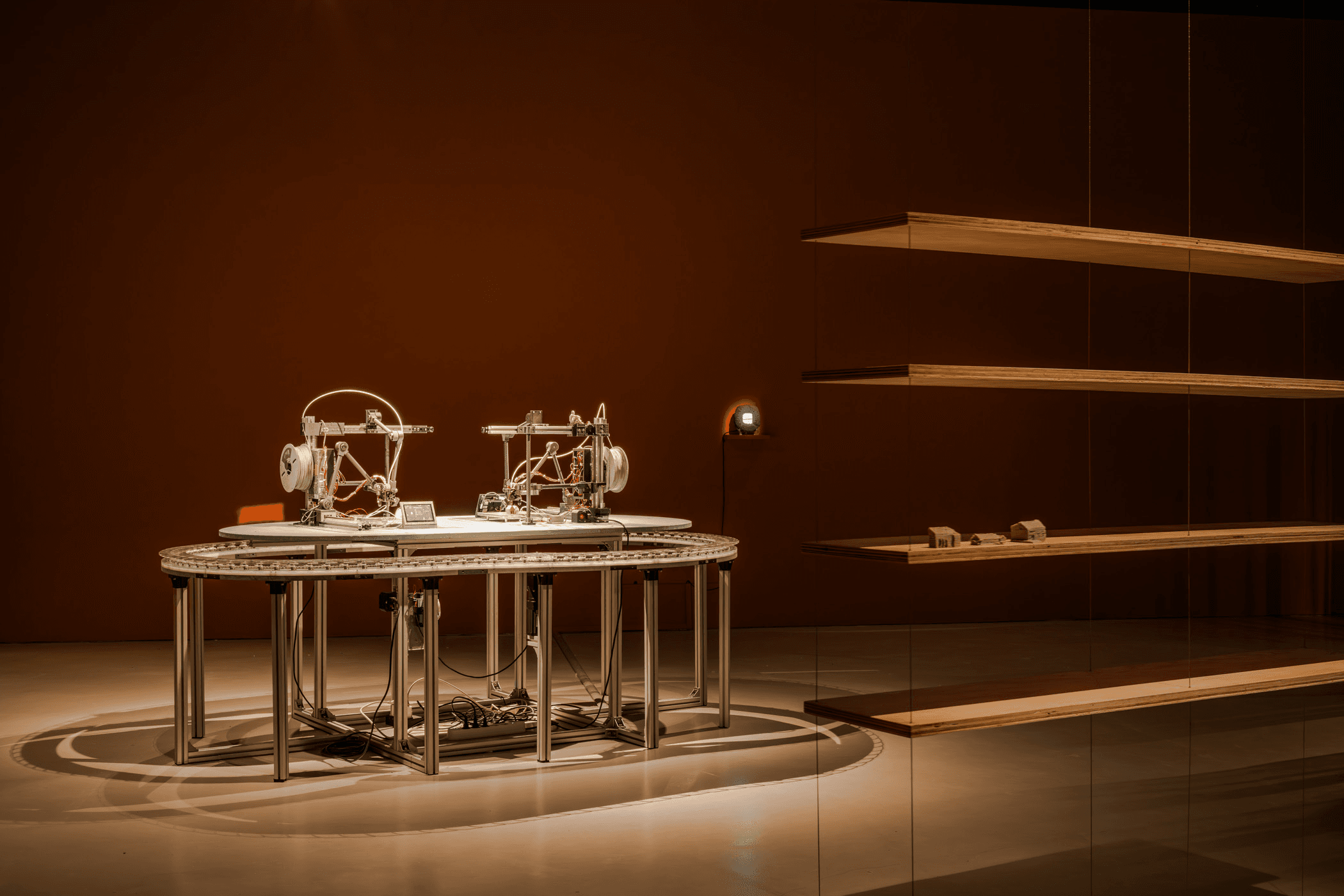
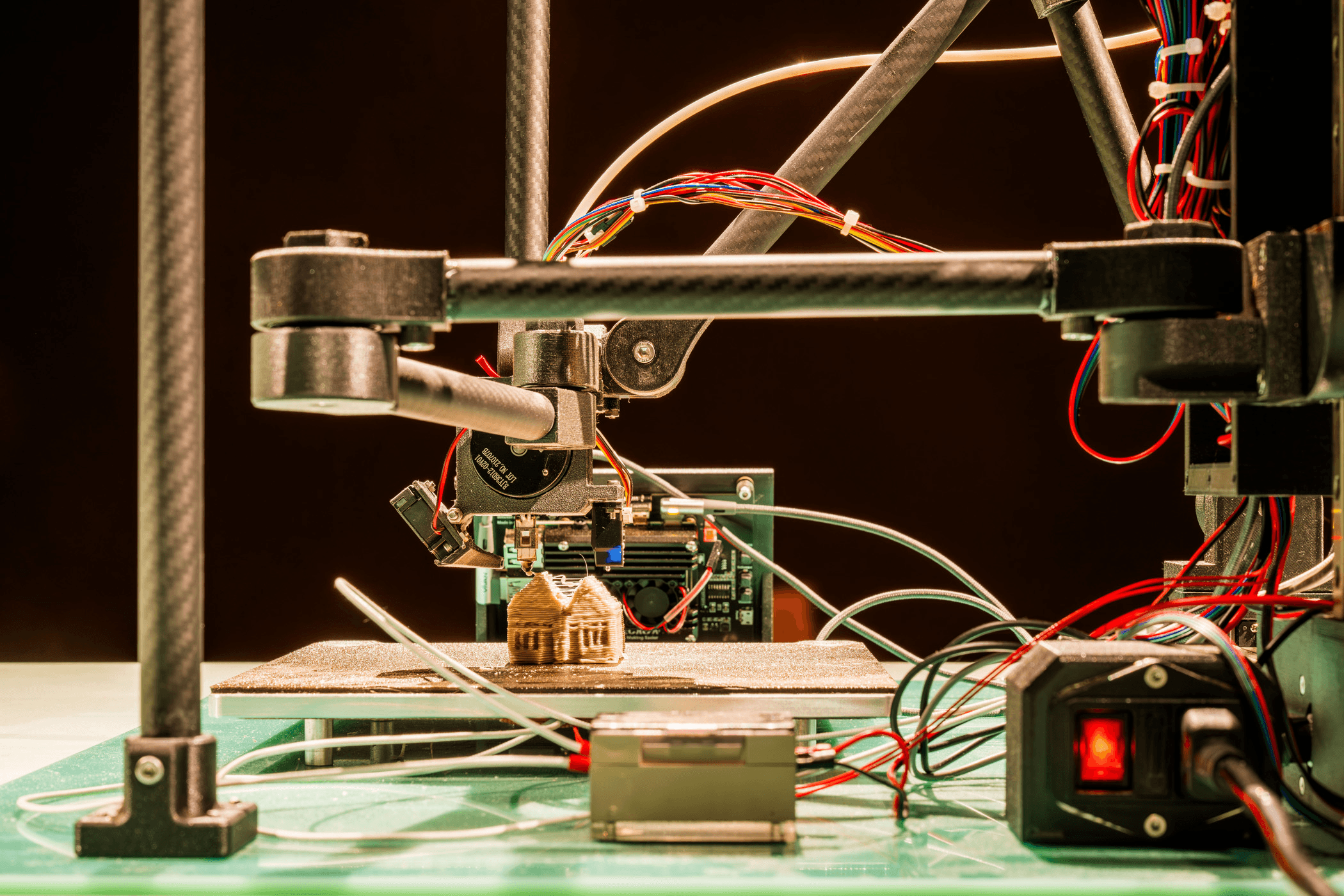
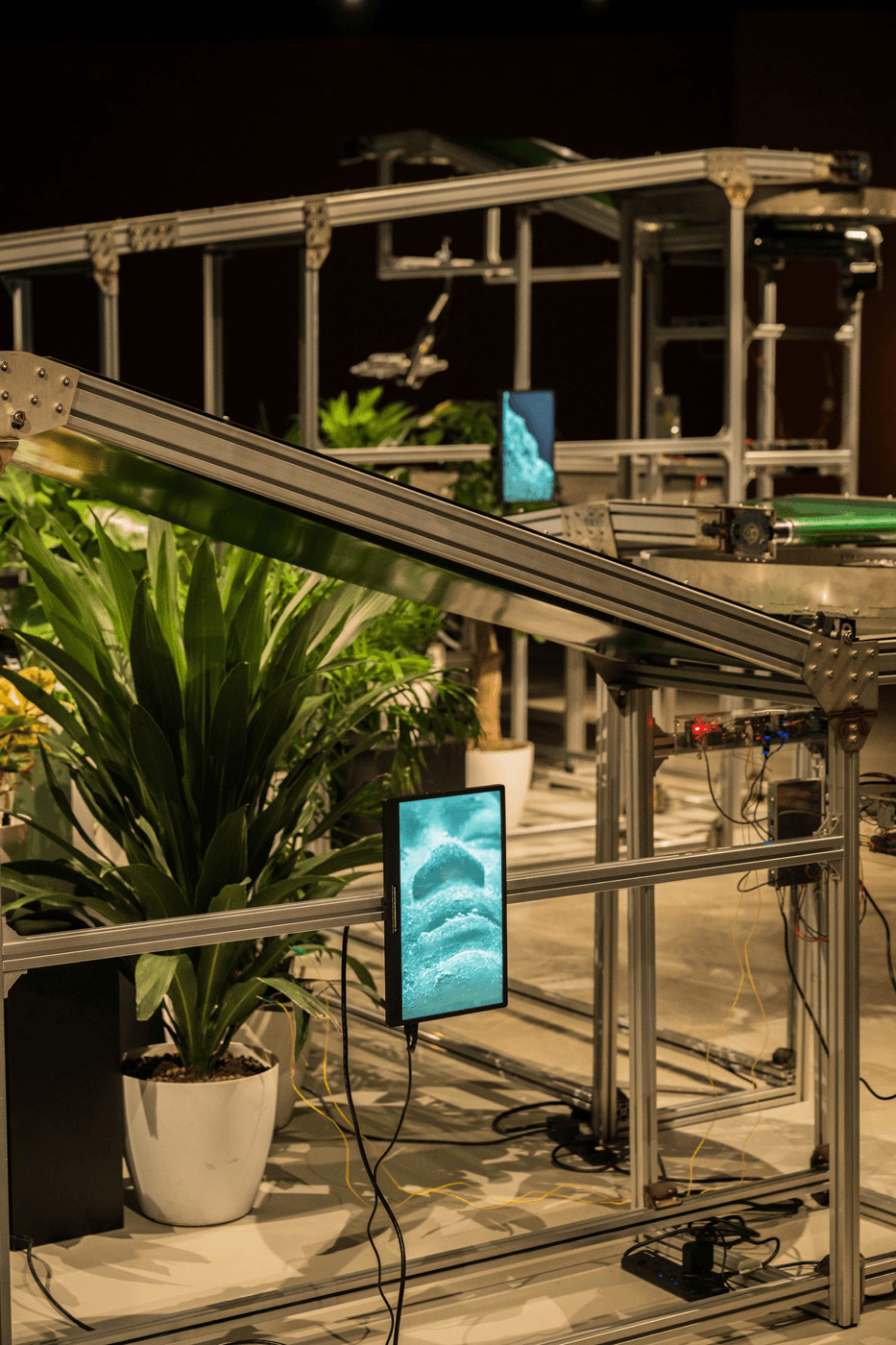
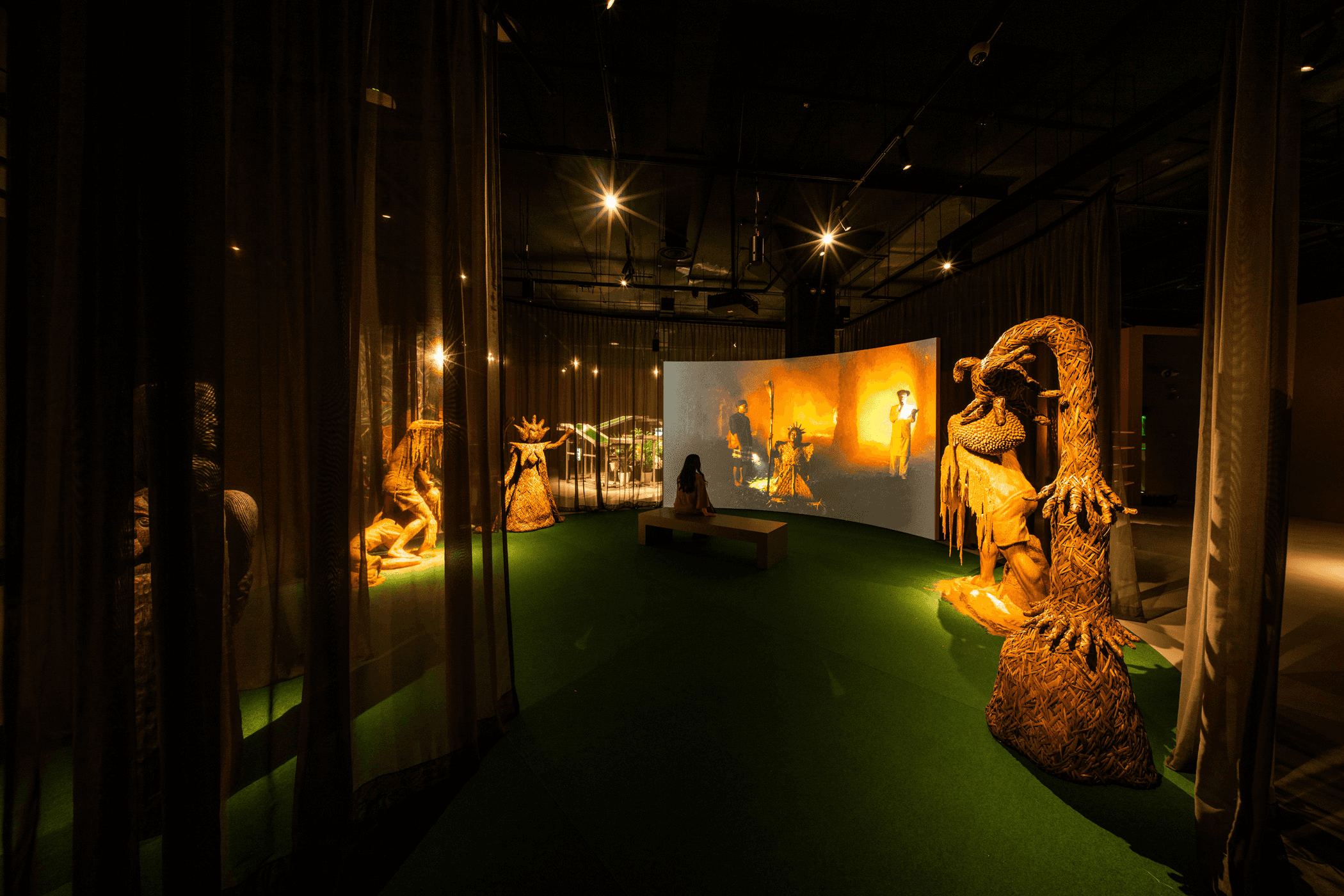
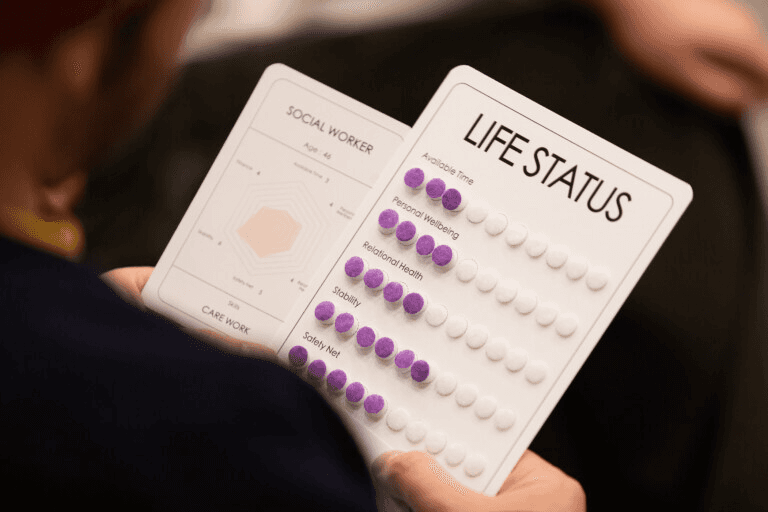
Since my practice is rooted in mechanical structures, I approached this idea physically. I built a loop inside the exhibition space where one installation connects to another. Movement and material circulate across the room. I wanted the audience to see the source and the effects within the same environment, as part of one operating structure.
In the beginning, my focus was on constructing the mechanism and making sure the circulation worked. But as the work developed, I started questioning what “endless” really means.
An endless harvest is not only about taking resources. It is about designing a system that demands continuous input and produces continuous output. The output does not return to regenerate the source. Nothing goes back to restore the earth. The loop continues, but it is not balanced.
That imbalance became central to the exhibition. The system runs smoothly, but it reflects a condition where extraction sustains itself without restoring what it takes. I want people to experience that condition directly, not just as a statement but as a working mechanism that surrounds them.
EN. When I began developing Nafasan Bumi, I was sitting with a persistent question: how does a system sustain itself even when its violence is widely known? The plantation is no longer hidden. Reports, certifications, sustainability frameworks all exist. Yet extraction continues. I was interested in that endurance. What allows it to adapt, to rebrand, to circulate through new moral vocabularies?
At the same time, I was thinking about proximity. My connection to these landscapes is not abstract. They are tied to family migration, to food, to everyday consumption. I asked myself how to position the work between the intimate and the structural. How can memory operate without becoming nostalgia? How can critique avoid becoming distant?
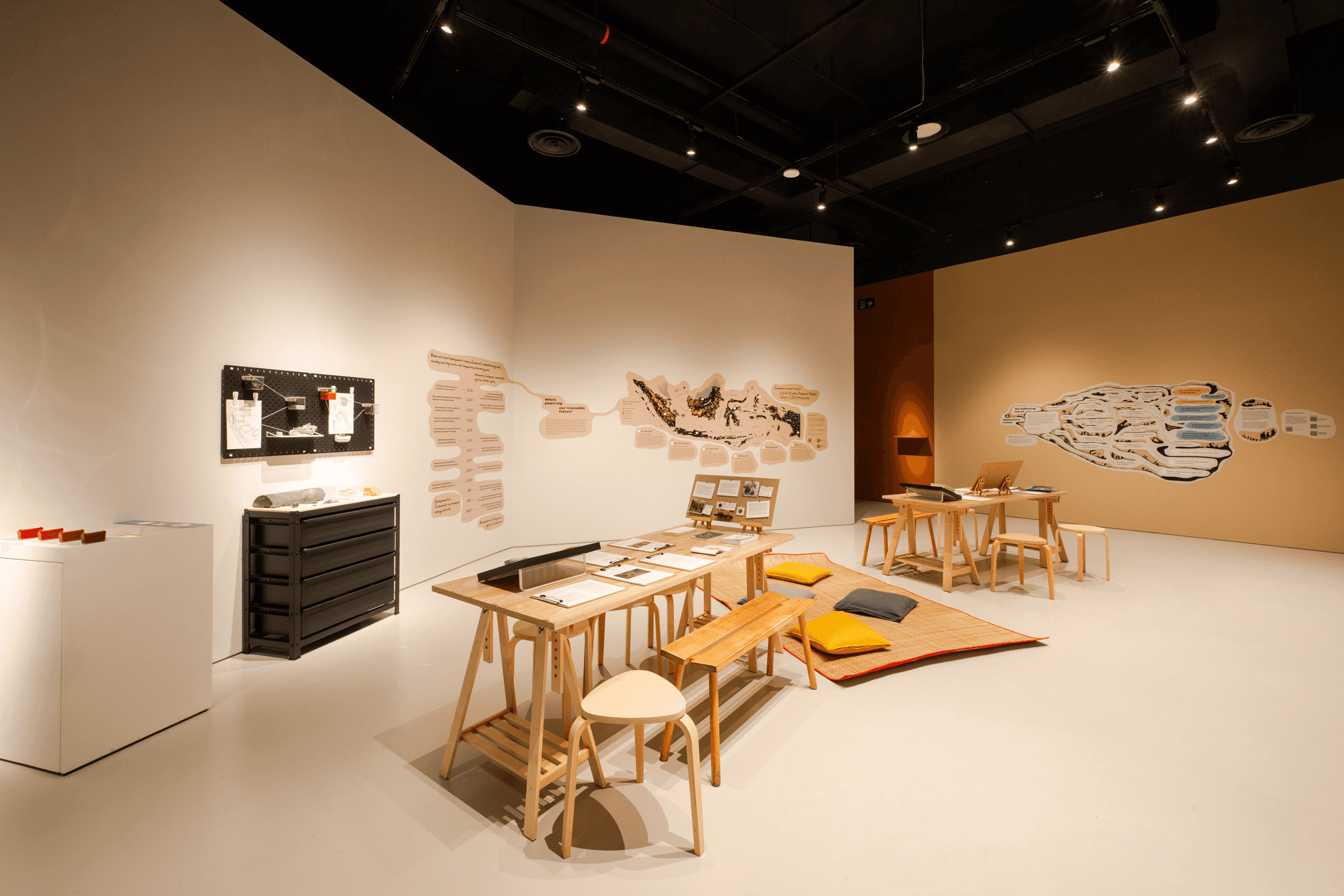
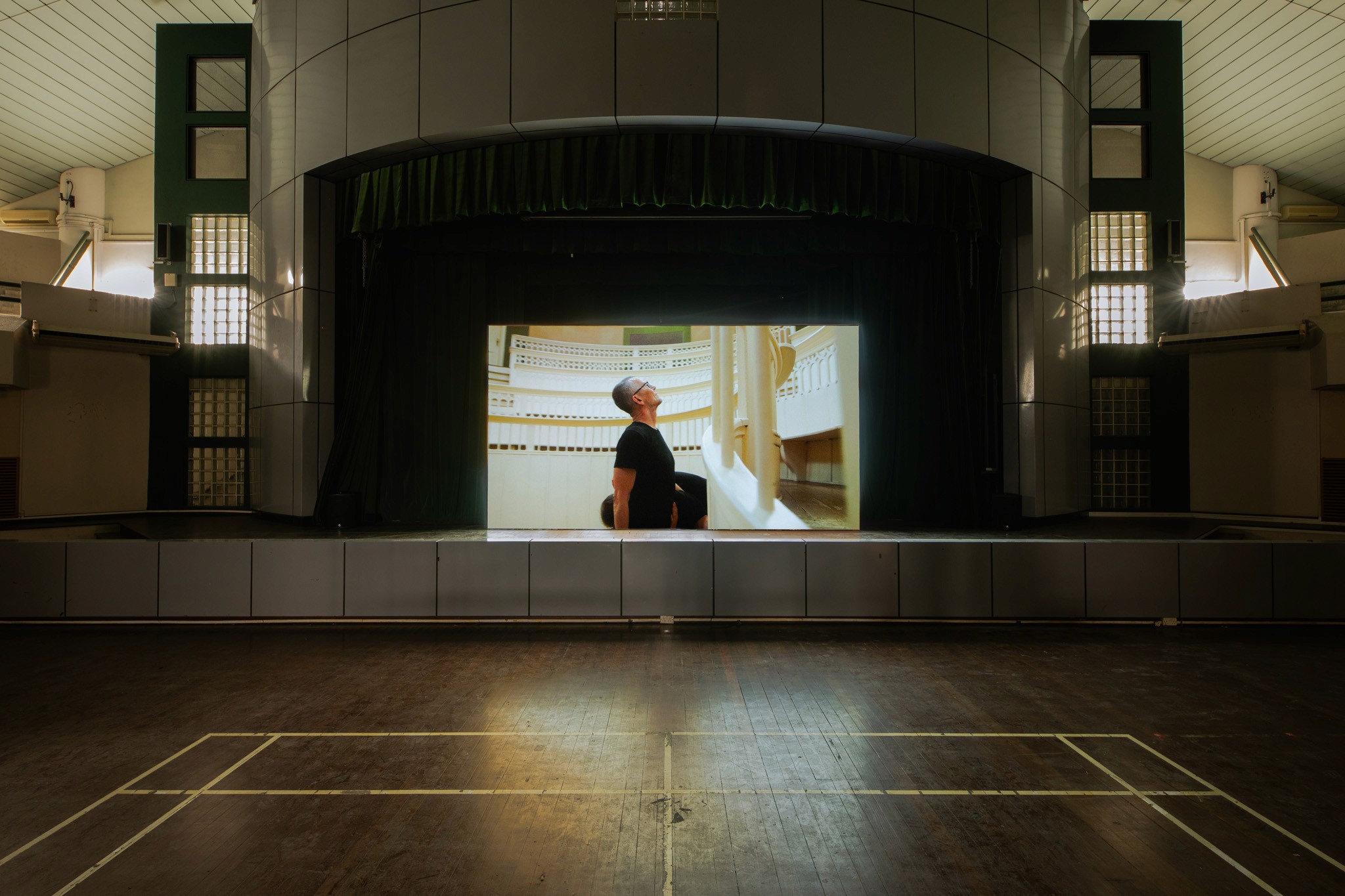
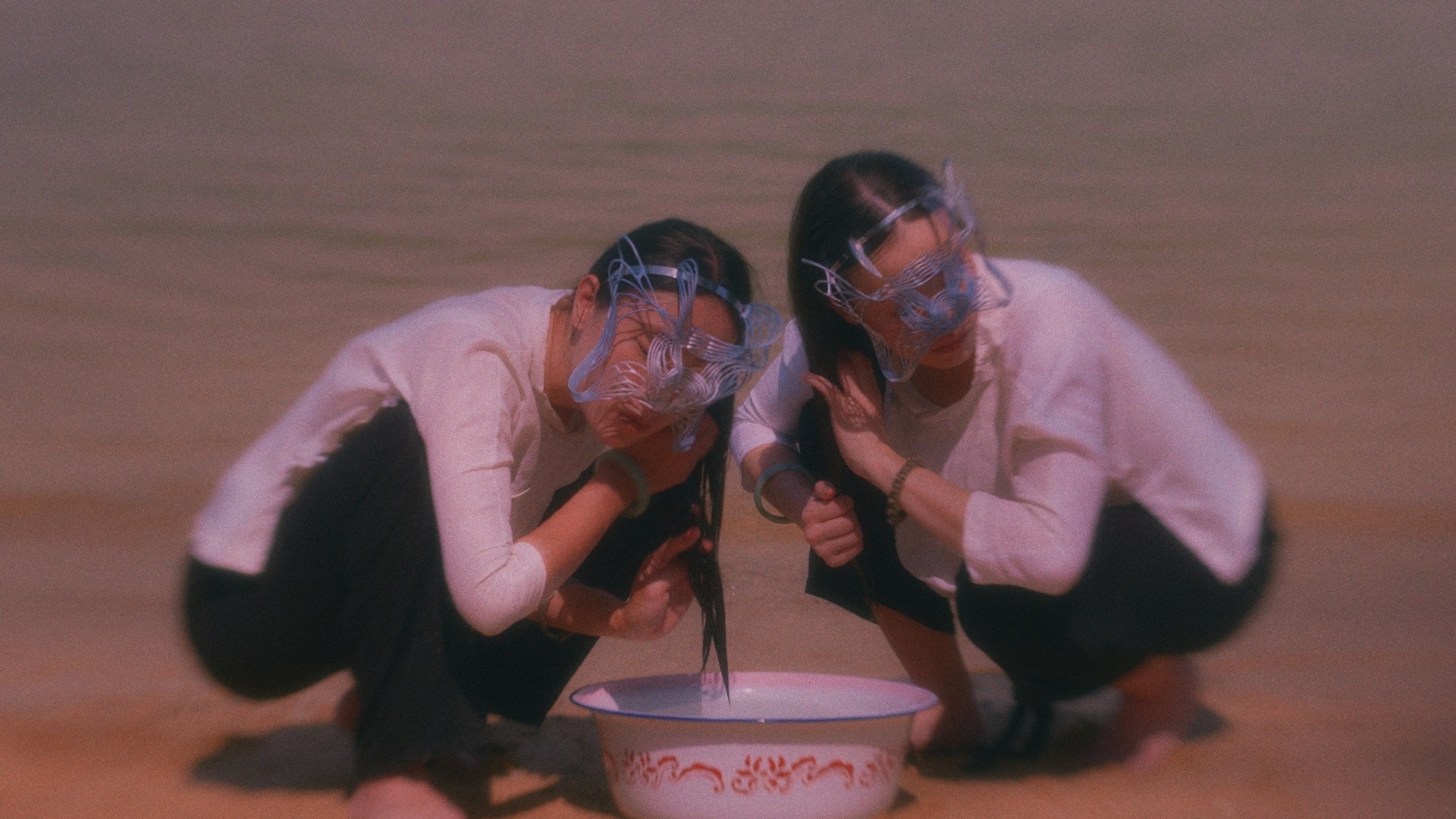
As the works evolved, my thinking shifted from exposure toward embodiment. Initially, I was focused on revealing infrastructures, from logistics, certification systems, into industrial language. But through the sculptures and the film, I became more attentive to fatigue, repetition, and breath. Extraction is not only economic; it is temporal and bodily. It produces exhaustion that accumulates across generations.
I also began to consider whether the plantation is simply a historical structure, or a flexible logic that continues to reorganize itself under the language of sustainability and transition. That realization made the project less about a single geography and more about a recurring pattern.
The exhibition ultimately holds both positions. It remains grounded in specific landscapes and histories, but it also reflects on a systemic cycle that exceeds them. My questions did not resolve; they became more layered. And perhaps that layering is the work itself.
CNTRFLD. Many works in the exhibition reflect on what happens after — the afterlives of materials, labour, and environmental impact. What kinds of reflections or feelings do you hope visitors carry with them after spending time in the exhibition?
BP. I’m not trying to leave people with a specific emotion like guilt or hope. What I want is awareness.
When you stand inside a working system, you start to notice duration. Repetition. Sound. Friction. You realize that nothing is isolated. Materials don’t just appear. Energy doesn’t come from nowhere. Output always comes from somewhere.
I hope that awareness stays with them after they leave the space, even in small ways. When they charge a device. When they see construction. When they hear about electric vehicles or the green transition. To understand that even solutions still have extraction behind them.
The exhibition is not about blaming the audience. It is about recognizing that we are all inside these systems. We benefit from them. We depend on them. The question is whether we are conscious of the chain of effects that continues beyond what we see.
EN. I do not expect visitors to leave with a clear conclusion. If anything, I hope they leave with a slight disturbance.
The works reflect on afterlives — of materials that continue circulating long after forests are cleared, of labour that disappears from view but persists in the body, of environmental damage that does not end when production stops. I hope visitors begin to sense that “after” is never truly after. It lingers in objects, in air, in habit.
Rather than producing instant provocation and moral lesson, I am interested in a slower realization. A recognition that everyday materials, such as wax, textile, food derivatives, are saturated with histories. That what feels distant is materially close. If there is a feeling I hope remains is our awareness that we all are not standing outside this system. We participate through consumption, mobility, investment, convenience. The system is not somewhere else; it runs through us
CNTRFLD. You both live and work in Indonesia while exhibiting internationally. How does being based where you are, influence your practice? What does it feel like to share this work in Singapore — so close, yet culturally distinct?
BP. Being based in Indonesia keeps my work grounded in lived conditions. The issues I am dealing with are visible and present. Extraction, pollution, infrastructure expansion, these are not distant topics.
Development here moves quickly, but regulation and long-term ecological planning do not always move at the same pace. That tension influences how I think about structure and sustainability in my work.
Showing the work in Singapore is interesting because geographically it is very close, but structurally it feels different. The infrastructure is more controlled and regulated. But economically and regionally, we are connected. Resources move across borders.
Presenting the work there highlights that connection. Even if extraction is not directly visible, the dependency is shared.
EN. Being based in Indonesia means that the questions I work with are not abstract research topics. They are part of everyday life. The plantation economy, food systems, informal labour, environmental degradation, all of those are not distant case studies. They shape the air, the price of goods, migration patterns, even family histories. Working from within that context creates a certain accountability. The work cannot romanticize or simplify what it is entangled with.
At the same time, exhibiting internationally introduces a shift in scale. The materials and histories I engage with are already global — palm oil, textiles, logistics, capital — but audiences encounter them from different proximities. Presenting the work in Singapore feels particularly layered. It is geographically close to Indonesia, yet economically and infrastructurally distinct. Singapore operates as a financial and logistical hub within the same regional networks that structure plantation economies.
Sharing this work there creates a different tension. The distance is not far enough to feel foreign, but not close enough to feel identical. That in-between space is important. It allows the work to resonate regionally, while also exposing how interconnected these systems are. The plantation is not confined to rural landscapes; it extends into ports, trade routes, investment flows, and urban consumption.
Showing the work in Singapore, therefore, does not feel like exporting a story from one place to another. It feels like revealing a shared structure — one that links our geographies, even if their surfaces appear different.