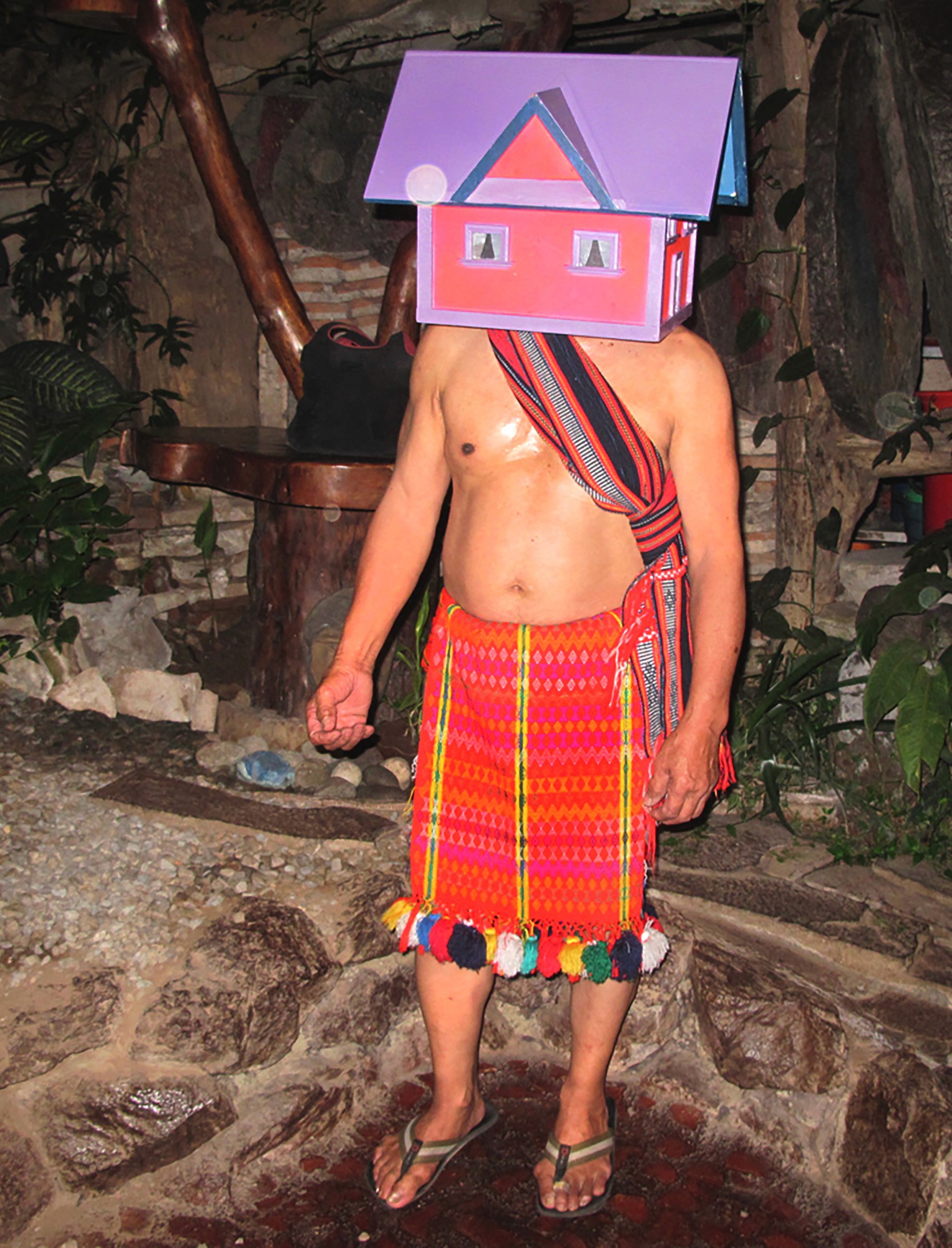
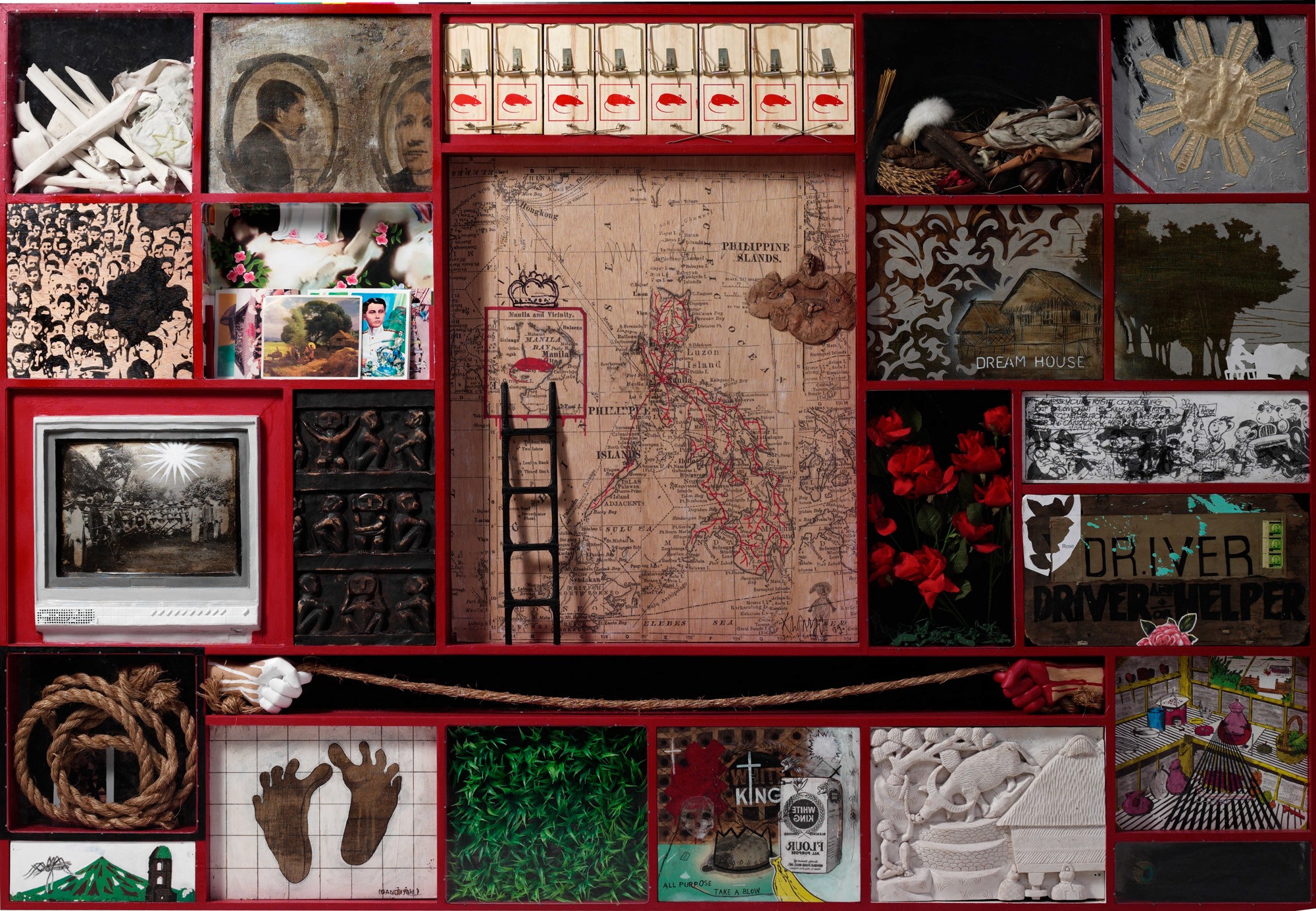
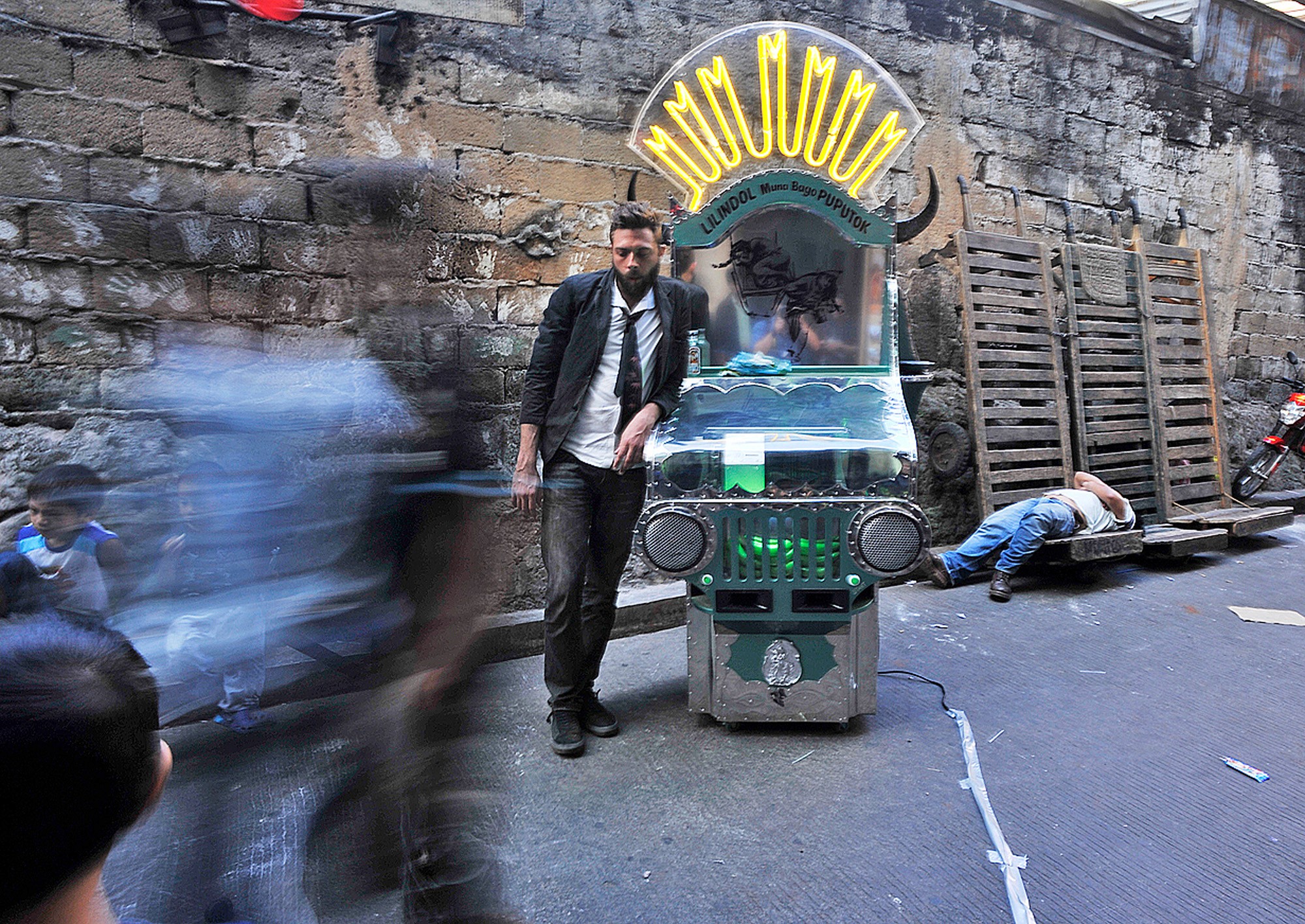
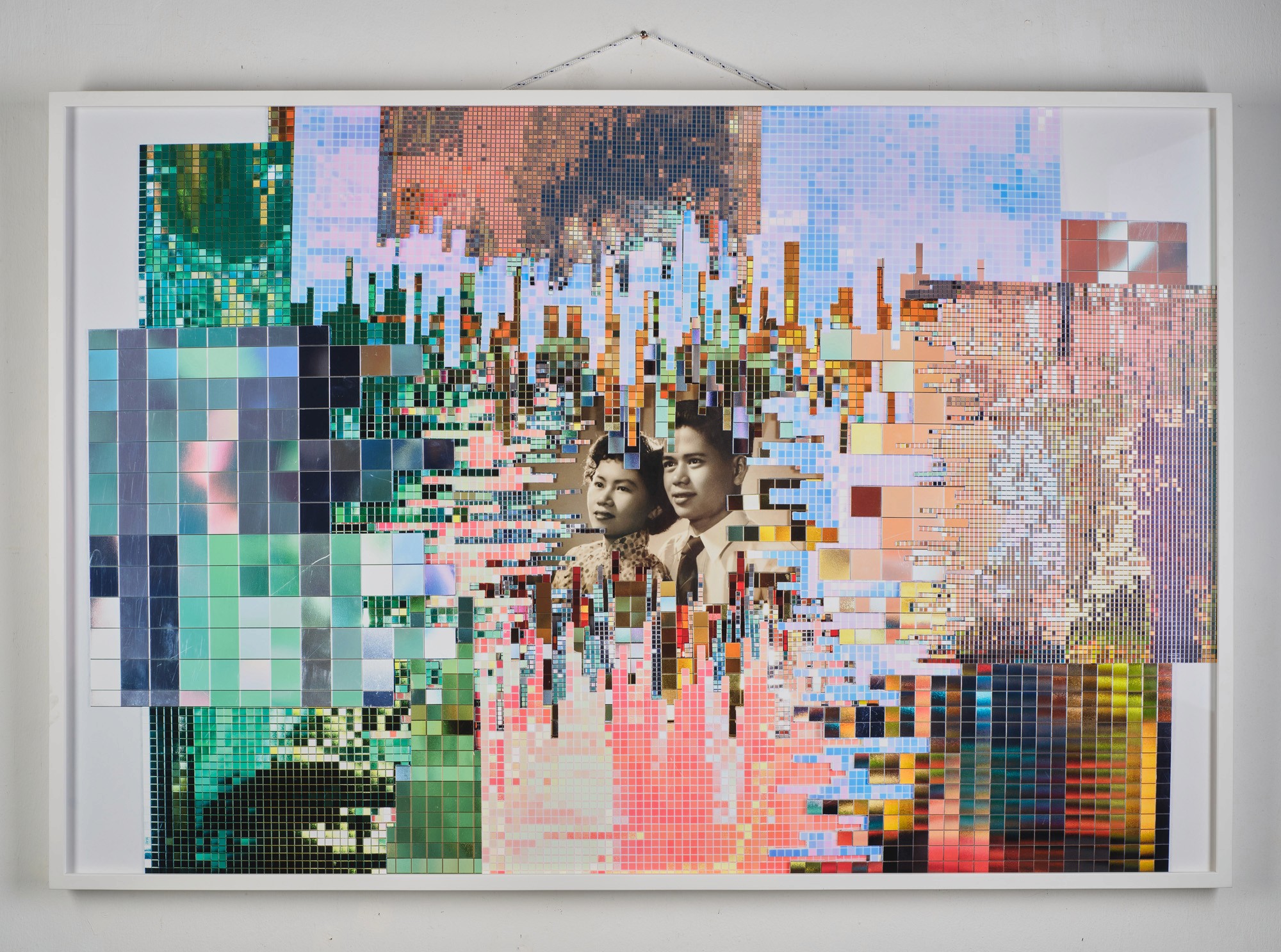
CNTRFLD. With your mother, Katrin de Guia, being German and your father Filipino, how does this dual heritage shape your understanding of identity and influence your artistic practice
KDG. There can be nothing more bipolar than these two opposing cultures: the lax mañana island culture of my father and the organized ways of my dear mother. It has been a lifelong saga from the smallest to the biggest things in life. Nevertheless, this union of theirs has managed to stay afloat for over 50 years! I have to give it to the both of them, hands down. Our cross cultural family dynamics works like some kind of check and balance. My artist turned academe mother’s interest was understanding the Filipino psyche and studied Filipino Psychology at the University of the Philippines under the guidance of Dr. Ver Enriquez and Dr. Alfredo Lagmay. She has written Kapwa: the Self in the Other or the Shared Self, a core value which is innate in many Filipinos. Her case studies were on a handful Filipino artists: my father of course Kidlat Tahimik, Rene Aquitania, Angel Velasco Shaw and Roberto Villanueva to name a few. She wanted to show that the way they approached their artmaking and process was capturing the very essence of what it means to be Filipino, very different from western modules. I, being exposed to all these great artists and culture bearers have definitely influenced my outlook directly or indirectly.
CNTRFLD. You've exhibited widely, from Palais de Tokyo to the Sharjah Biennale and QAGOMA. How have your experiences exhibiting internationally compared to showing in the Philippines? What support systems—or gaps—have you encountered in both contexts
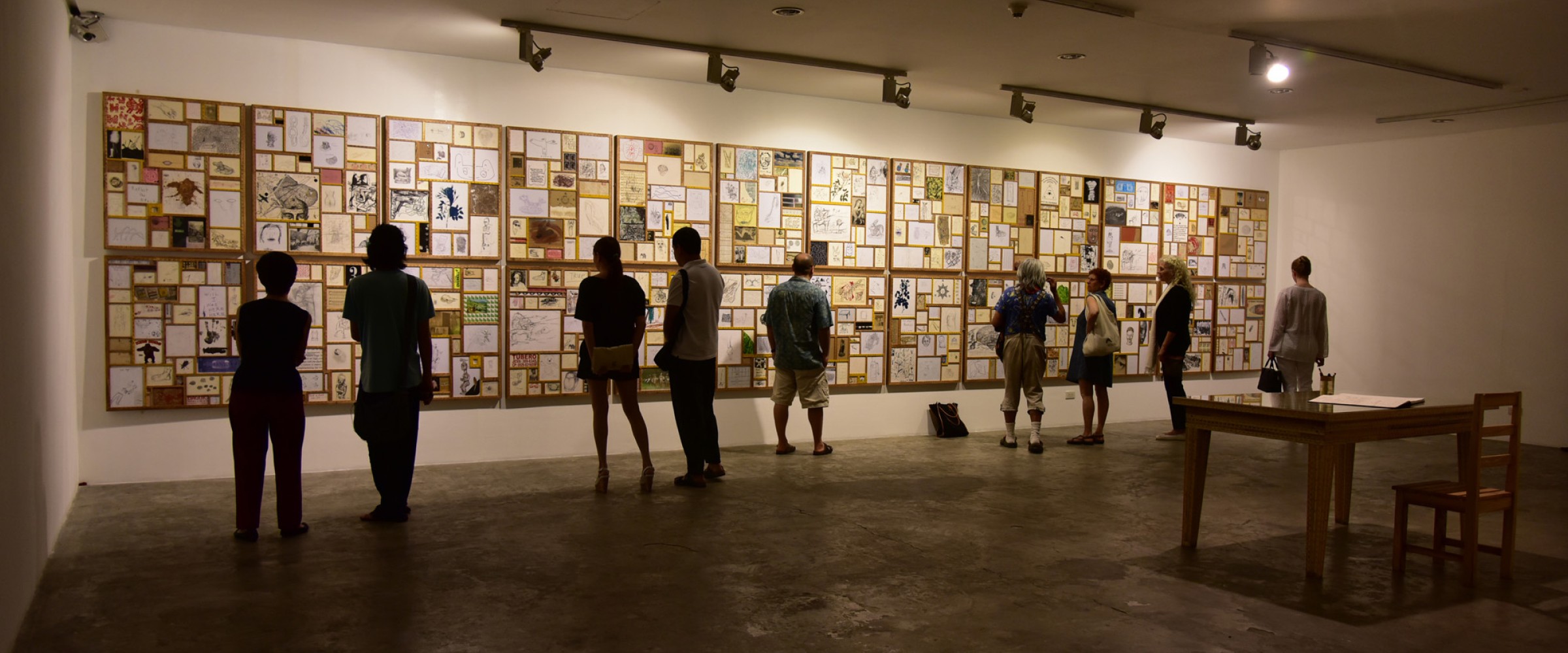
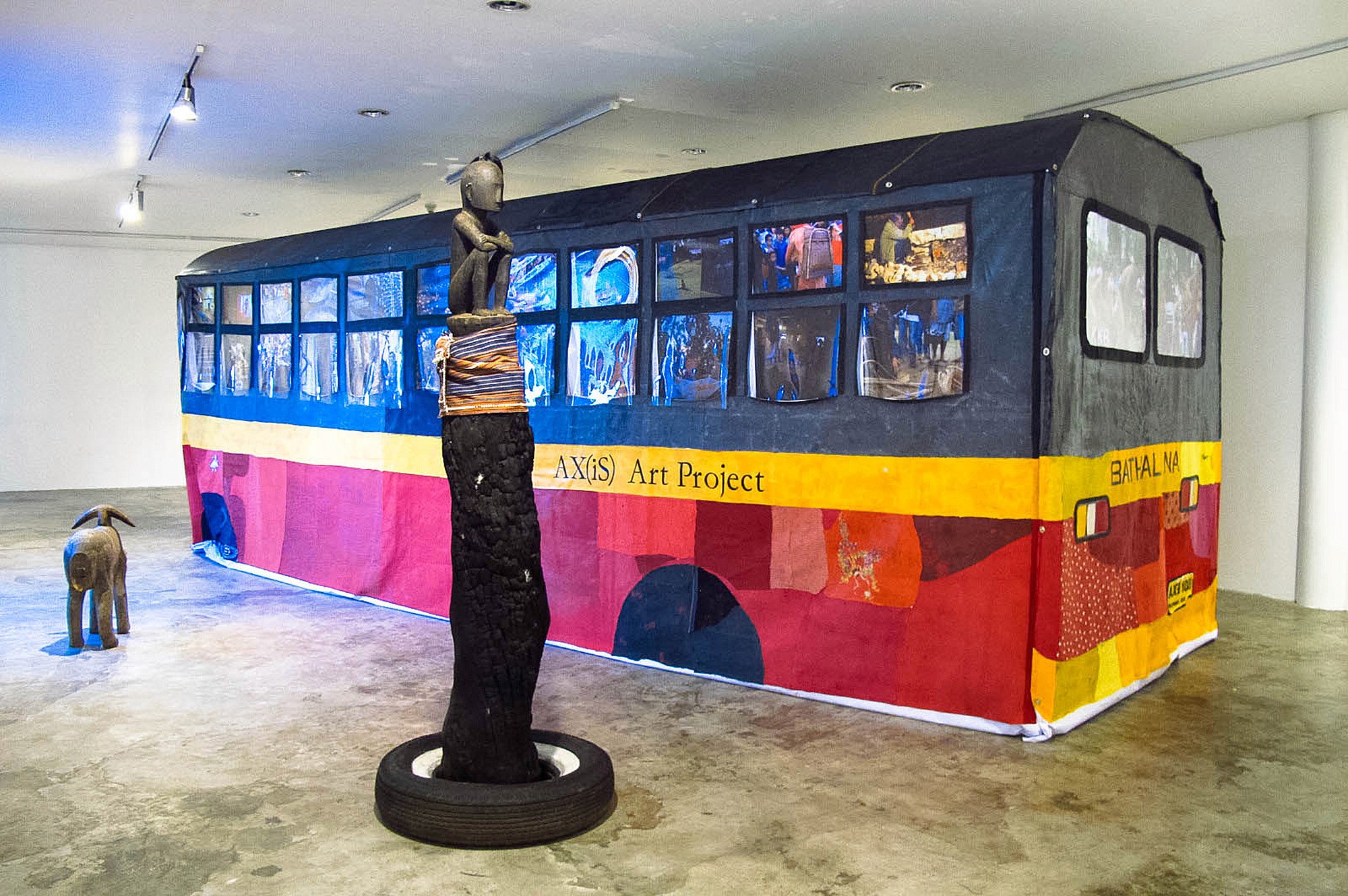
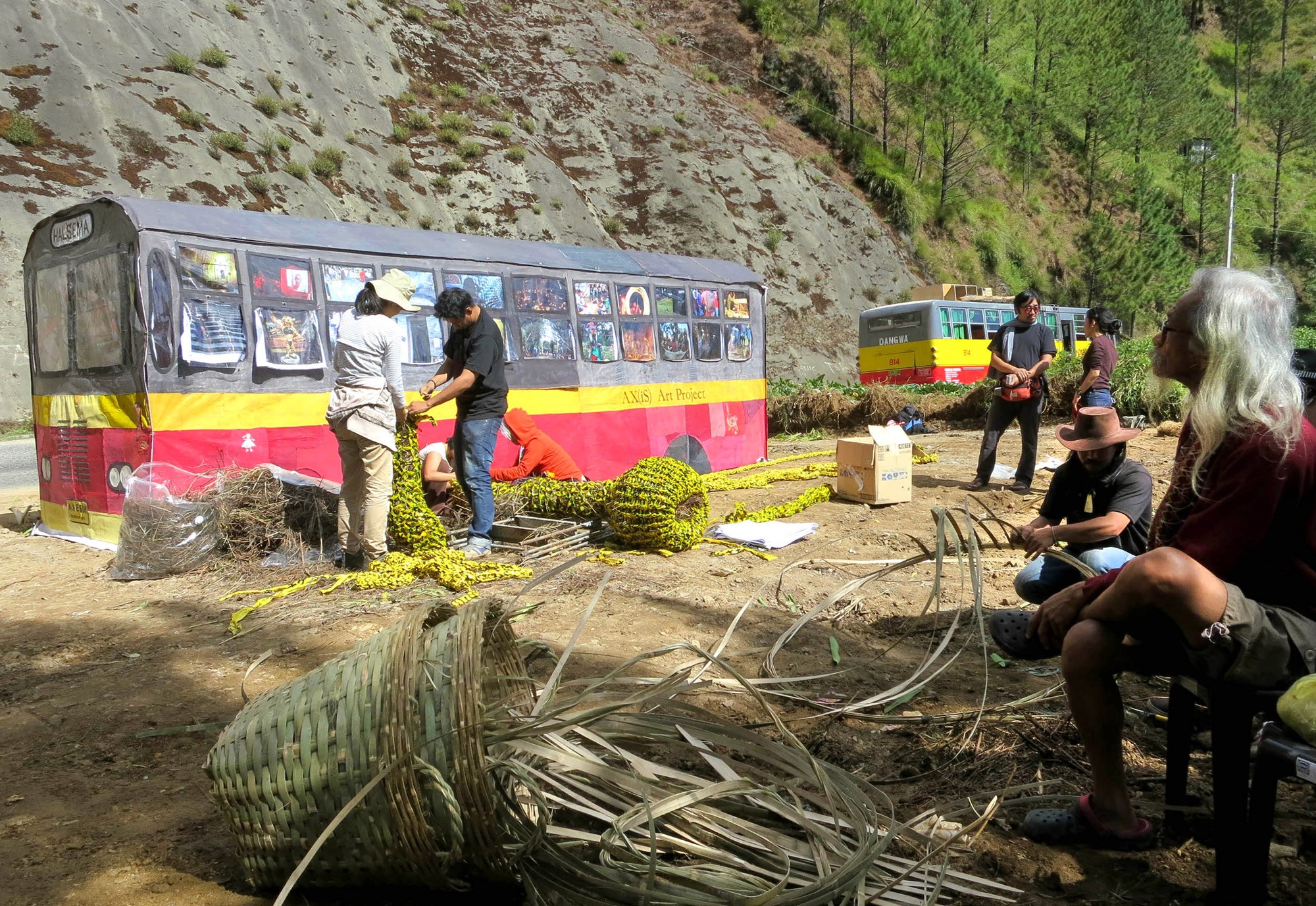
KDG. I consciously try to distribute my weight around the different cultural arenas. Primarily engaging myself in local issues, which may perhaps develop further into other projects that may lead to international platforms. Support system? I don’t really know of any support system on either side of the fence. Since I work from an independent platform, I have to be the one to personally make the connections to get my work out there, and all three exhibitions that you stated were my initiative. No gallery helped me make that network. I wish they had, and I wish I had a gallery to back me up, but it really hasn’t happened to me that way. That’s why years ago, I among others initiated AX(is) Art Project. It was a platform where a bilateral dialogue could happen, some form of engagement between the many facets and factions in the art world. I did it out of necessity since no government nor private entity had such an initiative. It was like everyone was in their own bubble. After several years of doing such projects, you dry up and you realize you can only do so much. Initiating, organizing and executing such projects eventually take its toll. Times change and things run its course, and you have adapt to new realities and find what’s appropriate. You’re not giving up on the cause but rather your following new currents and changing skin.
CNTRFLD. Projects like the AX(iS) Art Project and Markets of Resistance highlight your commitment to community-based, collaborative work. What have these experiences taught you about the power of collective cultural practice?
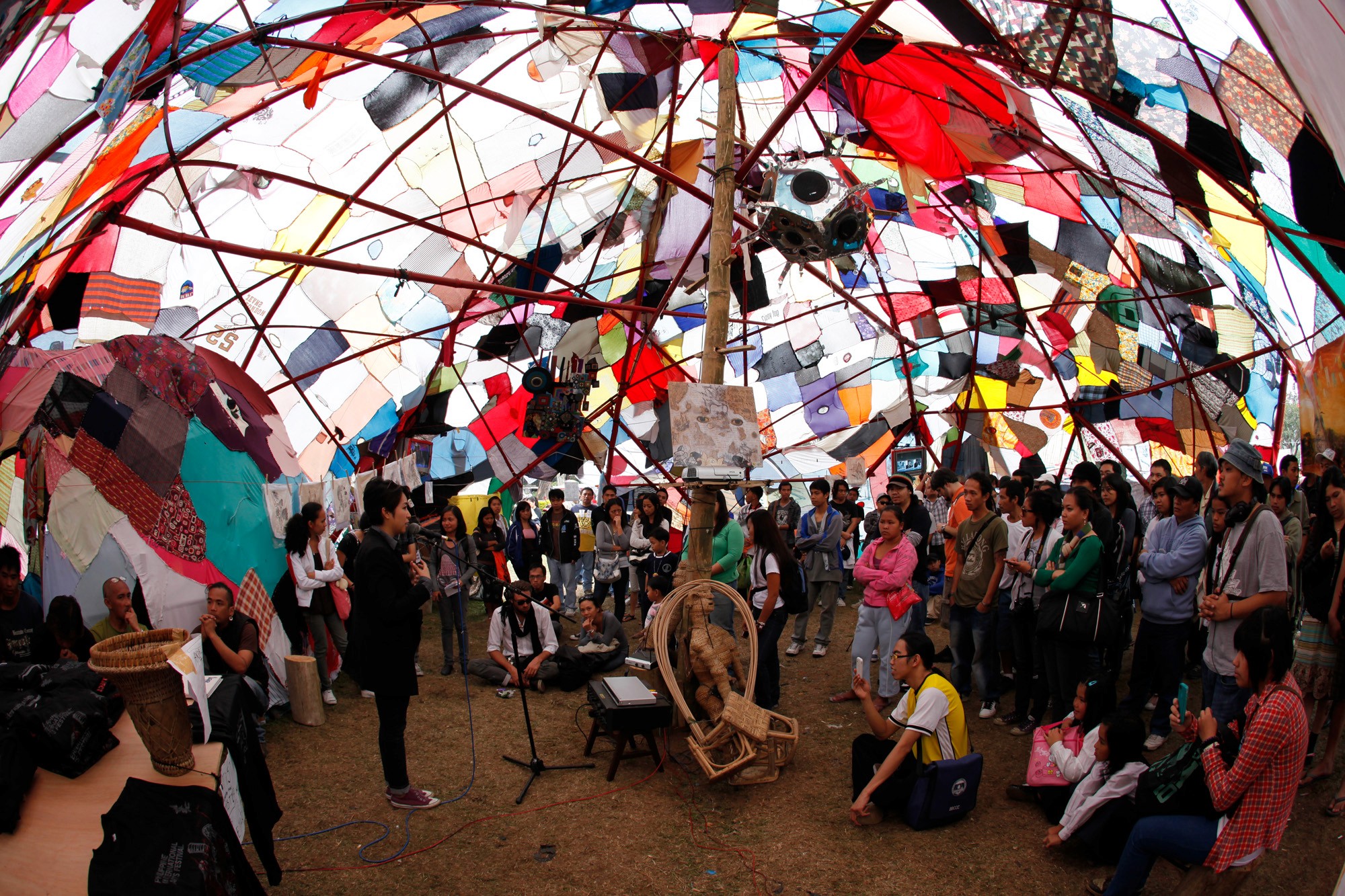
KDG. In the end, I think it is projects like these that make everything worthwhile. They may be the more difficult aspects of one’s duty... that of being an artist, organizer, funder, therapist and janitor, you have to be determined and have to wear many hats to pull such projects off. I still believe that the role of the artist in one’s community is vital. Growing up in Baguio, I witnessed the strength of the Baguio Arts Guild along with my parents, Santiago Bose, Rene Aquitania and Roberto Villanueva, Ben Cabrera, Tommy Hafalla and Willy Magtibay project a bright force onto the public arena, where they dug deep going past the art bubble and engaged themselves in community and organized art festivals. These were such eye openers that empowered many. The effects are still evident today, and you can say it is rather contagious.
CNTRFLD. Looking back over the past two decades, how would you describe the evolution of the contemporary art landscape in the Philippines? What has changed—and what do you feel still needs to shift?
KDG. Well a lot has definitely changed in the art scene not just in the Philippines but the world over. I think we are starting to feel the effects of commerce, the internet and AI come and influence our creative backbone directly or indirectly. It has become a norm and part of the equation in our day to day activities. I think this rapid influence on one’s creative process isn’t helping anyone. A new kind of instant homogenous artist army is on the rise. One that thinks and behaves in accordance to popular trends and opinions, like some sort of fashionable art commodity.
I think to counter that, artist collectives everywhere must create creative hubs and programs that promote and propagate local artist initiatives that reflect local flavors and it must go beyond the facade of the artworld and into the streets. Exchange programs would also be necessary to build up a network of alternative platforms that would encourage a healthier critical thinking. All this outside big institutions.
CNTRFLD. What are you currently working on, and are there any upcoming projects or exhibitions you’re particularly excited about?
KDG. I have a number of exhibitions lined up locally and abroad. Nevertheless I am not yet there. Presently I am working on a number of book projects. This started with a book that AX(is) Art Project produced some time back entitled Tiw-tiwong, An Uncyclopedia to Life, Art and Living in Baguio and the Cordilleras and Beyond. It works as an anti-textbook to understand our landscape through the eyes of the artist and the culture bearer. The idea of the book I think is a perfect prototype for other minority cultures and communities to adopt and copy, Its one last attempt to save what is salvageable from today’s fast homogenized world. It is a self-published book under Baguio Kunst Book Publishing. We hope to produce more books about local artists and their practice.
I am also in the middle of creating an art archive. Both my parents have a ton of material that have accumulated and with the passing of my brother Kidlat de Guia a few years ago, the burden of collating their life’s work falls on my lap. It’s a race against time before the Baguio mould gets to it. Alongside Nospace (an online platform that promoted local artists during the pandemic lockdown) and Ax(is) Art Project we continue to produce exhibitions, projects and film programs locally at the Victor Oteyza Community Art Space and Ili-Likha Artist Watering Hole and major exhibitions locally and internationally.
CNTRFLD. What advice would you offer to young or emerging Filipino artists—especially those based outside major cities or art centres—who are navigating questions of identity and practice today?
KDG. If you’re coming from a region away from the big city, your identity will naturally follow you like a ghost, from the way you talk, to what you eat or how you eat. All this may beinnate and second nature to you but taken out of your comfort zone and put in a different environment, you will come to see how different you are. These unique traits can be the basis of one’s lifelong journey as an artist.
Up here in Baguio we have some of the most skilled woodcarvers that come from Ifugao, a region and people renowned for the mastery of water irrigation, the rice terraces and yes,woodcarving. This skill/art has been passed down from generation to generation. There is an Ifugao saying that the baby learns how to carve in the mother’s womb. Many of these great Ifugao carvers migrated to Baguio after the war in the 1950s. Slowly they transformed their traditional indigenous motives to easy commercial souvenir products. A whole carving industry naturally gravitated towards supplying the tourist market. I guess you can say that the Ifugao art of woodcarving and their culture did not die and managed to adapt to the times but 90 percent ofwhat is produced is kitsch.
It would be great if one is able to harness such amazing talent and gradually encourage carvers to produce one-of-a-kind sculptures and works of art. But things like these involve a lot of factors and can’t be rushed. A gradual progression has to develop naturally… I guess like culture. Belonging to a cultural minority is a tricky one that could work both ways, you somehow have to be rooted to your identity but at the same time be open to what’s out there allowing your understanding and disposition to evolve. After all, culture is a living species and not a museum artifact.