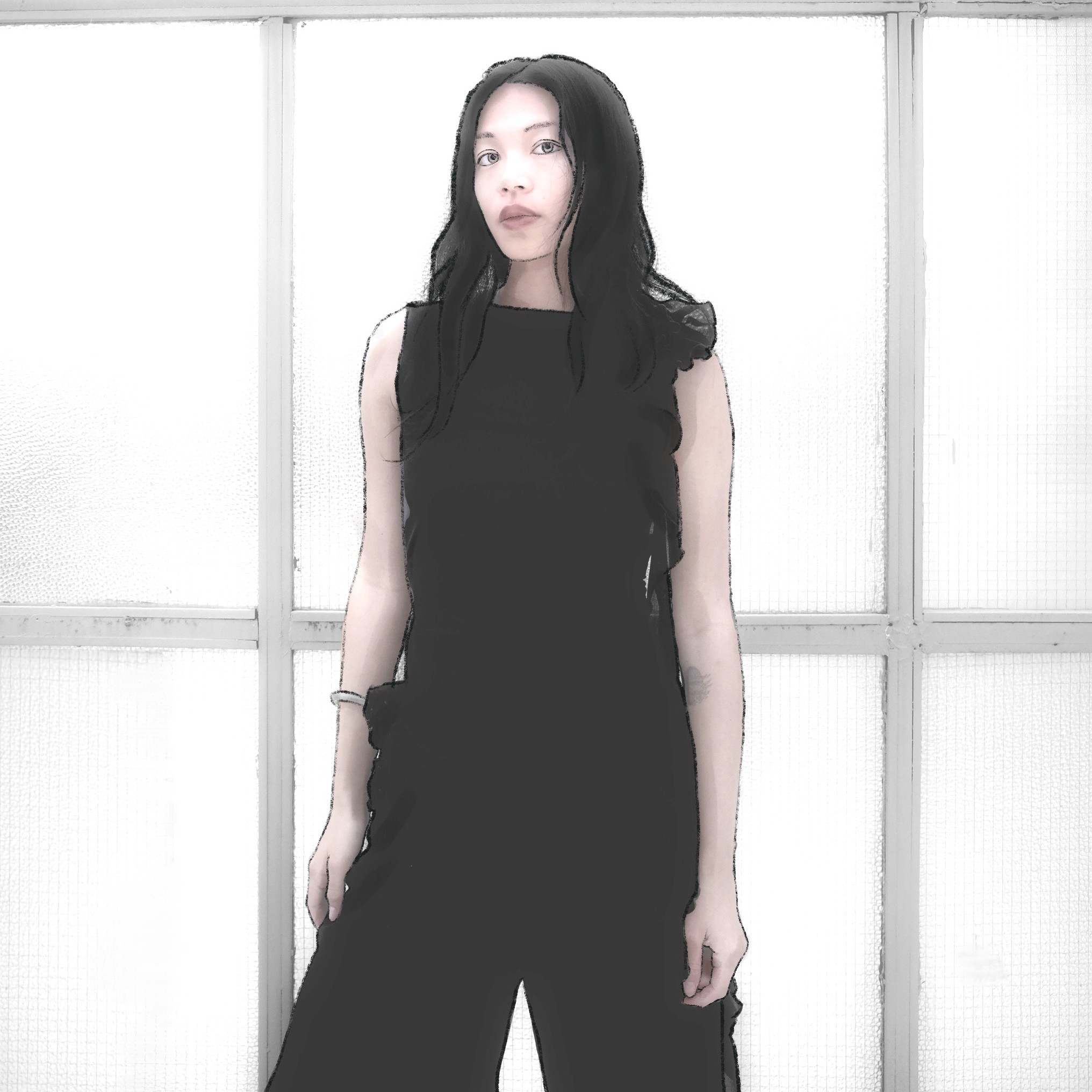
"To me, diaspora means being a free-wheeling entity that moves across spatial and psychic terrains. It’s to be untethered, strange, traversing, lost, and maybe even disloyal to cultural baggage… there’ll always be subparts of the self that desire to interface or merge into another space and time."—Elizabeth Gabrielle Lee
Origins & Early Sensibilities
CNTRFLD. You’ve described growing up in Singapore among wet markets, mangroves, jade counters, aquarium shops and those quietly revealing back alleys. Looking back now, how do you feel your childhood environment—both its intimacy and its tensions—shaped the sensitivities that guide your practice today?
EGL. Over time I’ve (mostly) subconsciously cultivated a sixth sense. Or perhaps it’s an instinct that’s driven by a hunger, a restlessness to gravitate toward the back alleys and the liminal spaces. These sites are ones that seem desolate and mundane but are incredibly potent with immanence. Coming into form as a resident in an environment that operates on a fear of entropy, where it is terraformed, hacked, manicured, and regularly un-heaved, inadvertently immerses you into a container of loss. Since it becomes commonplace for these spaces to never truly remain as they are, there’s a certain degree of anticipation of when they would meet their finality. It’s like living in a terrarium that has a countdown timer displayed on the glass walls, and you’re in constant exposure to when the expiration date comes up and ravishes it all.
CNTRFLD. You’ve spoken before about feeling your heritage both present and rejected in Singapore’s very Western-facing cultural landscape. How did that sense of cultural dissonance shape your early ideas about identity, and do you see those threads resurfacing in the way you build images or tell stories now?
EGL. Alienation is a recurring node within my practice. This was, of course, operating on a subliminal level during the earlier years. I have experienced it and approach it today as more of an ontological flattening, where the layers have been ultimately smoothened to the degree that it became imperceptible. Instead of various cultures butting heads at oppositional dichotomies (East v West, mind v body, master v slave, etc) the dissonance was stamped out and homogenised at the outset, which made there nothing for me to even contend with at the beginning. Of course, as the implicitness of this dissonance grew more explicit over time, the Xeno, the other, and the strange became embedded much more presently into my practice. I see these narrative devices functioning as agents of dissonance, propagating productive friction to open up sites of rupture — which feels apt particularly during this time of what feels to be a rapture.
Identity, Diaspora & Movement
CNTRFLD. You split your life between London and Singapore. On a personal level, what does “diaspora” feel like for you—emotionally, intuitively, even psychically?
EGL. It means to be a freewheeling entity that moves across spatial and psychic terrains. It’s to be untethered, strange, traversal, lost and maybe even disloyal to cultural baggage. There’s a phenomenon called quantum entanglement that has observed how particles that have once bonded, and then spilt apart, will continue to reflect the state of the other, despite the difference. It’s been called a spooky action at a distance by Einstein. What was inflicted on one particle would impact the state of the other. It is innate to be made up of fractured selves, and there’ll always be subparts of the self — diasporic or not — that will subconsciously or consciously desire to move, interface or merge into another space and time.
CNTRFLD. Having lived and worked across multiple cities and artistic ecosystems, what similarities or contrasts have you noticed in the support structures available to artists? How have these differences shaped your own path and priorities?
EGL. The indexing of identity-centric practices and the doubling down of representation. These structures tend to resonate positively toward a universality that transcends languages and speaks transversally. At times, this dis-affords the zany and subterranean that esoteric practices embody, which in my opinion, is an oversight. The creative ecosystem — across cities or cultures — also values more implicit representations which has something I’ve struggled a little bit with, especially with the tendency to veer toward the clandestine and arcane. These points of contention and the pressure to produce work that adheres to a certain pantheon, subculture and the aesthetic sensibilities of the city actually moved me away from producing work that would identify to specific camps. Learning to unbind myself to the ideological and semiotic vocabularies is a tension I’ve come up against when it comes to receiving support, because most of these expect you to operate out from a specific canon, or a school. Perhaps the challenge for us here is to learn how to crystallise these subtleties into something that can be understood across different gradients and thresholds.
CNTRFLD. London has become your main base these past years. What keeps you rooted there as a place to think, make, and teach—and what aspects of Singapore do you find yourself instinctively carrying into your life in London?
EGL. I’m now split between Singapore, Athens and London. I teach in London and spend my other time in Athens, with some Singapore in between. London as a city is challenging on many fronts, and many, as most residents in metropoli do, have a love-disdain relationship with it. I’m no different. But what keeps me there is the anonymity and its vastness, but also the presence that I have been fortunate to carve in my relationships. The city has a porousness to it that attracts the best and worst of transience.
Practice, Research & The Singapore Biennale 2025
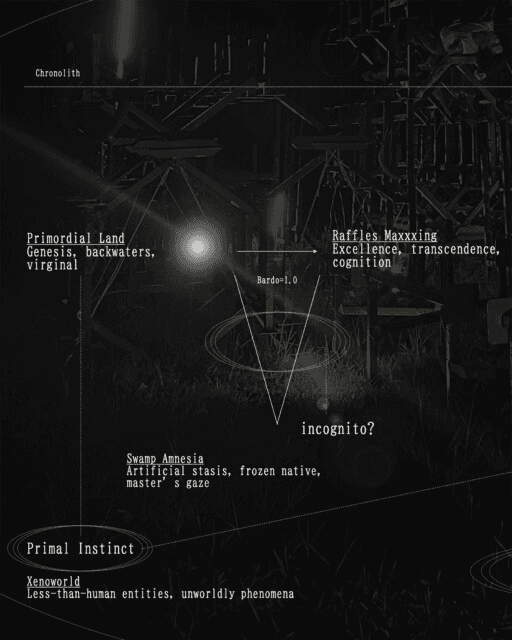
CNTRFLD. Your work often probes excess, desire, unseen infrastructures, and the neo-gothic—these thresholds where the visible and invisible rub against each other. How do these interests come together in TOTAL-PLEASURE-SUITE, where performers surrender agency to objects, environments, and the non-human?
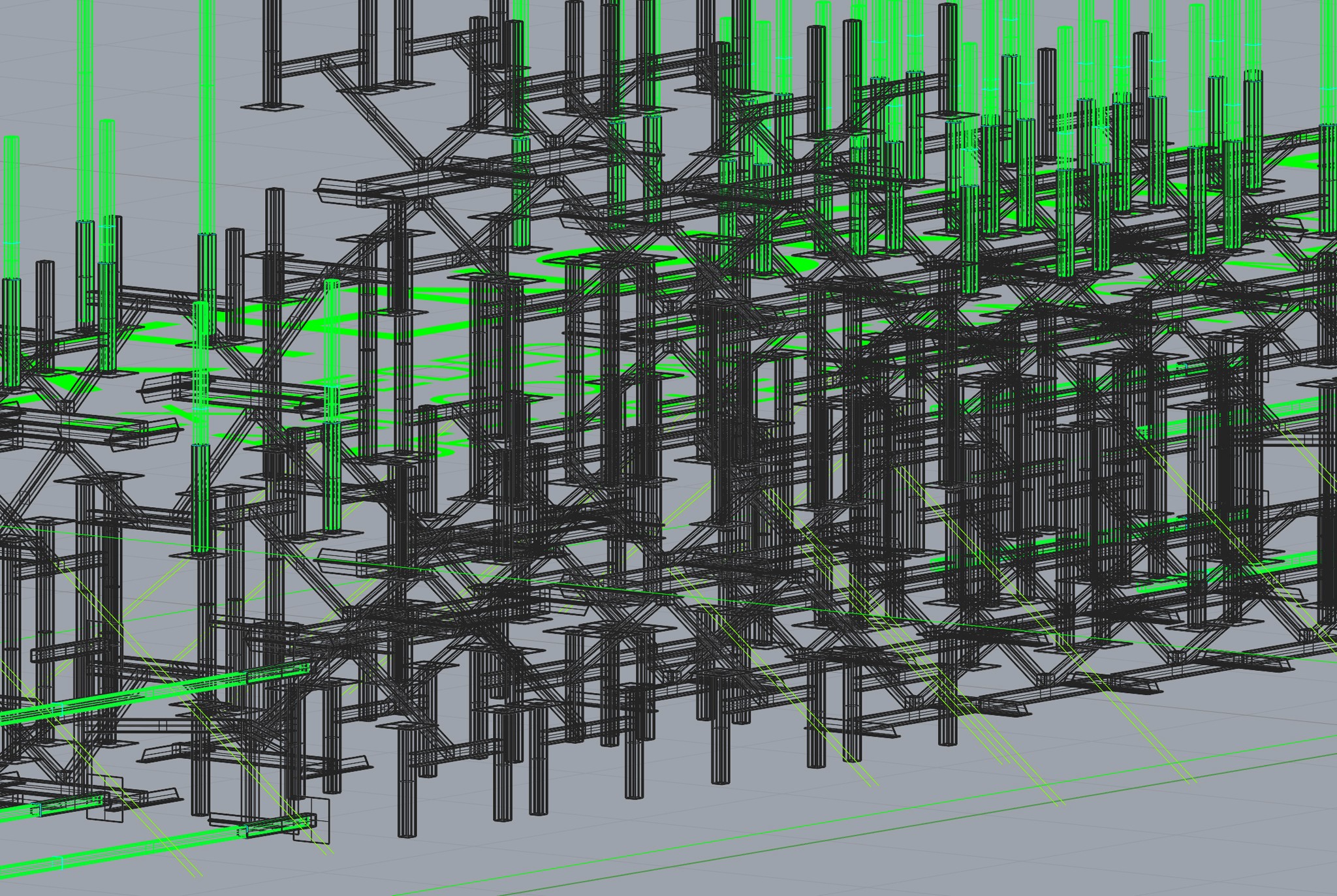
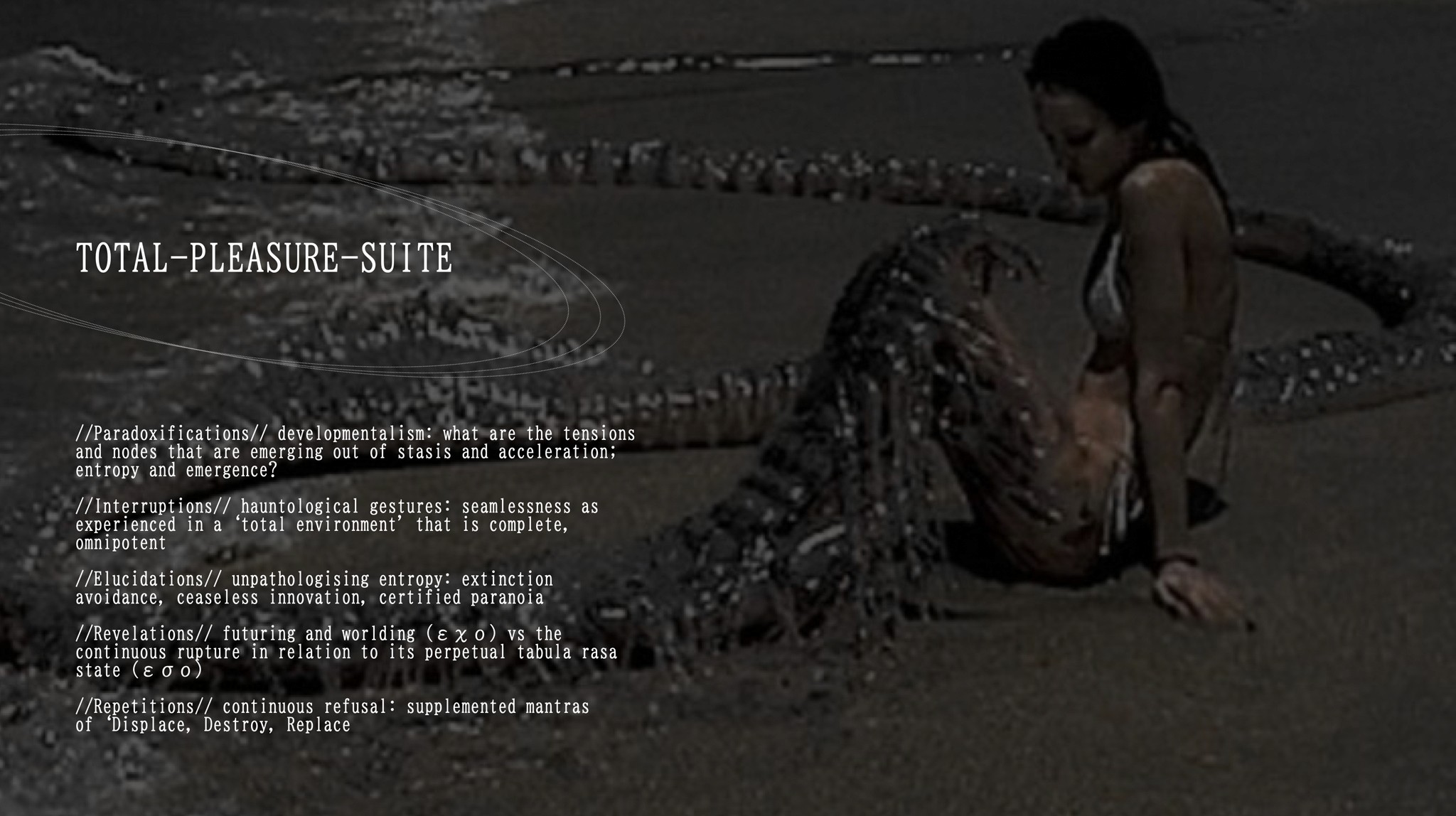
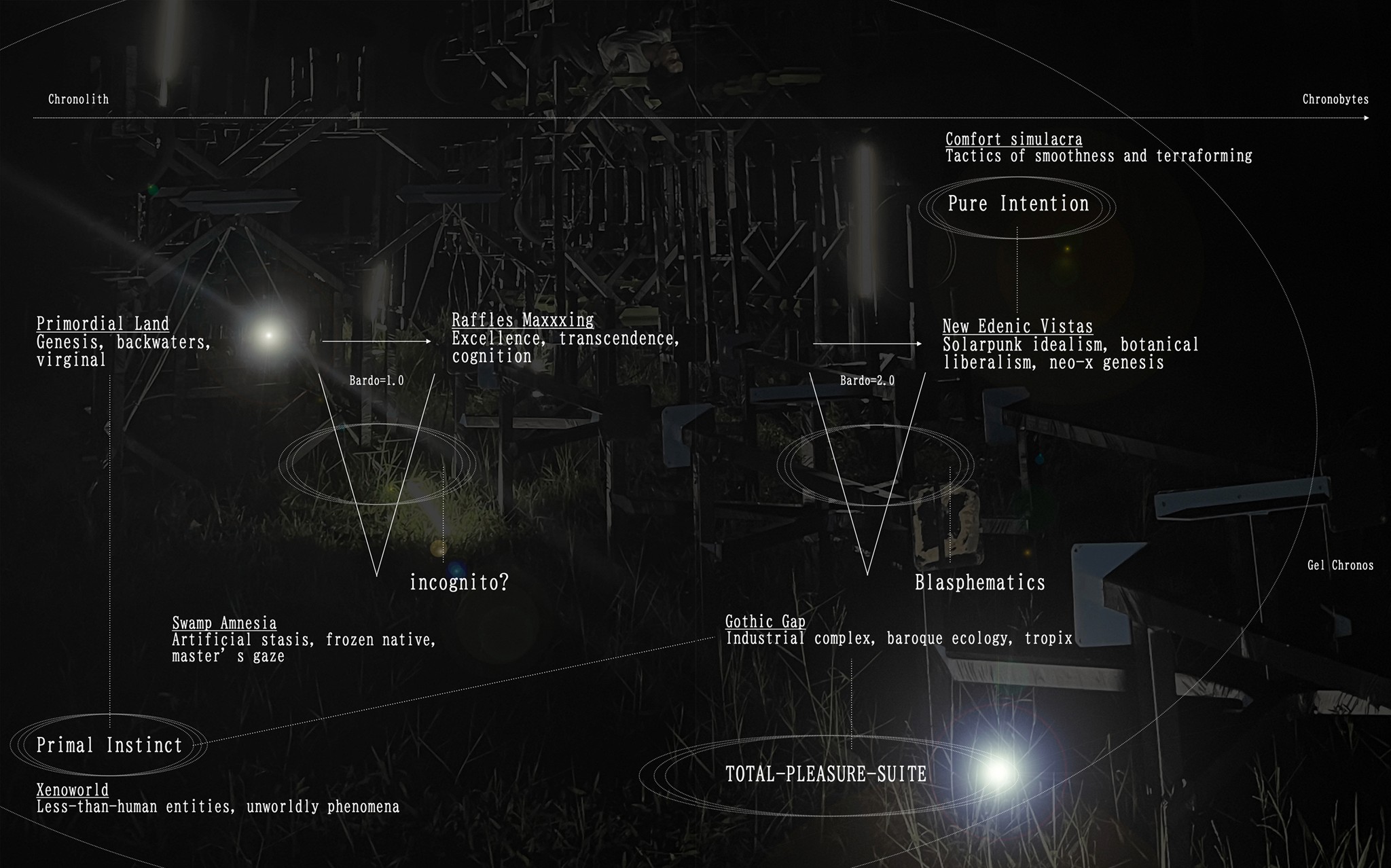
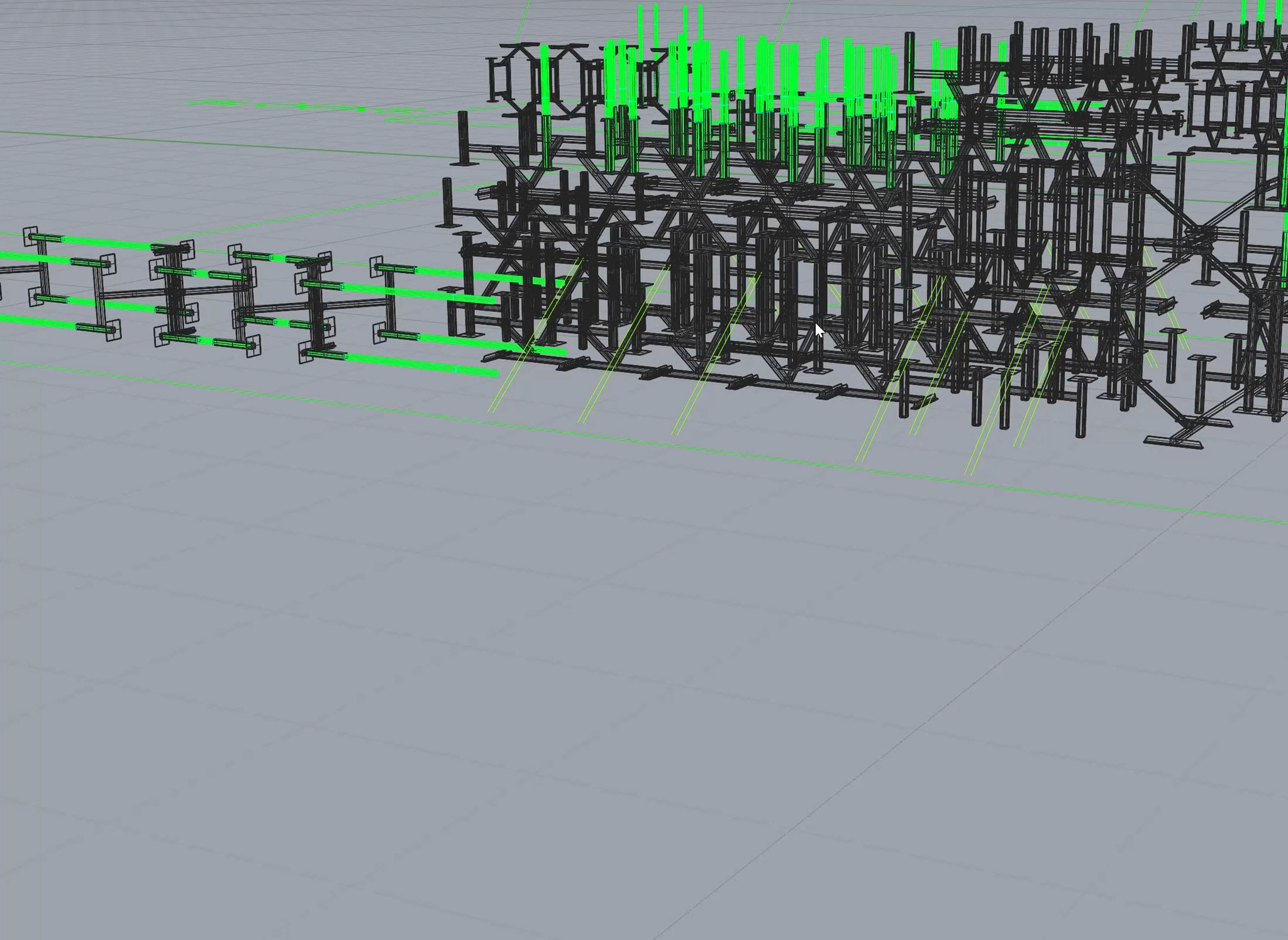
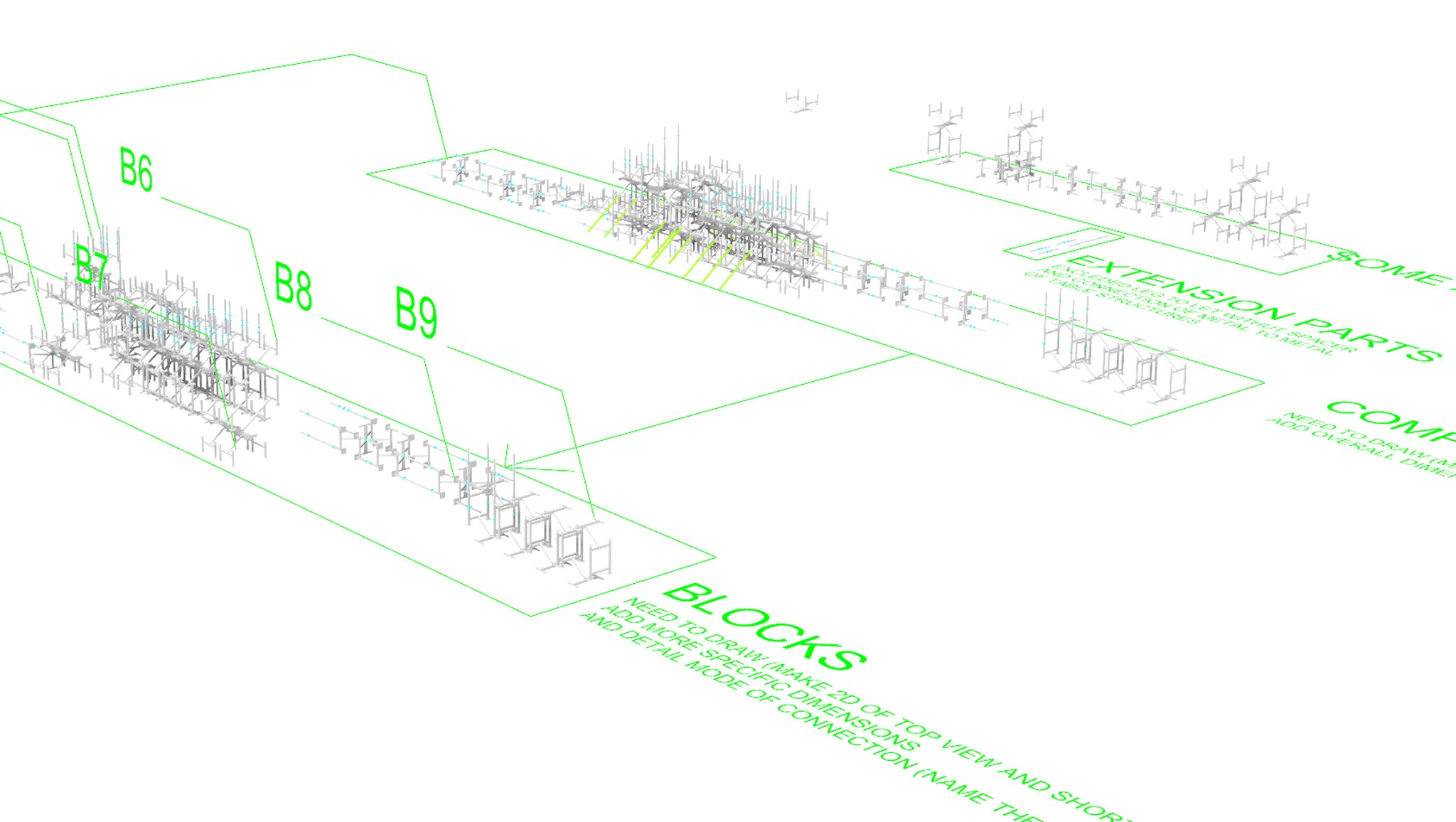
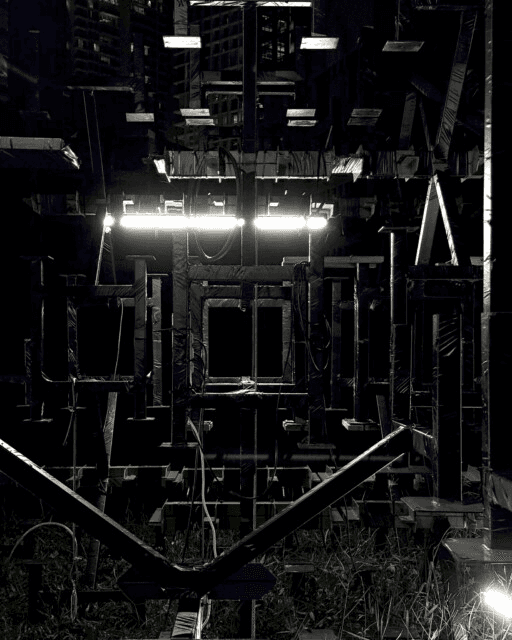
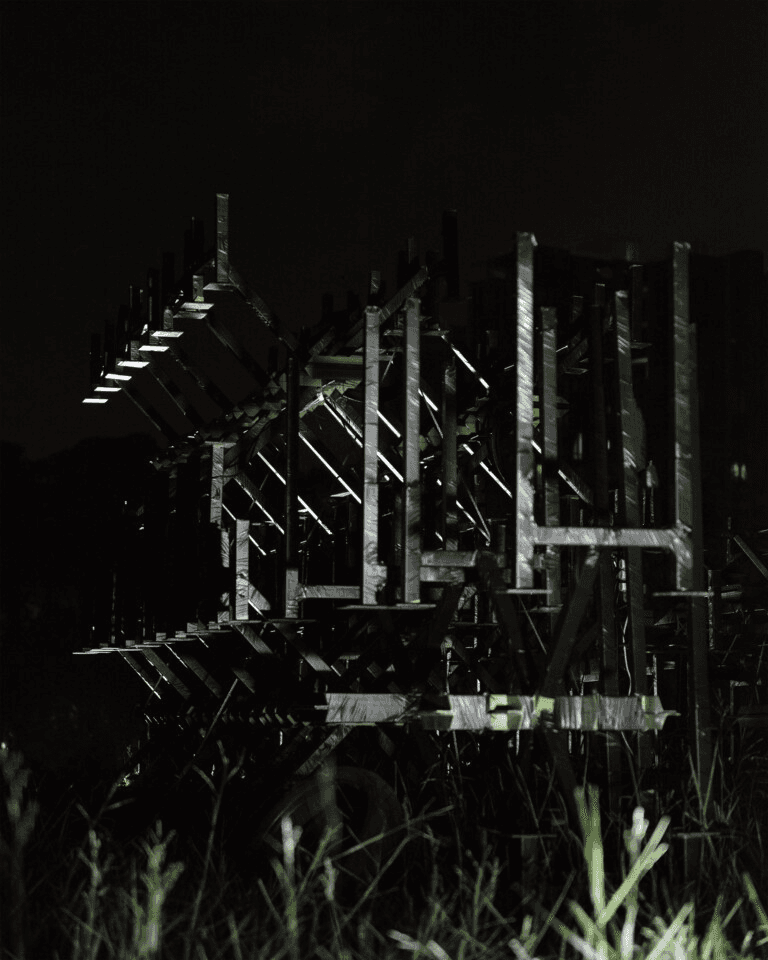
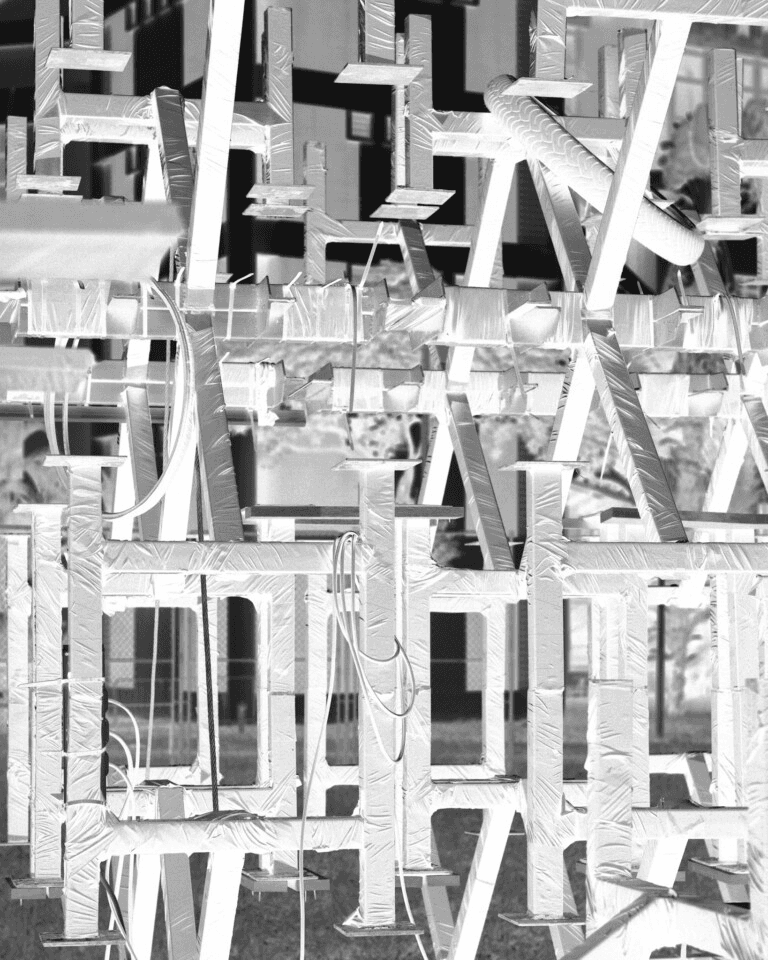
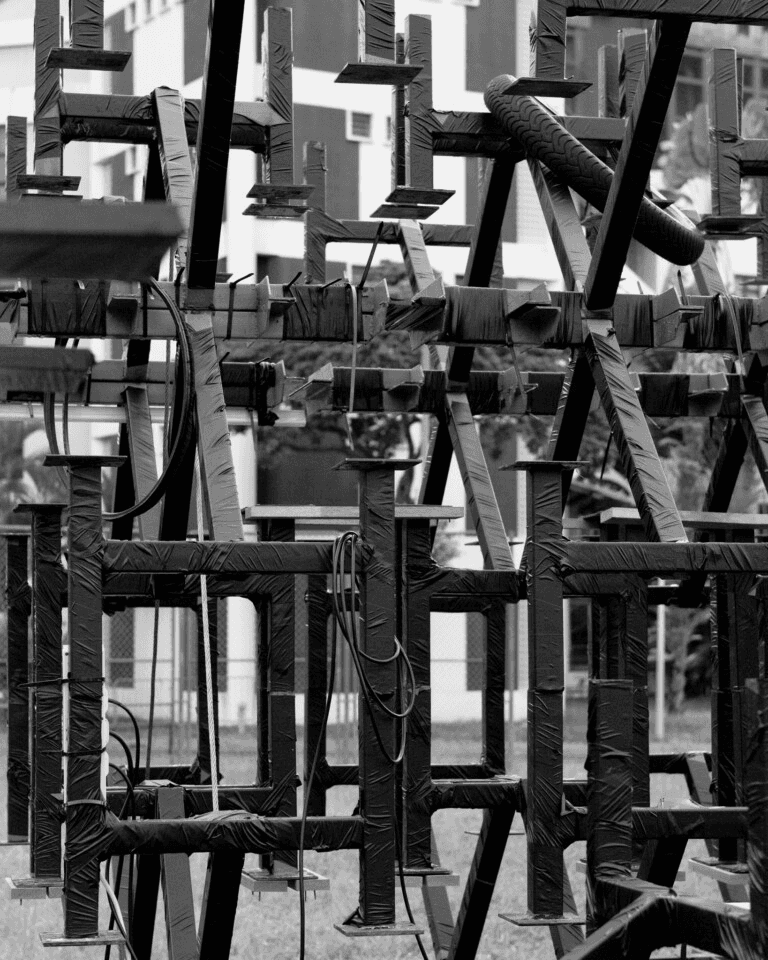
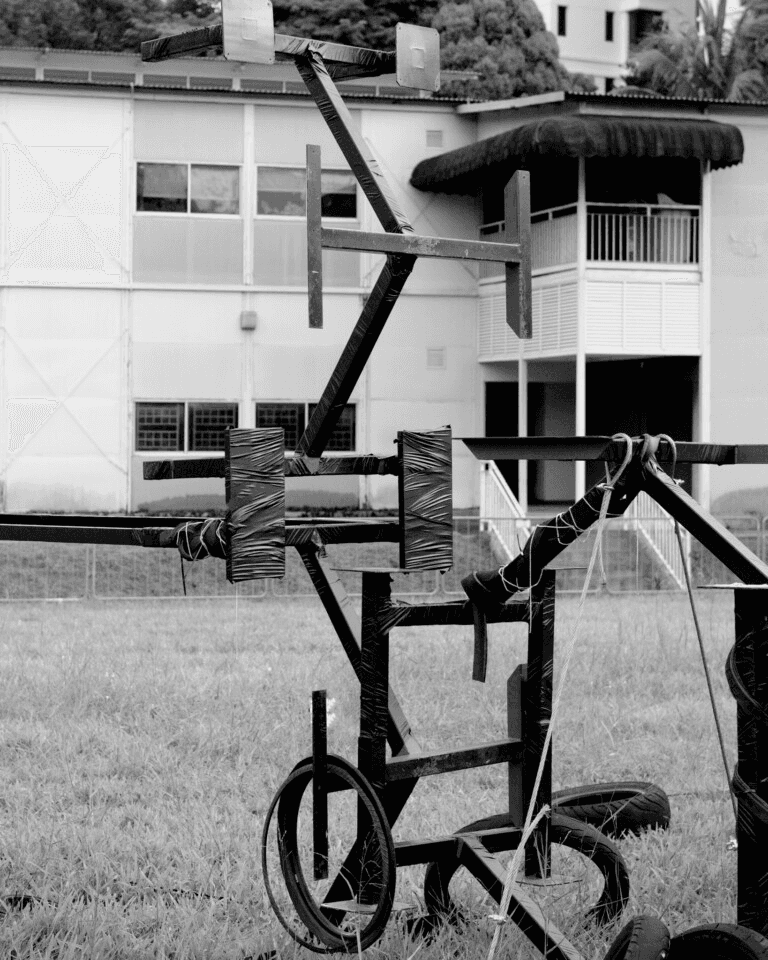
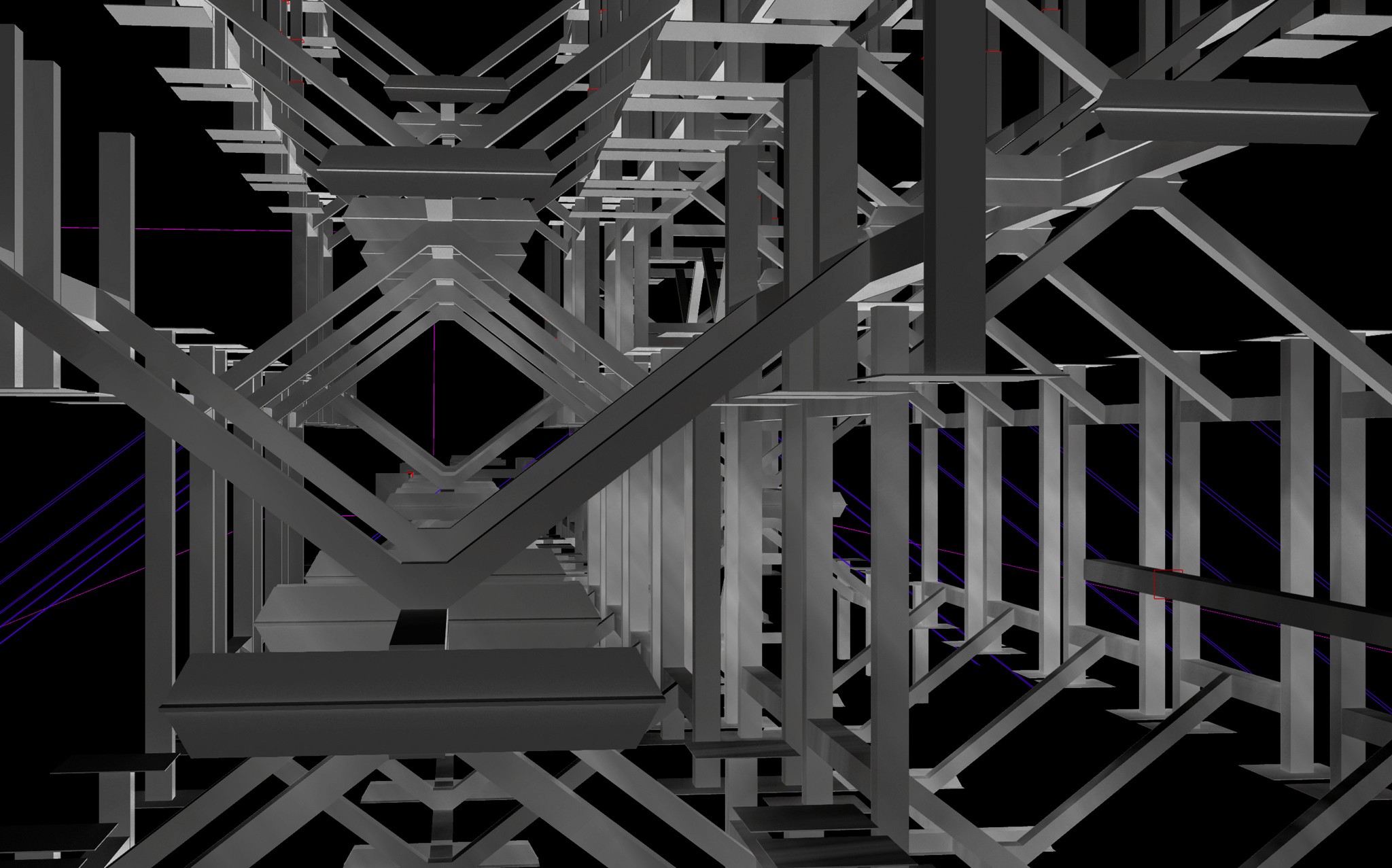
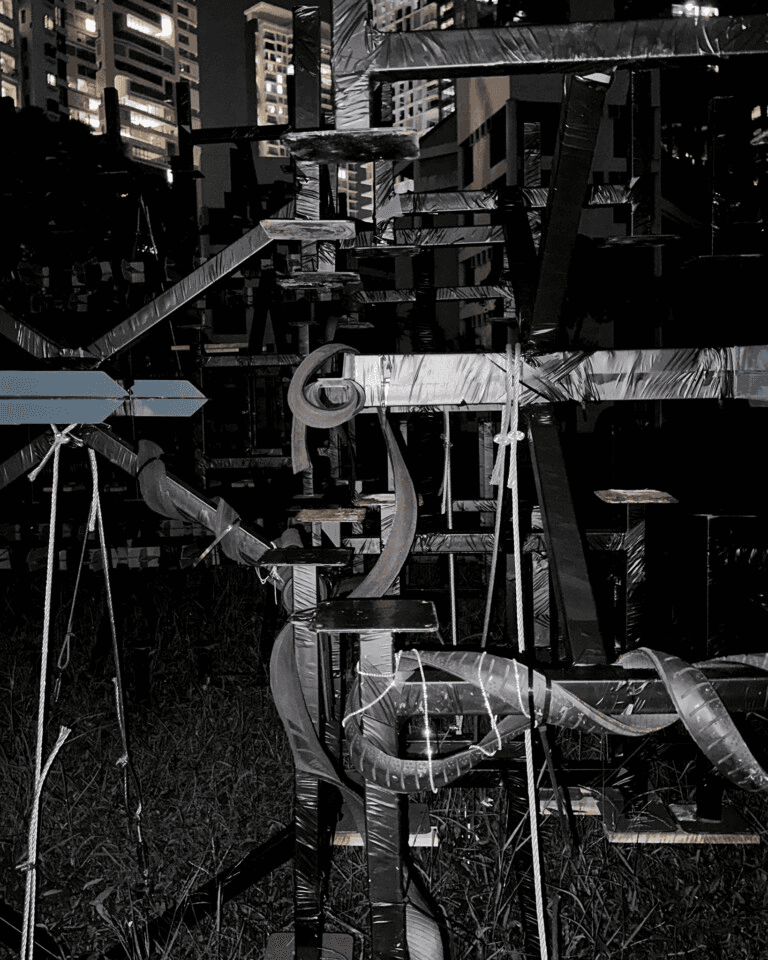
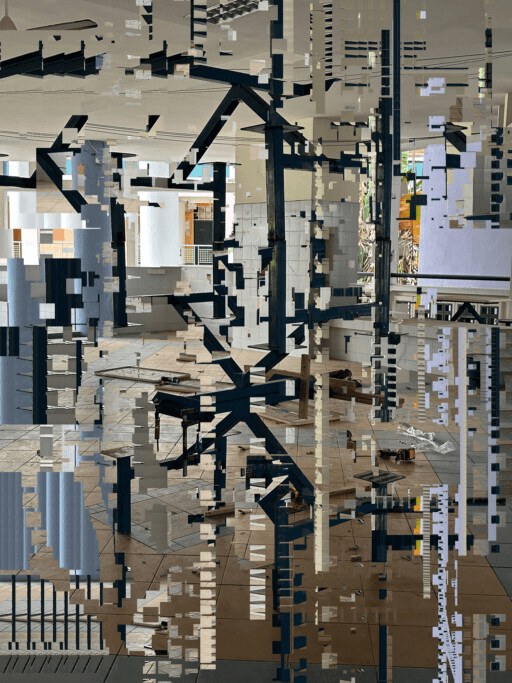
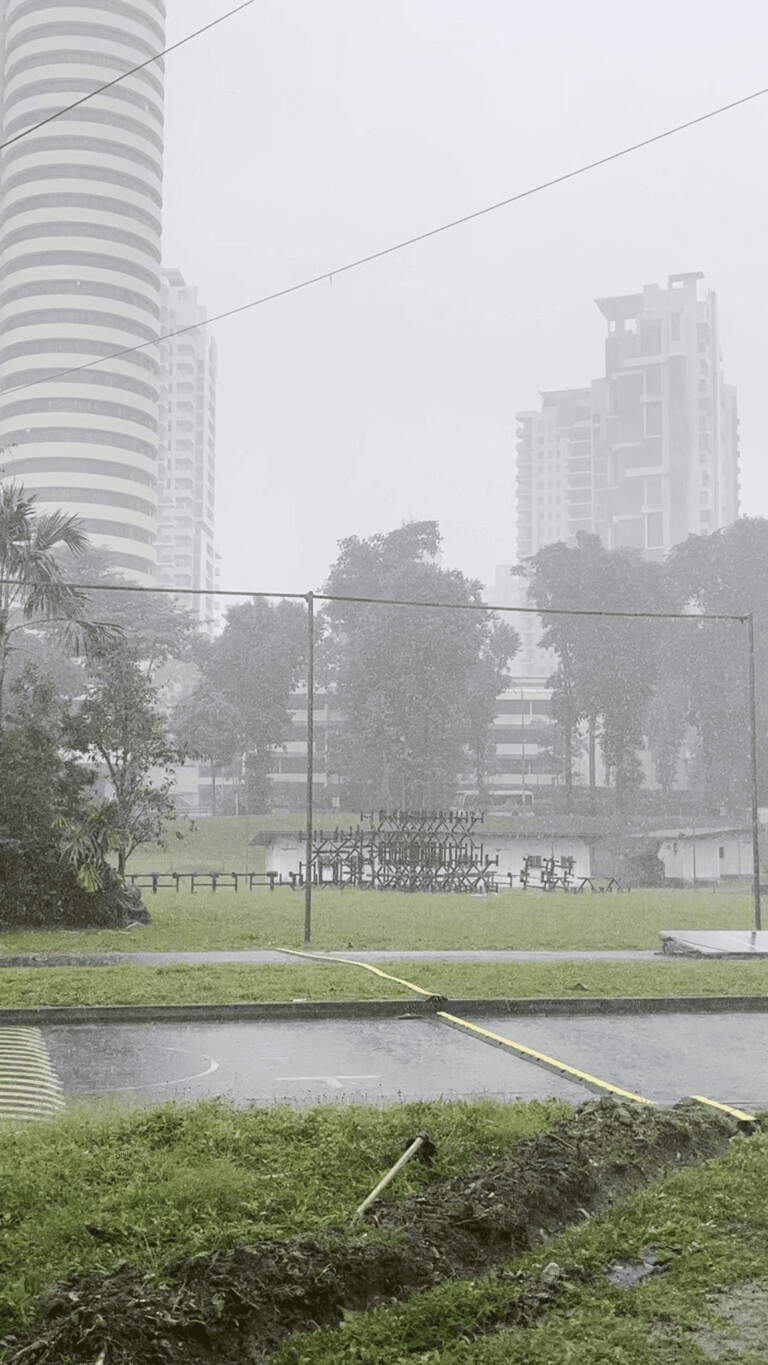
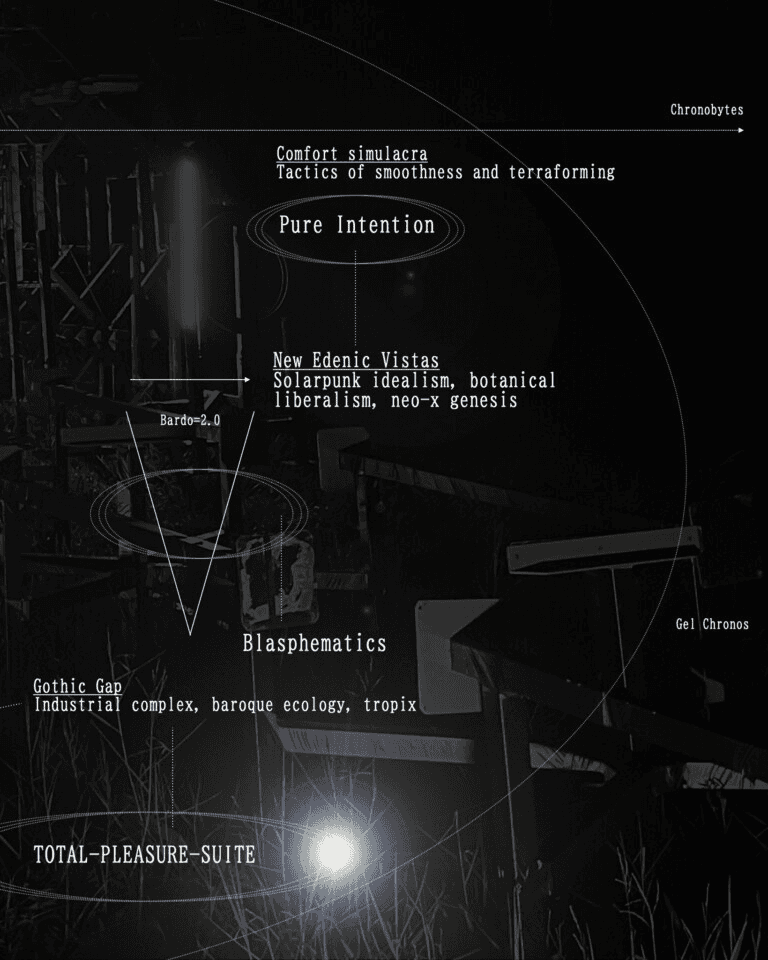
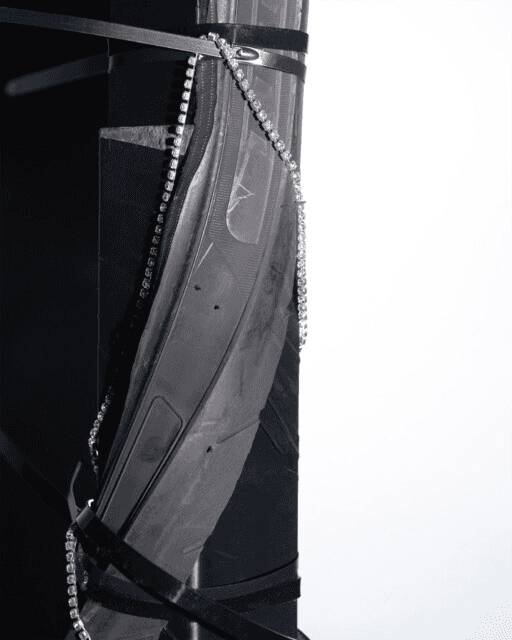
EGL. TOTAL-PLEASURE-SUITE is a hyper-physical rendering of the fallacies and limitations, but also the desires and instinctual drives that lie dormant in the metamodern psyche. I created this work with the image of a monolith that is fallible, junky and corruptible. Unlike the monoliths historically encountered in culture (2001: A Space Odyssey, or the ancient Acro Corinth and obelisks), this entity is easily subject to contagion and appropriation, transference and tainted-ness. The spatial design, in collaboration with Federico Ruberto, consists of former school tables from the exhibition site, wrapped with a latex-looking tape, augmented with diamantes and tyre scraps. The ‘suite’ is an attempt at the monstruous return of material excess, utilising signifiers of industrialisation (automotive rubbers), and the nightlife entertainment industry (diamanté strings from Taobao that are commonly used on clothing and costume jewellery worn by hostesses). An ode to buried pleasures and displaced, the suite becomes an altar for these material fragments to — hastily and haphazardly — convene with each other as if they are the very last of their so-called “inanimate” kind amidst the dawn of the human. TOTAL-PLEASURE-SUITE resurfaces the wasted, wretched, and off-kilter of our psychic mis-affordances and trappings through the haunting of the objects of the tropical gothic. The performance, Blasphematics, was an activation of the performers Josh Tirados and Jack. Its core motivation was to subvert the power dynamics of the ‘performance activation’ format, where humans assume the role of key masters, making the non-human object come alive. It posed the question of: what happens if we’re able to allow the less-than-human realm to move through us instead? The soundscape, designed by GODKORINE responded to the prompts of hauntings from the underbellies in the tropical gothic, such as hollowed KTV lounges, desolate strata malls and the ubiquity of blinding LED lights that harshly shove products to be sold to apathetic consumers.