“Being open to collisions between things that don’t obviously belong together has been crucial. Finally, I would say to hold on to curiosity, especially when it’s fragile or discouraged. Sometimes an image or an interest stays with you for years before it finds its form or its audience."—Jiajia Zhang
Singapore Biennale 2025 – Theme and Practice
CNTRFLD. Your work is part of the Singapore Biennale 2025, which is guided by the theme of pure intention and encourages audiences to engage with the city through immersive and site-responsive works. How does your contribution reflect this theme, and in what ways does it transform the audience’s perception of public and private spaces in Singapore?
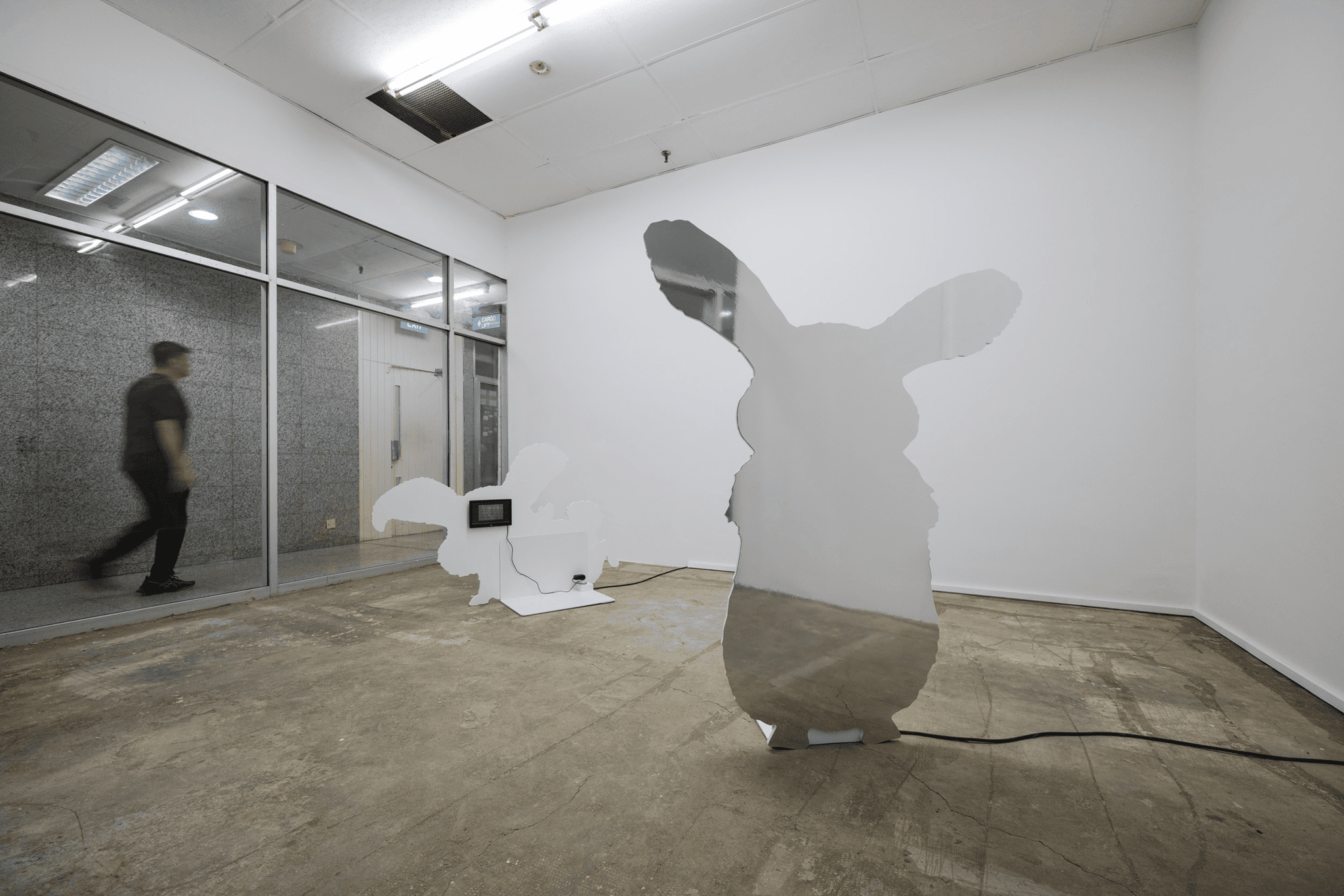
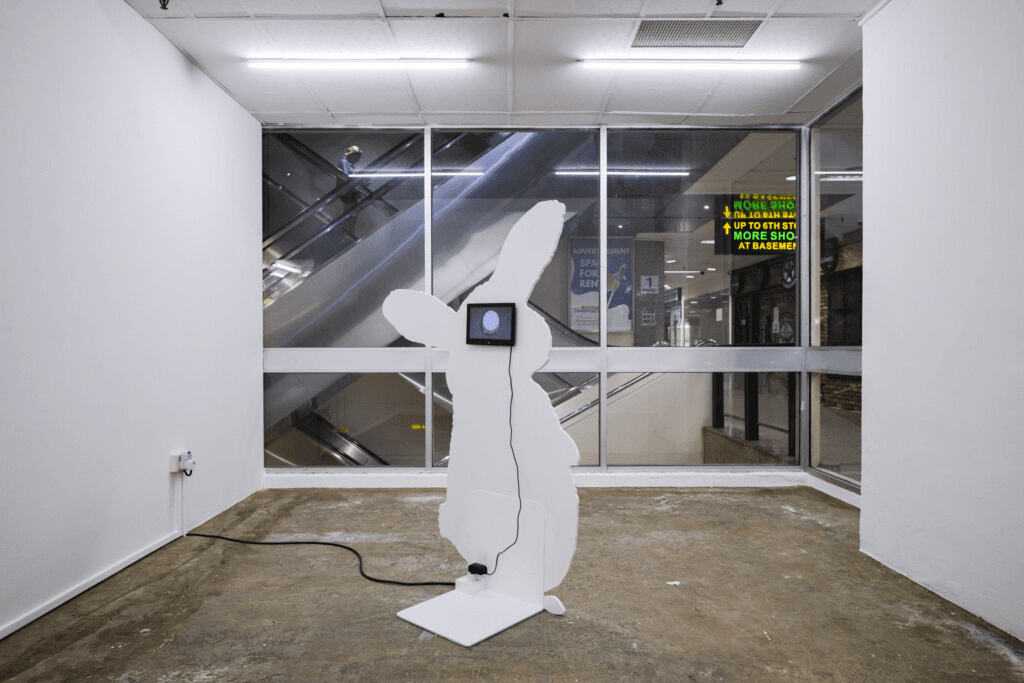
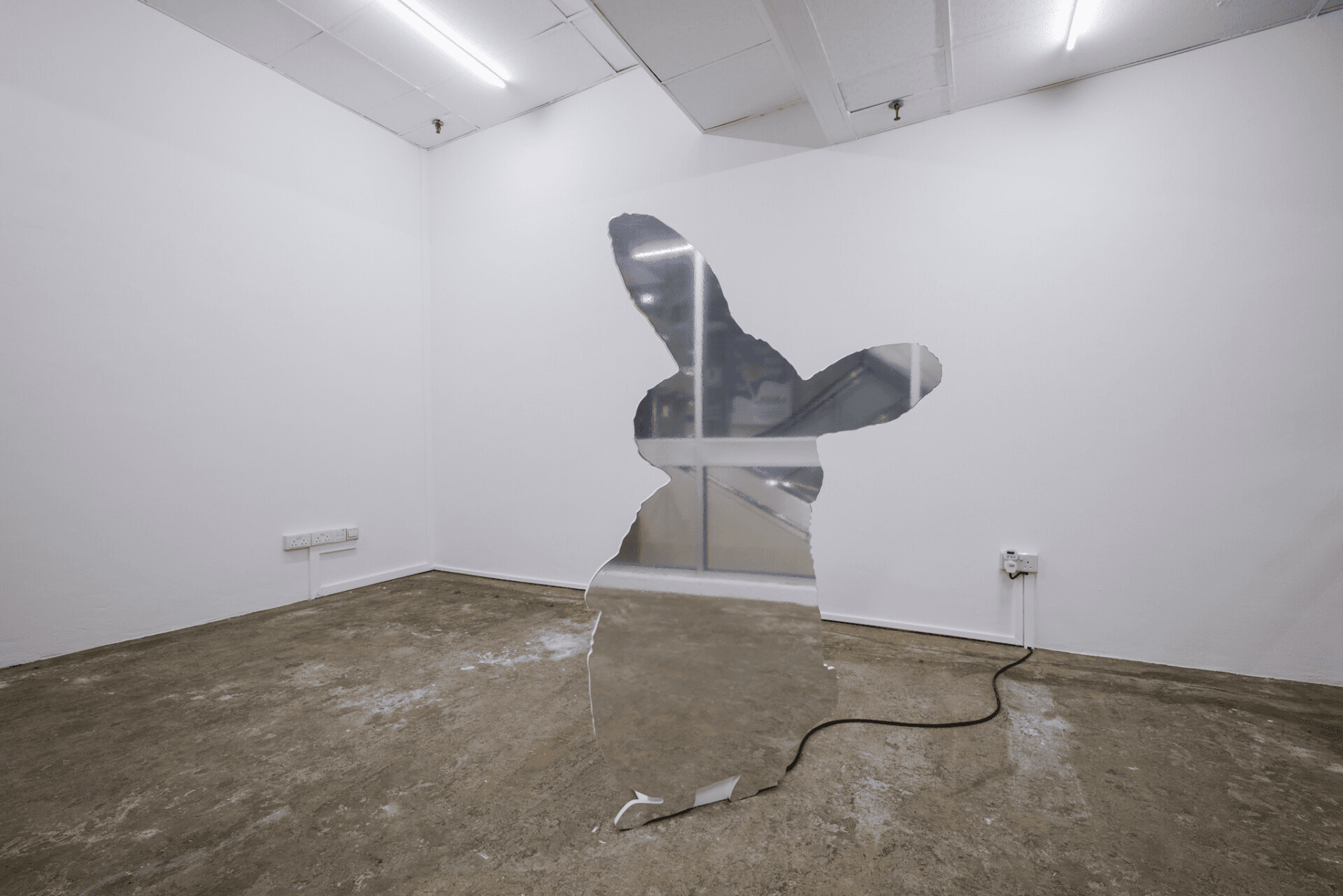
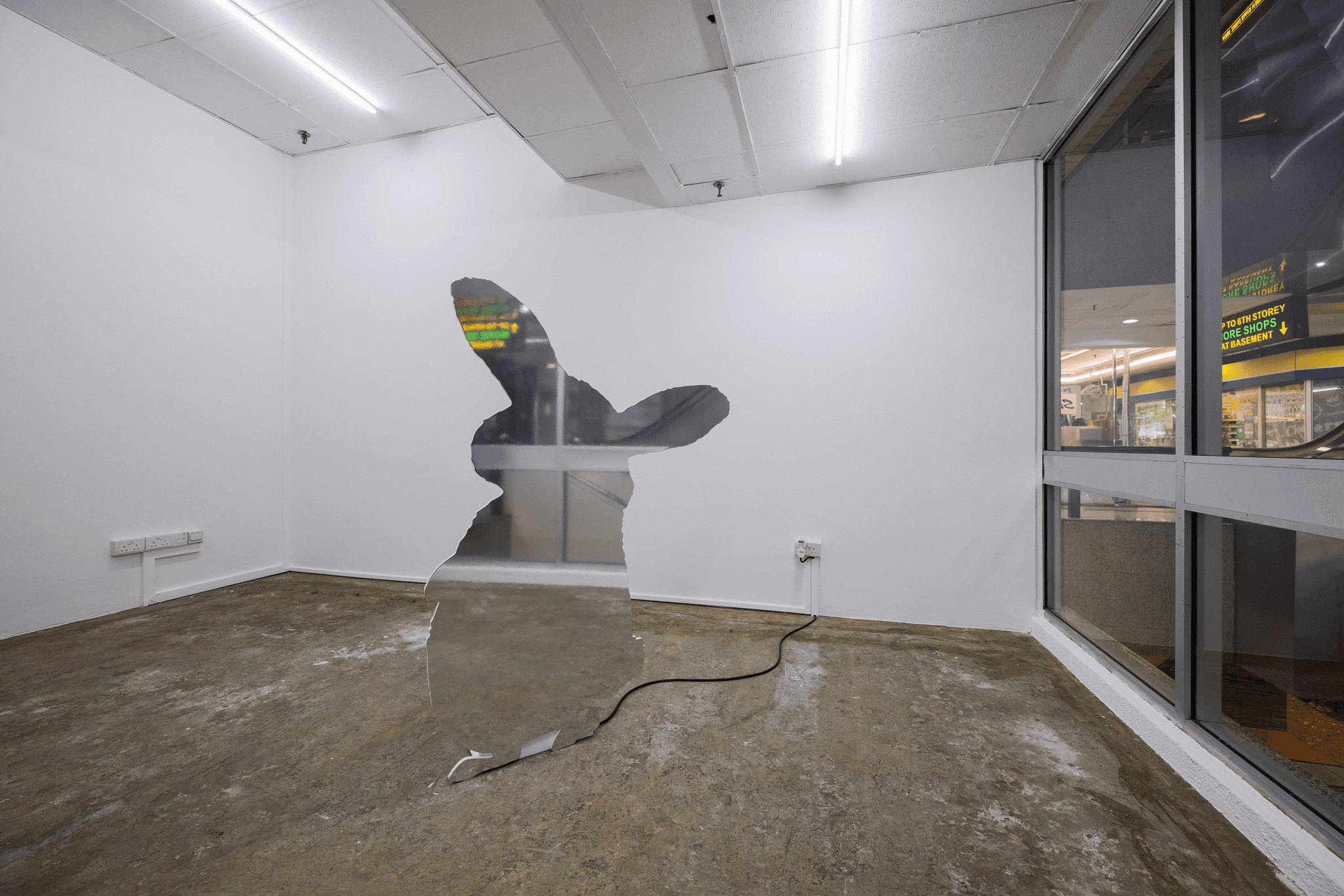
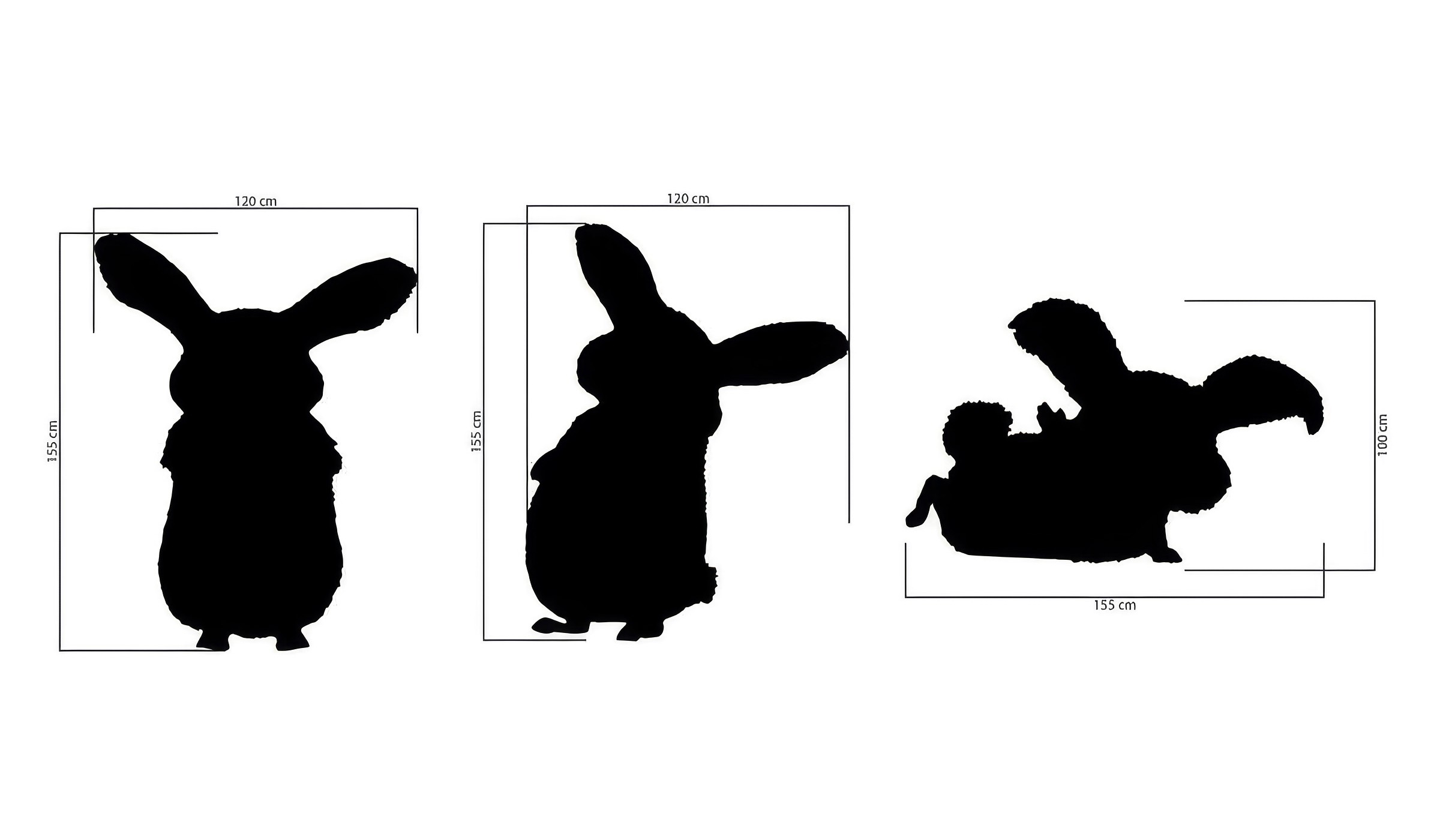
JZ. My contribution engages with the theme of pure intention through questions of perception in public space, specifically from the perspective of a child. The sculptures take the familiar form of mascots but remove them from their usual commercial or retail context. I was interested in this shift—how a language of images that is normally instrumentalised for consumption can be reactivated in a more open, ambiguous way.
What intrigued me was thinking about how, prior to having children, I hadn’t paid close attention to this visual language in public space, nor to the kinds of emotional attachments children form to specific places, images, or figures in the city. These attachments are often driven by intentions we don’t fully register as adults. In that sense, the work reflects on multiple layers of intention operating simultaneously in public space —commercial, architectural, social, playful—and how we are not always conscious of them. I approached this reflection playfully.
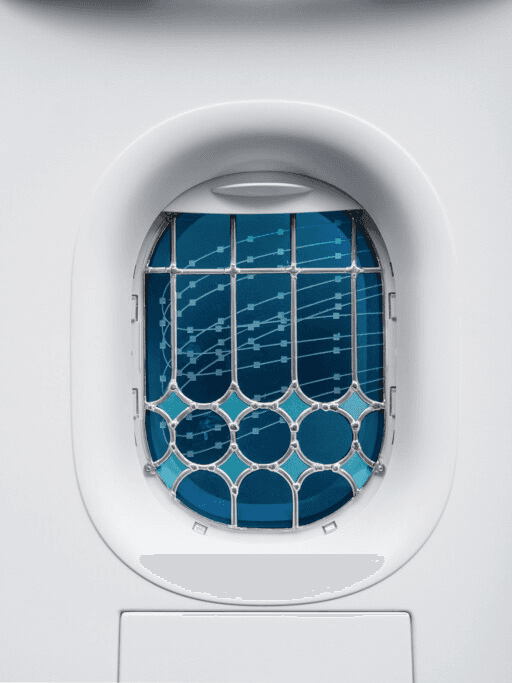
The sculptures function as carriers for video works, most of which were shot in public spaces across the city. One video is composed entirely of found footage, which I think of as a kind of virtual public space—another site where language, imagery, and address are constantly being negotiated. Together, these videos open short, fragmentary narratives rather than fixed meanings.
Formally, the sculptures are abstracted and mirrored on one side, so they physically reflect the audience and their surroundings. Viewers find themselves caught between looking into the work—through these small narrative windows—and seeing themselves reflected, alongside other viewers. This creates moments of collision, where spectators become participants in a temporary, shared play.
Ultimately, the work speaks to different sides, forces, and intentions that coexist in Singapore’s public spaces, and to how these spaces are experienced differently by different audiences. By foregrounding play, reflection, and shifting perspectives, the work invites viewers to become more aware of how they inhabit the city—both collectively and individually.
Notable Past Work
CNTRFLD. Looking back at exhibitions such as You Left Something Behind at Kunstmuseum St. Gallen and A FILM IN TWO PARTS, THE SECOND OF WHICH NEVER ENDS at Istituto Svizzero in Milan, how do you see your approach to blending public and private, analogue and digital, evolving over time?
JZ. Looking back, I see these exhibitions as moments where my practice became more explicitly shaped by lived experience and by the friction between different states of being. During You Left Something Behind at Kunstmuseum St. Gallen, I was confronted with an extreme polarity between the public and the private. Preparing a museum exhibition is an intensely public act, but at the same time I had just given birth, which is perhaps one of the most domestic and private moments imaginable. That push and pull directly informed the work. It changed how I perceived the city and how I read its structures.
One piece from that period was based on the opening times of a restaurant I passed every day; those hours became a framework for translating my own nursing times. It was a way of thinking about visibility—about when a body is “open,” working, available, or withdrawn—and how these rhythms are mirrored or erased within public infrastructure and social expectations. It also opened up perspectives that are rarely acknowledged in public space, particularly around care and motherhood.
A FILM IN TWO PARTS, THE SECOND OF WHICH NEVER ENDS continued this inquiry, but through a more spatial and infrastructural lens. The installation was centred around bollards—objects that usually regulate public movement—placed on a carpet, collapsing the logic of the street into something domestic and intimate. The floor plan echoed a memory from my childhood, when my parents divided a large room with a cupboard, creating a semi-private space for me.
I was never fully included in the adult world, but never entirely excluded either. That condition of being adjacent, overhearing, and partially participating has stayed with me and continues to shape how I think about space and spectatorship.
Across both projects, there is also an increasing awareness of how analogue and digital modes intertwine. I move constantly between handwritten notes, phone recordings, found objects, and digital translations. This mirrors our everyday condition—shifting between bodily, physical needs and the abstractions of devices and networks.
Language itself now exists in both material and generated forms, and I’m interested in that contradiction: how intimacy, care, and memory are filtered through systems that are often impersonal or infrastructural. Over time, my work has become less about resolving these oppositions and more about holding them in tension—allowing public and private, analogue and digital, to overlap, leak into one another, and remain productively unresolved.
Early Life and Upbringing
CNTRFLD. You spent your early childhood in China with your grandparents before joining your parents in Switzerland. How did these formative experiences of transnational movement and separation shape your sense of identity and the way you engage with space and memory in your work?
JZ. My early childhood in China was shaped by a very collective way of living. I lived with my grandparents, cousins, aunts, and uncles in a kind of gated community where my two sets of grandparents lived at opposite ends of a park. I was constantly moving between their homes, drifting from one space to another. Each household had a very different atmosphere and educational style—one grandmother was extremely social, with a full house, many guests, and a strong sense of hospitality, while the other was stricter and more structured.
That movement between different environments taught me early on that space is never neutral. On the walks between the two homes, I had time to process and reflect on what I had just experienced, to form my own understanding rather than fully adopting one position or another. Beyond my family, many of the neighbourhood houses had open doors and a similar sense of welcome, which reinforced this idea of permeability—between private and shared spaces, between inside and outside.
When my parents left China, it didn’t feel traumatic to me at the time. In such a large, extended family structure, their absence didn’t register as a lack. The real rupture came later, when I travelled alone to Switzerland and was suddenly reunited with my parents, who had become almost strangers. Moving from a collective family structure into the intimacy of a nuclear family felt unexpectedly lonely.
I had to adapt to the rules, rhythms, and emotional world of just two people, which was a much bigger structural shift than the geographical move itself. This transition was compounded by the introduction of a new language and new social codes. In Switzerland, I became aware of tensions between different value systems— between home and school, private life and public expectations.
But by that point, I was already used to navigating contradictions. I had learned early on that reality is assembled from multiple perspectives rather than a single, stable narrative. That understanding continues to shape my work. I’m drawn to spaces that are transitional, layered, or incomplete — spaces where belonging is negotiated rather than fixed.
Memory, for me, is not linear or singular; it’s something that accumulates through movement, separation, and adaptation. These early experiences of transnational movement and shifting family structures taught me to see identity as something porous and constructed, and that sensibility continues to inform how I engage with space, language, and perception in my practice.
Identity and Artistic Perspective
CNTRFLD. Your practice often navigates the intersections of personal, cultural, and digital narratives. How do you see your own diasporic experience informing your artistic exploration of identity, and in what ways does it influence the themes you choose to address?
JZ. My practice usually starts from things that are very present in my everyday life—observations of my own behaviour, situations I find myself in, or moments of contradiction and uncertainty. These are not necessarily chosen as “themes” in advance; they tend to arise repeatedly through different constellations.
Having a diasporic background means that these kinds of tensions surface more often, or at least more visibly. You’re regularly confronted with questions of positioning, translation, and adjustment, even in very ordinary situations. For me, this becomes a way of seeing the world rather than a declared subject matter. It’s about moving through the city, observing scenes, fragments of language, gestures, or encounters, and collecting them almost intuitively. The work often emerges from this accumulation. Only later, through the process of making, do certain themes—identity, belonging, mediation, distance—become legible.
Because of this, my engagement with personal, cultural, and digital narratives feels embedded rather than illustrative. The diasporic experience informs how I access both physical space and narrative space—how I read a street, how I approach a text, or how I interpret an image. It brings with it certain structures of perception that aren’t consciously learned but formed through lived experience. Making work becomes a way of making these structures visible to myself.
Rather than starting with a fixed idea of what I want to explore and then applying it to the work, the process often works in reverse. The act of working reveals what has already been shaping my perspective. In that sense, identity in my practice is not a stable category but something that unfolds through observation, repetition, and making.
Diasporic Experience and Cultural Translation
CNTRFLD. In works like After Love, you juxtapose footage from China, Taiwan, and Europe to explore emotional and cultural translation across contexts. How do you approach representing diasporic perspectives in your work, and what challenges or opportunities does this offer in creating universally resonant experiences?
JZ. After Love began with a very small, almost accidental trigger. I came across a coxcomb flower at a market—one that immediately reminded me of my grandparents’ backyard. That image set off a chain of associations, including a VHS tape I had recently found. When I was growing up, VHS tapes were one of the primary ways families separated across countries stayed connected. Emails weren’t really an option yet, phone calls were prohibitively expensive, and letters were slow. These tapes became a form of emotional exchange.
What struck me when I revisited the footage was how performative and bittersweet it was. People would present the best version of themselves to the camera: dressing up, decorating their homes, singing songs, staging small performances. Music played a crucial role because it’s a universally understood emotional carrier. That’s why the film is structured around songs—karaoke evergreens, often English-language tracks that were popular in Chinese karaoke culture, even when the lyrics weren’t fully understood. Emotion travelled more easily than language.
The work moves between these intimate, private performances and larger, public ones by celebrities and cultural icons such as Teresa Teng, Leslie Cheung, and even Britney Spears. These figures represent a different scale of address—performing for mass audiences—yet their personal vulnerabilities and tragedies puncture the spectacle. Leslie Cheung’s funeral procession appears alongside references to his struggle with depression; Britney Spears’ case emerges in relation to familial surveillance and control. In both cases, there’s a tension between care and constraint—between the desire for someone’s well-being and the imposition of norms, expectations, and definitions of success.
This tension also extends beyond the personal. When I was working on After Love in 2019, the protests in Hong Kong around the extradition bill were unfolding. The dynamic between the “motherland” and Hong Kong—between protection and control, belonging and threat—echoed the familial dynamics in the film. I was interested in how similar structures appear at vastly different scales: within families, within celebrity culture, and within geopolitical relationships.
In representing diasporic perspectives, I don’t aim to explain or resolve these contradictions. Instead, I try to weave together fragments—private footage, pop culture, political context—allowing emotional translation to happen through proximity rather than through a single narrative. The challenge is that these experiences are deeply specific, but the opportunity lies in their emotional architecture. Feelings of longing, care, surveillance, and misalignment are widely shared, even if their contexts differ. By working through emotion, performance, and music, the work opens a space where personal and collective histories can resonate across cultural boundaries.